Retinol has become one of the most popular and scientifically proven skincare ingredients in the beauty industry. Dermatologists, skincare experts, and beauty influencers consistently recommend retinol for improving skin texture, reducing wrinkles, treating acne, and promoting youthful skin. However, choosing the right retinol for your skin type can feel confusing because there are many formulas, strengths, and product types available.
Social media platforms like TikTok, Instagram, and YouTube have increased awareness about retinol products and skincare routines. While retinol offers impressive skincare benefits, using the wrong formula or strength may lead to dryness, irritation, redness, or skin sensitivity.
Understanding your skin type is the key to selecting the right retinol product. Whether you have dry skin, oily skin, sensitive skin, combination skin, or acne prone skin, different retinol formulas work better for different skincare needs.
In this article, you will learn how retinol work How to Choose the Right Retinol for Your Skin Type: The Ultimate Retinol Guide, how to choose the best retinol for your skin type, common retinol mistakes to avoid, and how to build a safe and effective skincare routine.
What Is Retinol
Retinol is a vitamin A derivative commonly used in skincare products.
It belongs to a group of ingredients called retinoids.
What Retinol Does
- Speeds up skin cell turnover
- Stimulates collagen production
- Improves skin texture
- Reduces fine lines and wrinkles
- Helps fade dark spots
- Supports acne treatment
Retinol is considered one of the most effective anti-aging skincare ingredients.
How Retinol Works on the Skin
Retinol works by encouraging faster skin renewal.
Main Benefits
- Removes dead skin cells
- Promotes smoother skin
- Reduces clogged pores
- Encourages healthier skin appearance
With consistent use, retinol helps improve overall skin quality.
Why Choosing the Right Retinol Matters
Not all retinol products work the same way.
Different formulas vary in:
- Strength
- Texture
- Ingredients
- Skin compatibility
Choosing the wrong retinol may cause irritation or discomfort.
Selecting the right product helps maximize benefits while minimizing side effects.
Understanding Different Skin Types
Before choosing retinol, identify your skin type.
Dry Skin
Feels tight and flaky.
Oily Skin
Produces excess oil and shine.
Combination Skin
Contains both oily and dry areas.
Sensitive Skin
Reacts easily to products and environmental changes.
Acne Prone Skin
Frequently experiences breakouts and clogged pores.
Knowing your skin type helps guide retinol selection.
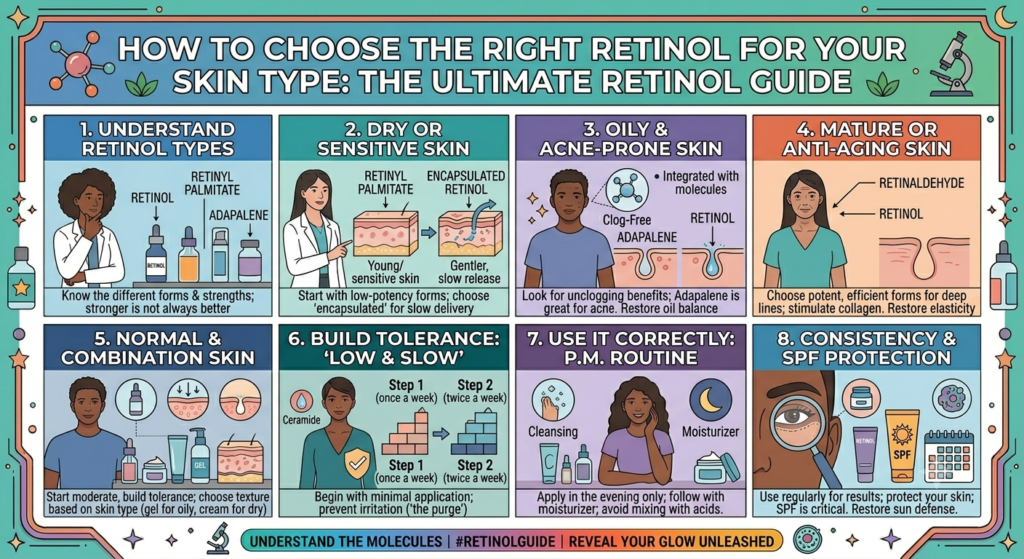
Best Retinol for Dry Skin
Dry skin requires gentle and hydrating retinol formulas.
What to Look For
- Cream based retinol
- Hydrating ingredients
- Lower retinol strength
Helpful Ingredients
- Hyaluronic acid
- Ceramides
- Glycerin
These ingredients help reduce dryness and irritation.
Brands like CeraVe and La Roche-Posay offer beginner friendly retinol products for dry skin.
Best Retinol for Oily Skin
Oily skin usually tolerates stronger retinol formulas better.
Ideal Products
- Lightweight serums
- Gel formulas
- Oil free products
Benefits for Oily Skin
- Reduces clogged pores
- Controls breakouts
- Improves skin texture
Retinol can help balance excess oil production over time.
Best Retinol for Sensitive Skin
Sensitive skin needs extra caution when using retinol.
Best Practices
- Start with low strength retinol
- Use products only a few times weekly
- Avoid harsh exfoliants initially
Gentle Ingredients to Pair with Retinol
- Niacinamide
- Ceramides
- Aloe vera
Sensitive skin benefits from slow and gradual retinol introduction.
Best Retinol for Combination Skin
Combination skin requires balance.
Recommended Formulas
- Lightweight creams
- Moderate strength retinol
- Non greasy moisturizers
Combination skin often responds well to flexible skincare routines.
Best Retinol for Acne Prone Skin
Retinol helps unclog pores and reduce acne.
Benefits for Acne
- Prevents breakouts
- Improves skin turnover
- Reduces acne marks
Important Tip
Initial purging may occur when starting retinol.
Purging is temporary and often improves after several weeks.
Understanding Retinol Strengths
Retinol products come in different concentrations.
Beginner Strength
0.1% to 0.3%
Intermediate Strength
0.5%
Advanced Strength
1% and higher
Beginners should always start with lower strengths.
Signs You Are Using Too Much Retinol
Using excessive retinol may damage the skin barrier.
Common Signs
- Redness
- Peeling
- Burning sensation
- Extreme dryness
Reducing frequency usually helps skin recover.
How to Start Using Retinol Safely
Step 1
Use retinol only two or three nights weekly.
Step 2
Apply moisturizer before or after retinol.
Step 3
Always wear sunscreen during daytime.
Slow introduction helps minimize irritation.
The Importance of Sunscreen with Retinol
Retinol increases skin sensitivity to sunlight.
Why SPF Matters
- Prevents sun damage
- Protects skin barrier
- Reduces irritation risk
Daily sunscreen is essential when using retinol products.
Brands like Supergoop! and EltaMD are popular for sun protection.
Retinol vs Prescription Retinoids
Retinol
Available over the counter and gentler.
Prescription Retinoids
Stronger and faster acting.
Examples include tretinoin and adapalene.
Prescription products may cause stronger side effects initially.
Common Retinol Side Effects
Temporary Side Effects
- Dryness
- Peeling
- Mild irritation
- Skin purging
Most side effects improve as the skin adapts.
Ingredients That Work Well with Retinol
Hyaluronic Acid
Improves hydration.
Niacinamide
Supports skin barrier health.
Ceramides
Reduce dryness and irritation.
Combining supportive ingredients improves retinol tolerance.
Ingredients to Avoid Mixing with Retinol
Some combinations may increase irritation.
Avoid Overusing Together
- Strong exfoliating acids
- Benzoyl peroxide
- Harsh scrubs
Careful layering helps protect the skin barrier.
Retinol for Anti-Aging Benefits
Retinol is highly effective for aging concerns.
Anti-Aging Benefits
- Reduces fine lines
- Improves elasticity
- Stimulates collagen
Long term use supports smoother and healthier looking skin.
Retinol and Hyperpigmentation
Retinol helps fade dark spots and uneven skin tone.
Why It Works
Faster skin turnover helps remove pigmented cells gradually.
Consistent use improves brightness over time.
The Difference Between Retinol and Retinal
Retinal is another vitamin A derivative.
Retinal Benefits
- Works faster than retinol
- May cause less irritation for some users
Retinal products are becoming increasingly popular in skincare.
How Long Retinol Takes to Work
Visible improvements usually require patience.
Average Timeline
- 2 to 4 weeks for adjustment
- 8 to 12 weeks for visible improvement
- Several months for major anti-aging results
Consistency is extremely important.
Retinol Myths and Misconceptions
Myth 1 Retinol Thins the Skin
Retinol actually supports healthier collagen production.
Myth 2 Stronger Retinol Is Always Better
Higher strengths are not suitable for everyone.
Myth 3 Retinol Should Be Used Every Night Immediately
Gradual use is safer and more effective.
Understanding retinol science helps avoid skincare mistakes.
Social Media and Retinol Trends
Social media has increased skincare awareness dramatically.
Beauty influencers often share:
- Retinol routines
- Product reviews
- Before and after results
- Dermatologist recommendations
However, skincare should always be personalized rather than trend focused.
Sustainable and Clean Retinol Products
Consumers increasingly prefer:
- Cruelty free skincare
- Eco friendly packaging
- Fragrance free formulas
The skincare industry continues evolving toward sustainability.
Building a Beginner Retinol Routine
Evening Routine Example
- Gentle cleanser
- Moisturizer
- Retinol product
- Hydrating cream
Morning Routine Example
- Cleanser
- Moisturizer
- Sunscreen
Simple routines often work best for beginners.
Common Retinol Mistakes to Avoid
- Starting with high strength products
- Skipping sunscreen
- Over exfoliating
- Using too much product
Retinol should be introduced carefully and patiently.
The Future of Retinol Skincare
Future skincare innovations may include:
- Encapsulated retinol technology
- Personalized skincare formulas
- AI skin analysis
- Gentler retinoid alternatives
Scientific advancements continue improving skincare products.
These resources provide expert skincare education and ingredient research.
Conclusion
Choosing the right retinol for your skin type can dramatically improve your skincare routine and support healthier, smoother, and more youthful looking skin. Whether your goal is anti-aging, acne treatment, texture improvement, or brightening, retinol remains one of the most effective skincare ingredients available today.
The key to successful retinol use is understanding your skin type, starting slowly, and supporting your skin barrier with hydration and sunscreen. Skincare results take time, but consistency and patience often lead to noticeable improvements.
Retinol is not about achieving perfect skin. Instead, it is about building healthier skin habits and supporting long term skin health through science based skincare practices.
FAQs
What is the best retinol strength for beginners?
Most beginners should start with 0.1% to 0.3% retinol.
Can sensitive skin use retinol?
Yes, but sensitive skin should use gentle low strength formulas slowly.
Why does retinol cause peeling?
Retinol increases skin cell turnover, which may temporarily cause dryness and peeling.
Should retinol be used every night?
Beginners should start only two or three nights weekly.
Can retinol help acne?
Yes, retinol helps unclog pores and improve acne prone skin.
Is sunscreen necessary with retinol?
Yes, sunscreen is essential because retinol increases sun sensitivity.
How long does retinol take to show results?
Visible improvements usually appear after several weeks or months of consistent use.