Introduction
Anti-aging skincare has become one of the biggest industries in modern beauty and wellness. Millions of people around the world invest in skincare products designed to reduce wrinkles, improve skin texture, increase hydration, and maintain a youthful appearance. From serums and moisturizers to advanced treatments and sunscreens, anti-aging skincare products continue evolving through scientific research and innovation.
The growing popularity of skincare trends on platforms like TikTok, Instagram, and YouTube has encouraged consumers to learn more about skincare ingredients and routines. People today are more interested in understanding the science behind anti-aging products instead of simply following marketing trends.
Aging is a natural biological process, but scientific advancements have helped skincare brands create products that support healthier and more resilient skin. Ingredients like retinol, hyaluronic acid, peptides, vitamin C, and sunscreen have become essential parts of anti-aging routines because of their proven skincare benefits.
In this article, you will explore The Science Behind Anti-Aging Skincare Products: Everything You Need to Know anti-aging skincare products, how aging affects the skin, and which ingredients truly help maintain youthful and healthy skin.
What Happens to Skin During Aging
Skin naturally changes over time.
As people age, the skin experiences:
- Reduced collagen production
- Loss of elasticity
- Slower cell turnover
- Decreased hydration
These changes contribute to wrinkles, fine lines, dryness, and uneven texture.
Intrinsic vs Extrinsic Aging
Scientists divide skin aging into two main categories.
Intrinsic Aging
Natural aging controlled by genetics and biological processes.
Extrinsic Aging
Aging caused by environmental factors such as:
- Sun exposure
- Pollution
- Smoking
- Poor lifestyle habits
Extrinsic aging can often be reduced with proper skincare and healthy habits.
Why Collagen Is Important for Youthful Skin
Collagen is one of the most important proteins in the skin.
Functions of Collagen
- Maintains skin firmness
- Supports elasticity
- Prevents sagging
Collagen production naturally decreases with age, especially after the mid twenties.
This decline contributes to wrinkles and thinner skin.
The Role of Elastin in Skin Health
Elastin helps skin stretch and return to its original shape.
Why Elastin Matters
Healthy elastin keeps skin flexible and resilient.
Sun damage and aging reduce elastin quality over time, leading to sagging skin.
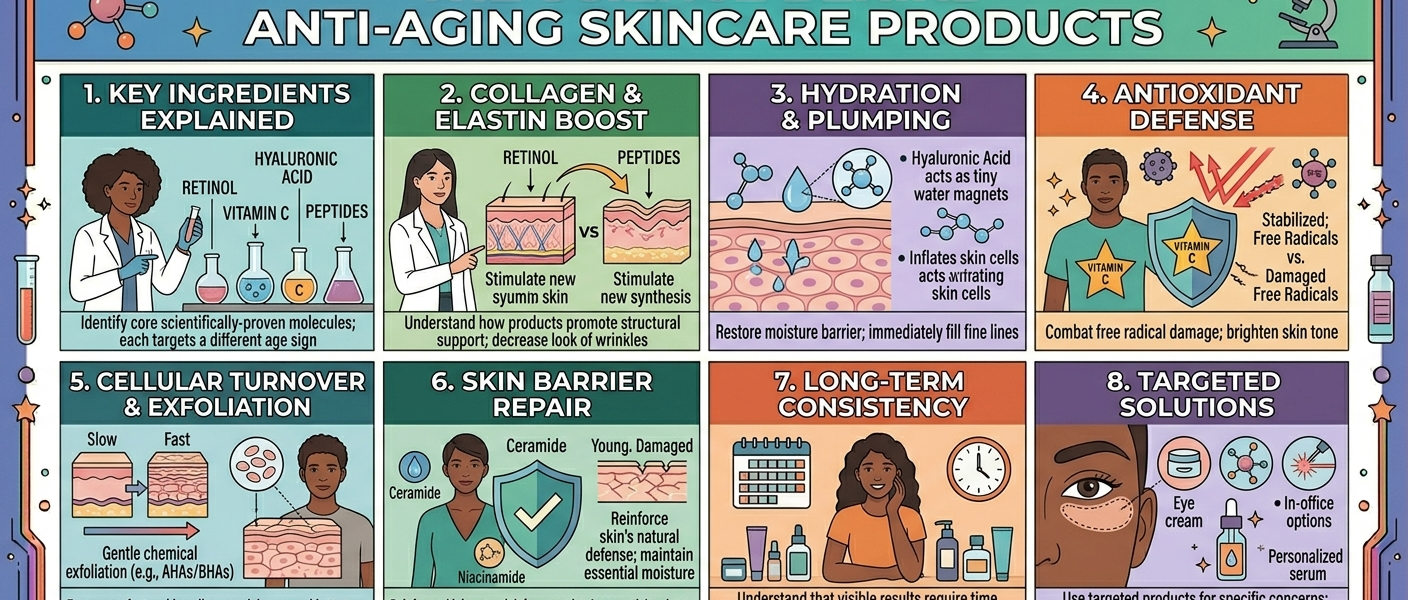
How Anti-Aging Skincare Products Work
Anti-aging products target different skin concerns through active ingredients.
Main Goals of Anti-Aging Products
- Increase hydration
- Stimulate collagen production
- Protect against free radicals
- Improve skin texture
- Reduce fine lines and wrinkles
Scientific research helps determine which ingredients truly benefit skin health.
Retinol and Retinoids
Retinol is one of the most researched anti-aging ingredients.
What Is Retinol?
A vitamin A derivative that supports faster skin cell turnover.
Benefits of Retinol
- Reduces wrinkles
- Improves texture
- Stimulates collagen production
- Helps fade dark spots
Brands like CeraVe and The Ordinary offer popular retinol products.
Important Tip
Retinol should be introduced gradually because it may initially cause irritation.
Hyaluronic Acid and Hydration Science
Hyaluronic acid is famous for its ability to retain water.
How It Works
It attracts and holds moisture within the skin.
Benefits
- Improves hydration
- Plumps skin appearance
- Reduces dryness
Well hydrated skin often appears smoother and healthier.
Vitamin C and Antioxidants
Vitamin C is a powerful antioxidant widely used in anti-aging skincare.
Benefits of Vitamin C
- Brightens skin tone
- Protects against environmental damage
- Supports collagen production
Antioxidants help neutralize free radicals that contribute to premature aging.
Peptides and Skin Repair
Peptides are amino acid chains that support skin repair processes.
Why Peptides Are Popular
- Improve firmness
- Support collagen synthesis
- Strengthen skin barrier
Peptides are commonly included in serums and moisturizers.
Sunscreen and UV Protection
Sunscreen is one of the most important anti-aging products.
Why UV Protection Matters
Sun exposure accelerates skin aging significantly.
Benefits of Sunscreen
- Prevents wrinkles
- Reduces dark spots
- Protects collagen and elastin
Daily sunscreen use is essential for long term skin health.
Brands like La Roche-Posay and Supergoop! are highly popular for UV protection.
The Science of Free Radicals
Free radicals are unstable molecules that damage skin cells.
Causes of Free Radical Damage
- Pollution
- UV radiation
- Smoking
- Stress
Antioxidants help reduce oxidative stress caused by free radicals.
Skin Barrier Function and Anti-Aging
The skin barrier protects against moisture loss and irritation.
Signs of a Damaged Barrier
- Dryness
- Redness
- Sensitivity
Healthy skin barriers support better anti-aging results.
Exfoliation and Cell Turnover
Exfoliation removes dead skin cells from the surface.
Benefits of Exfoliation
- Smoother texture
- Brighter appearance
- Better product absorption
Types of Exfoliation
- Chemical exfoliants
- Physical exfoliants
Over exfoliation should be avoided to prevent irritation.
Glycolic Acid and Chemical Exfoliants
Glycolic acid is a popular alpha hydroxy acid.
Benefits
- Improves texture
- Reduces fine lines
- Enhances brightness
Chemical exfoliants support smoother and healthier looking skin.
Niacinamide and Skin Health
Niacinamide is a versatile skincare ingredient.
Benefits
- Reduces redness
- Improves barrier function
- Controls oil production
- Brightens skin tone
It works well for many skin types.
The Importance of Moisturizers
Moisturizers help maintain skin hydration.
Why Moisturizing Matters
Hydrated skin appears healthier and more youthful.
Moisturizers also strengthen the skin barrier and reduce dryness.
Anti-Aging Skincare for Different Skin Types
Dry Skin
Requires rich hydration and nourishing products.
Oily Skin
Benefits from lightweight non comedogenic formulas.
Sensitive Skin
Needs gentle fragrance free products.
Combination Skin
Requires balanced hydration and targeted treatments.
Choosing suitable products improves skincare results.
Lifestyle Factors That Affect Skin Aging
Skincare products alone are not enough.
Important Lifestyle Factors
- Sleep quality
- Nutrition
- Stress management
- Hydration
- Exercise
Healthy lifestyles strongly support youthful skin.
The Role of Diet in Skin Health
Nutrition affects overall skin appearance.
Skin Friendly Foods
- Fruits
- Vegetables
- Healthy fats
- Antioxidant rich foods
Balanced diets help support collagen and skin repair.
Common Anti-Aging Myths
Myth 1 Anti-Aging Products Stop Aging Completely
Aging is natural and cannot be stopped entirely.
Myth 2 Expensive Products Always Work Better
Scientific ingredients matter more than price.
Myth 3 Natural Products Are Always Safer
Natural ingredients can also cause irritation.
Understanding skincare science helps consumers make informed choices.
Social Media and Anti-Aging Trends
Social media has increased skincare awareness dramatically.
Influencers now share:
- Ingredient education
- Product reviews
- Skincare routines
- Dermatologist advice
Digital beauty culture continues influencing skincare trends.
Professional Anti-Aging Treatments
Some people combine skincare with professional treatments.
Popular Treatments
- Chemical peels
- Laser treatments
- Microneedling
- Botox injections
Professional procedures should always be performed by qualified experts.
Sustainable and Clean Beauty Trends
Consumers increasingly value sustainability in skincare.
Popular trends include:
- Cruelty free products
- Recyclable packaging
- Ethical ingredient sourcing
The beauty industry is adapting to environmentally conscious consumers.
How to Build an Effective Anti-Aging Routine
Morning Routine
- Gentle cleanser
- Vitamin C serum
- Moisturizer
- Sunscreen
Evening Routine
- Cleanser
- Retinol or treatment serum
- Moisturizer
Consistency is key for visible skincare improvements.
Common Mistakes in Anti-Aging Skincare
- Skipping sunscreen
- Overusing active ingredients
- Using too many products at once
- Expecting immediate results
Patience and consistency are essential for skincare success.
The Future of Anti-Aging Science
Future skincare innovations may include:
- Personalized skincare technology
- AI based skin analysis
- Advanced peptide research
- Biotechnology ingredients
Scientific advancements continue transforming skincare products and treatments.
Conclusion
Anti-aging skincare products are supported by years of scientific research and dermatological advancements. Ingredients like retinol, hyaluronic acid, vitamin C, peptides, and sunscreen play important roles in maintaining healthier and more youthful skin.
While aging is a natural process, proper skincare routines and healthy lifestyle habits can help improve skin texture, hydration, and overall appearance. Understanding the science behind skincare ingredients allows consumers to make smarter and more effective beauty choices.
The best anti-aging routine focuses on consistency, protection, hydration, and realistic expectations. Healthy skin is not about perfection but about maintaining balance, confidence, and long term care.
FAQs
What is the most effective anti-aging skincare ingredient?
Retinol is considered one of the most researched and effective anti-aging ingredients.
Why is sunscreen important for anti-aging?
Sunscreen protects skin from UV damage that causes premature aging.
Can anti-aging products remove wrinkles completely?
They can improve the appearance of wrinkles but cannot completely stop aging.
What age should people start anti-aging skincare?
Many experts recommend starting preventive skincare in the twenties.
Is hyaluronic acid good for aging skin?
Yes, it improves hydration and plumps the skin.
Are expensive anti-aging products always better?
No, ingredient quality matters more than price.
How long does it take to see skincare results?
Most skincare products require several weeks or months of consistent use.