Hyperpigmentation is one of the most common skincare concerns affecting people of all ages and skin types. Dark spots, acne marks, sun damage, and uneven skin tone can affect confidence and make skin appear dull or tired. Fortunately, modern skincare science offers many effective ways to treat hyperpigmentation safely and gradually.
Dermatologists often explain that hyperpigmentation occurs when the skin produces excess melanin, the natural pigment responsible for skin color. This excess pigment can appear as dark patches, acne scars, sunspots, or post inflammatory marks. While hyperpigmentation is usually harmless, many people seek treatment to achieve brighter and more even toned skin.
The rise of skincare education on platforms like TikTok, Instagram, and YouTube has increased awareness about skincare ingredients and treatment options. Consumers today are more interested in science backed skincare solutions instead of temporary beauty trends.
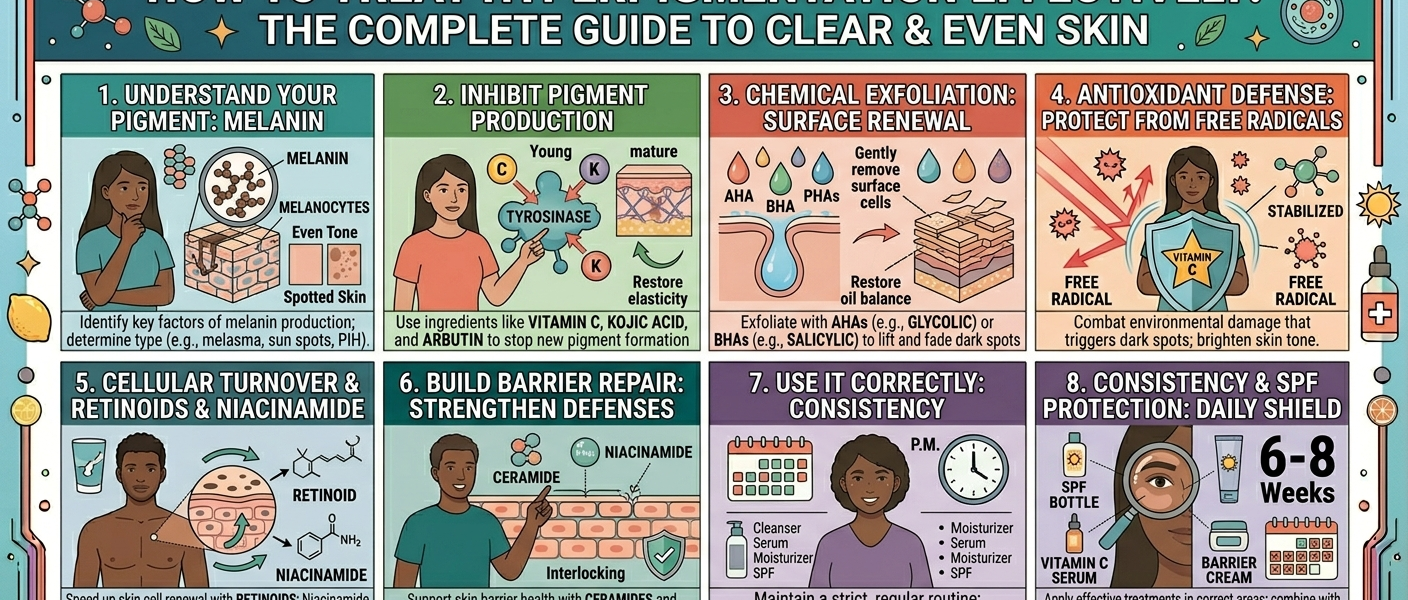
Treating hyperpigmentation requires patience, consistency, and the right combination of skincare ingredients and protective habits. In this article, you will learn about How to Treat Hyperpigmentation Effectively: The Complete Guide to Clear and Even Skin the best treatment ingredients, dermatologist approved skincare routines, professional procedures, and how to prevent future discoloration.
What Is Hyperpigmentation
Hyperpigmentation refers to areas of skin that become darker than the surrounding skin.
Why It Happens
The skin produces extra melanin in certain areas.
Common Forms of Hyperpigmentation
- Acne scars
- Sunspots
- Melasma
- Post inflammatory hyperpigmentation
Hyperpigmentation can affect all skin tones and skin types.
Understanding Melanin and Skin Pigment
Melanin is the pigment that gives skin its color.
What Triggers Excess Melanin
- UV exposure
- Inflammation
- Hormonal changes
- Skin injuries
When melanin production becomes uneven, dark spots may develop.
Common Causes of Hyperpigmentation
Understanding the cause helps determine the best treatment approach.
Sun Damage
UV exposure is one of the biggest causes of pigmentation.
Effects of UV Rays
- Sunspots
- Uneven skin tone
- Premature aging
Daily sunscreen is essential for prevention.
Acne and Post Inflammatory Hyperpigmentation
Acne often leaves dark marks after healing.
Why Acne Causes Pigmentation
Inflammation stimulates melanin production.
People with deeper skin tones are often more prone to post inflammatory hyperpigmentation.
Hormonal Changes and Melasma
Melasma is commonly linked to hormonal fluctuations.
Common Triggers
- Pregnancy
- Birth control
- Hormonal changes
Melasma often appears on the cheeks, forehead, and upper lip.
Skin Injuries and Irritation
Cuts, burns, and irritation may also cause discoloration.
Common Examples
- Picking acne
- Aggressive skincare treatments
- Harsh exfoliation
Protecting the skin barrier helps reduce inflammation.
Why Sunscreen Is Essential for Hyperpigmentation
Sunscreen is one of the most important tools for preventing dark spots.
Benefits of Sunscreen
- Prevents further pigmentation
- Protects healing skin
- Reduces UV damage
Dermatologists recommend SPF 30 or higher daily.
Brands like Supergoop! and EltaMD are widely recommended.
Best Ingredients for Treating Hyperpigmentation
Several skincare ingredients are scientifically proven to improve discoloration.
Vitamin C
Vitamin C is one of the most popular brightening ingredients.
Benefits
- Brightens skin tone
- Reduces dark spots
- Protects against environmental damage
- Supports collagen production
Vitamin C works especially well in morning skincare routines.
Retinol
Retinol supports faster skin cell turnover.
Benefits for Hyperpigmentation
- Fades acne marks
- Improves texture
- Supports collagen production
Retinol should be introduced slowly to reduce irritation.
Brands like The Ordinary and CeraVe offer popular retinol products.
Niacinamide
Niacinamide is highly versatile and gentle.
Benefits
- Brightens uneven tone
- Reduces redness
- Supports skin barrier health
- Helps oil control
Sensitive skin often tolerates niacinamide well.
Azelaic Acid
Azelaic acid is highly recommended by dermatologists.
Benefits
- Reduces pigmentation
- Calms inflammation
- Helps acne prone skin
It works especially well for post inflammatory hyperpigmentation.
Alpha Arbutin
Alpha arbutin helps reduce melanin production.
Benefits
- Brightens dark spots
- Supports even skin tone
- Gentle for many skin types
It is often combined with vitamin C or niacinamide.
Kojic Acid
Kojic acid is commonly used in brightening products.
Benefits
- Reduces pigmentation
- Improves uneven skin tone
It should be used carefully to avoid irritation.
Exfoliating Acids for Hyperpigmentation
Chemical exfoliants help remove pigmented skin cells.
Glycolic Acid
Glycolic acid improves skin renewal.
Benefits
- Smooths texture
- Brightens dull skin
- Supports fading of dark spots
Lactic Acid
Lactic acid is gentler than glycolic acid.
Benefits
- Hydrates while exfoliating
- Improves skin brightness
It works well for dry or sensitive skin.
Salicylic Acid
Salicylic acid is especially useful for acne prone skin.
Benefits
- Unclogs pores
- Reduces acne
- Helps prevent future marks
Balanced exfoliation is important to avoid irritation.
How to Build a Hyperpigmentation Skincare Routine
Consistency is essential for visible results.
Morning Routine
Recommended Steps
- Gentle cleanser
- Vitamin C serum
- Moisturizer
- Sunscreen
Morning routines focus on protection and brightening.
Evening Routine
Recommended Steps
- Cleanser
- Retinol or treatment serum
- Moisturizer
Night routines support skin repair and renewal.
The Importance of Gentle Skincare
Aggressive skincare may worsen pigmentation.
Avoid
- Harsh scrubs
- Over exfoliation
- Excessive active ingredients
Healthy skin barriers support better healing.
Hyperpigmentation and Skin Barrier Health
Damaged skin barriers increase inflammation.
Why Barrier Repair Matters
- Reduces irritation
- Supports healing
- Improves treatment tolerance
Ingredients like ceramides and hyaluronic acid help support recovery.
Professional Treatments for Hyperpigmentation
Some people choose professional procedures for faster results.
Chemical Peels
Chemical peels exfoliate pigmented skin layers.
Benefits
- Brighter skin tone
- Improved texture
- Faster fading of spots
Professional guidance is recommended.
Laser Treatments
Lasers target excess melanin directly.
Benefits
- Improved pigmentation
- More even skin tone
Laser treatments should be performed by trained professionals.
Microneedling
Microneedling supports collagen production and skin renewal.
Benefits
- Improved texture
- Reduced acne scars
- Enhanced product absorption
Professional treatments may complement skincare routines.
How Long Hyperpigmentation Treatment Takes
Results require patience and consistency.
Typical Timelines
- Mild pigmentation: several weeks
- Deeper pigmentation: several months
Long term habits provide better results.
Common Mistakes That Worsen Hyperpigmentation
Skipping Sunscreen
UV exposure darkens pigmentation.
Picking Acne
Inflammation increases post acne marks.
Over Exfoliating
Excess irritation worsens discoloration.
Using Too Many Products
Complicated routines may damage the skin barrier.
Simple routines are often more effective.
Hyperpigmentation in Different Skin Tones
Hyperpigmentation affects all skin tones differently.
Deeper Skin Tones
More melanin may increase the risk of post inflammatory pigmentation.
Gentle treatment approaches are especially important.
The Role of Lifestyle in Skin Brightening
Lifestyle habits strongly affect skin health.
Important Habits
- Healthy diet
- Hydration
- Sleep
- Stress management
Balanced lifestyles support healthier skin.
Nutrition and Skin Health
Certain nutrients support brighter skin.
Helpful Nutrients
- Antioxidants
- Vitamin C rich foods
- Omega 3 fatty acids
Healthy diets support overall skin function.
Social Media and Hyperpigmentation Trends
Social media has increased skincare awareness dramatically.
Beauty creators often share:
- Product reviews
- Before and after photos
- Ingredient education
- Dermatologist interviews
However, skincare should always be personalized.
Clean Beauty and Brightening Products
Consumers increasingly prefer:
- Fragrance free skincare
- Cruelty free brands
- Sustainable packaging
- Gentle formulations
The skincare industry continues evolving toward safer formulations.
Hyperpigmentation Myths and Misconceptions
Myth 1 Dark Spots Fade Overnight
Treatment requires patience and consistency.
Myth 2 Stronger Products Work Faster
Harsh products may worsen irritation and pigmentation.
Myth 3 Sunscreen Is Only Needed Outdoors
Daily UV exposure affects pigmentation even indoors near windows.
Understanding skincare science helps avoid mistakes.
The Future of Hyperpigmentation Treatments
Future skincare innovations may include:
- Personalized skincare formulas
- Biotechnology brightening ingredients
- AI skin analysis
- Advanced laser technologies
Scientific research continues improving pigmentation treatments.
These resources provide trusted skincare education and ingredient research.
Conclusion
Hyperpigmentation is a common skincare concern, but modern skincare science offers many effective ways to improve uneven skin tone and dark spots safely. Ingredients like vitamin C, retinol, niacinamide, azelaic acid, and sunscreen can significantly improve skin brightness and support healthier skin over time.
The key to treating hyperpigmentation effectively is patience, consistency, and protecting the skin barrier. Aggressive treatments and unrealistic expectations often cause more harm than good. Instead, balanced skincare routines and long term healthy habits usually produce the best results.
Healthy skin is not about perfection. It is about maintaining balance, protecting the skin, and making informed skincare choices that support long term skin health and confidence.
FAQs
What causes hyperpigmentation?
Hyperpigmentation is caused by excess melanin production due to sun exposure, acne, inflammation, or hormonal changes.
Can vitamin C fade dark spots?
Yes, vitamin C helps brighten skin and reduce pigmentation gradually.
Is sunscreen necessary for hyperpigmentation?
Yes, sunscreen prevents dark spots from becoming worse.
How long does hyperpigmentation treatment take?
Results may take several weeks or months depending on severity.
Can retinol help acne marks?
Yes, retinol supports faster skin renewal and fading of acne scars.
Is hyperpigmentation permanent?
Most pigmentation can improve significantly with consistent treatment.
What is the best skincare routine for dark spots?
A simple routine with cleanser, treatment serum, moisturizer, and sunscreen is often effective.