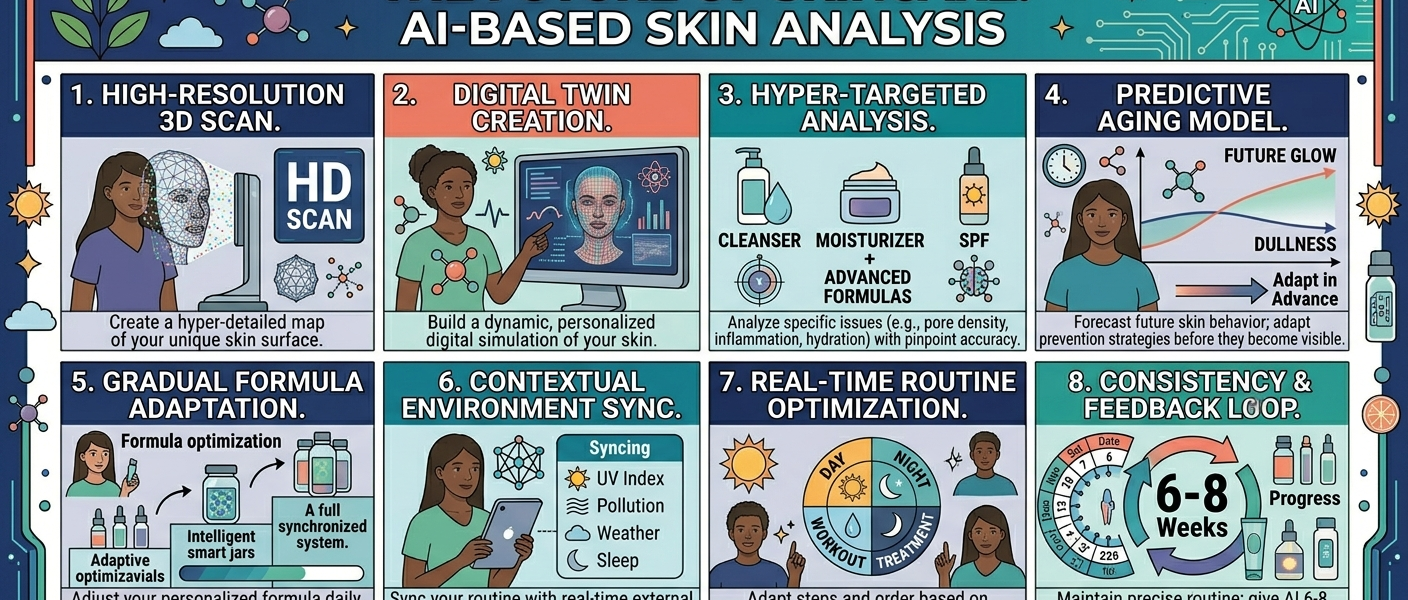
The skincare industry is evolving rapidly with the help of artificial intelligence and advanced beauty technology. AI-based skin analysis is becoming one of the most exciting innovations in modern skincare because it allows consumers to receive personalized skincare recommendations based on their unique skin conditions and concerns. Instead of relying only on trial and error, many people can now use AI powered tools to better understand their skin and create more effective skincare routines.
Technology has changed the beauty industry dramatically over the past decade. Social media platforms like TikTok, Instagram, and YouTube have increased skincare awareness while also introducing consumers to ingredient education, personalized beauty, and smart skincare devices. At the same time, artificial intelligence has allowed beauty companies to collect and analyze skin data in ways that were previously impossible.
AI based skincare tools can now evaluate concerns such as:
- Acne
- Wrinkles
- Hyperpigmentation
- Dryness
- Oiliness
- Pore size
- Skin sensitivity
- Fine lines
Many beauty brands and skincare companies are investing heavily in artificial intelligence because consumers increasingly want customized skincare solutions rather than generic beauty advice.
In this article, you will learn The Future of Skincare: AI-Based Skin Analysis works, its benefits, future innovations, challenges, ethical concerns, and how technology is shaping the future of personalized skincare.
What Is AI-Based Skin Analysis
AI-based skin analysis uses artificial intelligence to evaluate the condition of the skin.
How It Works
AI systems analyze skin data through:
- Smartphone cameras
- Facial scanning
- Smart mirrors
- Skin imaging devices
The technology identifies patterns and provides skincare recommendations.
The Rise of Beauty Technology
Beauty technology has become one of the fastest growing parts of the skincare industry.
Why Consumers Want Smart Skincare
People increasingly seek:
- Personalized routines
- Faster results
- Better ingredient recommendations
- Convenient skincare tools
Technology helps make skincare more customized and data driven.
How Artificial Intelligence Works in Skincare
Artificial intelligence systems use algorithms and machine learning.
What AI Analyzes
- Skin texture
- Pigmentation
- Wrinkles
- Acne severity
- Oil production
- Hydration levels
The system compares skin patterns with large skincare databases.
Machine Learning and Skin Data
Machine learning allows AI systems to improve over time.
How It Improves Accuracy
The system learns from:
- User feedback
- Skin images
- Treatment outcomes
This continuous learning helps provide more personalized skincare advice.
Smartphone Skin Analysis Apps
Many skincare companies now offer AI powered mobile applications.
Common Features
- Selfie skin scans
- Progress tracking
- Product recommendations
- Daily skincare reminders
Consumers appreciate the convenience of at home analysis.
Smart Mirrors and Beauty Devices
Smart beauty mirrors are becoming increasingly popular.
Features
- High resolution skin scanning
- Hydration measurement
- Wrinkle analysis
- UV damage detection
These devices bring professional style analysis into homes.
Personalized Skincare Recommendations
One of the biggest benefits of AI skincare is personalization.
Personalized Advice May Include
- Cleansers
- Moisturizers
- Sunscreens
- Serums
- Anti-aging products
Customized routines may improve product effectiveness.
AI and Acne Detection
AI technology can help analyze acne severity.
What AI May Detect
- Active breakouts
- Redness
- Acne patterns
- Inflammation
This helps users track changes over time.
AI and Anti-Aging Analysis
AI systems can evaluate visible aging signs.
Common Concerns Analyzed
- Fine lines
- Wrinkles
- Skin elasticity
- Texture changes
Personalized anti-aging routines are becoming increasingly popular.
AI and Hyperpigmentation Tracking
Artificial intelligence can monitor pigmentation changes.
Benefits
- Detects dark spots
- Tracks treatment progress
- Suggests brightening ingredients
Consistent tracking helps users understand long term improvements.
AI and Skin Hydration Monitoring
Hydration is essential for healthy skin.
AI Hydration Features
- Measures moisture levels
- Identifies dehydration signs
- Recommends hydrating products
Hydration tracking supports healthier skin barriers.
AI and Sensitive Skin Detection
Sensitive skin often requires personalized care.
AI May Help Identify
- Redness patterns
- Irritation triggers
- Barrier damage
Gentle skincare recommendations may improve skin comfort.
AI and Preventive Skincare
Future skincare technology may focus heavily on prevention.
Potential Benefits
- Early detection of skin changes
- Personalized prevention strategies
- Improved skincare consistency
Preventive skincare may become more advanced through AI.
Virtual Dermatology and Telemedicine
AI is also transforming virtual skincare consultations.
Benefits of Virtual Dermatology
- Faster access to advice
- Remote skincare guidance
- Convenient consultations
Technology makes skincare support more accessible.
AI and Dermatologist Collaboration
Artificial intelligence is designed to support professionals rather than replace them.
How Dermatologists Use AI
- Skin imaging analysis
- Progress tracking
- Personalized treatment planning
Professional expertise remains extremely important.
Benefits of AI-Based Skin Analysis
AI skincare technology offers multiple advantages.
Personalization
Customized skincare routines are more targeted.
Benefits
- Better ingredient matching
- Improved routine consistency
- Reduced product confusion
Convenience
Users can analyze their skin from home.
Benefits
- Time saving
- Accessible technology
- Easy routine management
Data Tracking
AI systems monitor skin changes over time.
Helpful Insights
- Progress photos
- Treatment effectiveness
- Skin condition patterns
Tracking encourages long term skincare consistency.
AI and Consumer Behavior in Beauty
Consumers increasingly value personalized beauty experiences.
Modern Beauty Trends
- Ingredient focused skincare
- Minimalist routines
- Skin barrier repair
- Technology based beauty tools
The beauty industry continues shifting toward customization.
Popular Beauty Brands Using AI Technology
Several major beauty companies are investing in AI.
Brands like L’Oréal, Neutrogena, and Shiseido have explored AI powered skincare tools and personalized beauty technology.
AI and Product Recommendations
AI systems may suggest products based on skin analysis.
Recommendations May Include
- Hydrating serums
- Acne treatments
- Sunscreens
- Barrier repair products
Personalized shopping experiences are becoming more common.
AI and Ingredient Education
Consumers now want to understand skincare ingredients better.
AI Tools May Explain
- Ingredient benefits
- Skin compatibility
- Product layering
Education focused technology improves skincare awareness.
AI and Skin Barrier Health
Healthy skin barriers are essential for balanced skin.
AI Can Help Monitor
- Dryness
- Sensitivity
- Moisture loss
- Redness
Barrier focused skincare continues growing in popularity.
Ethical Concerns and Privacy Issues
AI skincare technology also raises important concerns.
Data Privacy
Skin scans and facial images involve personal data.
Consumer Concerns
- Image storage
- Data protection
- Privacy risks
Companies must prioritize transparency and security.
Accuracy and Bias
AI systems are only as accurate as their training data.
Potential Challenges
- Limited skin tone representation
- Misdiagnosis risks
- Inaccurate recommendations
Inclusive data is essential for fair skincare analysis.
Over Reliance on Technology
Technology should not completely replace professional care.
Why Professional Advice Still Matters
Dermatologists provide deeper medical expertise and diagnosis.
AI works best as a supportive tool.
AI and Inclusive Beauty
The beauty industry increasingly recognizes diverse skin needs.
Importance of Inclusivity
AI systems should work effectively across:
- Different skin tones
- Various ages
- Multiple skin conditions
Inclusive technology improves skincare accessibility.
The Role of Augmented Reality in Beauty
Augmented reality is also shaping beauty experiences.
AR Features
- Virtual skincare simulations
- Makeup try-ons
- Treatment previews
Technology creates more interactive beauty experiences.
Smart Skincare Devices for Home Use
Home skincare technology continues expanding.
Popular Devices
- LED masks
- Facial scanners
- Skin hydration sensors
Consumers increasingly combine skincare with beauty technology.
AI and Sustainable Beauty
Technology may also improve sustainability.
Potential Benefits
- Reduced product waste
- Smarter purchasing decisions
- Personalized product quantities
Sustainable beauty is becoming more important globally.
The Future of Personalized Skincare
Future skincare routines may become highly customized.
Future Innovations May Include
- DNA based skincare
- Real time skin monitoring
- Personalized formulations
- AI generated routines
Technology may continue making skincare more precise.
AI and Biotechnology in Skincare
Biotechnology is becoming increasingly important in beauty science.
Innovations May Include
- Lab created skincare ingredients
- Personalized active ingredients
- Advanced skin repair technology
Scientific advancements continue transforming skincare.
Social Media and AI Skincare Trends
Social media strongly influences beauty technology trends.
Beauty creators frequently discuss:
- AI skincare apps
- Smart beauty tools
- Ingredient analysis
- Personalized skincare routines
Consumers today are more informed and technology focused than ever before.
Minimalist Beauty and AI
AI may support simpler skincare routines.
Benefits
- Fewer unnecessary products
- Better ingredient targeting
- Improved skincare efficiency
Personalized routines often reduce product overload.
Challenges Facing AI Skincare Technology
Despite exciting innovations, challenges remain.
Common Challenges
- High technology costs
- Accuracy limitations
- Privacy concerns
- Consumer skepticism
The industry must continue improving transparency and reliability.
The Future Relationship Between Humans and Beauty Technology
Technology will likely become more integrated into everyday skincare.
Future Possibilities
- Smart bathroom mirrors
- AI powered beauty assistants
- Automated skincare tracking
However, human expertise and healthy habits will still remain important
These resources provide valuable information about skincare science, beauty innovation, and future skincare technology.
Conclusion
AI-based skin analysis is transforming the skincare industry by making beauty routines more personalized, accessible, and data driven. From acne tracking to hydration monitoring and anti-aging analysis, artificial intelligence is helping consumers better understand their skin and make more informed skincare decisions.
Technology offers exciting opportunities for personalization and convenience, but it should complement rather than replace professional dermatology expertise. Healthy skin still depends on consistency, balanced skincare habits, sun protection, hydration, and long term care.
As artificial intelligence, biotechnology, and beauty technology continue evolving, the future of skincare will likely become more customized, efficient, and science focused than ever before. Consumers can expect smarter skincare experiences that combine innovation, education, and personalized beauty solutions for healthier skin.
FAQs
What is AI-based skin analysis?
AI-based skin analysis uses artificial intelligence to evaluate skin conditions and provide personalized skincare recommendations.
How does AI skincare work?
AI systems analyze skin images and compare them with skincare databases using machine learning algorithms.
Can AI detect acne and wrinkles?
Yes, many AI tools can identify acne, fine lines, wrinkles, and pigmentation concerns.
Is AI skincare accurate?
AI technology continues improving, but professional dermatology advice is still important.
Are AI skincare apps safe?
Most reputable apps focus on data security, but users should review privacy policies carefully.
Can AI replace dermatologists?
No, AI is designed to support skincare analysis, not fully replace medical professionals.
What is the future of AI in skincare?
Future innovations may include personalized skincare formulas, smart devices, DNA based skincare, and advanced skin tracking technology.