The Science Behind Anti-Aging Skincare Products Explained
The science behind anti-aging skincare products is based on understanding how skin biologically ages and how topical formulations can influence those aging processes. Skin aging is not just a cosmetic concern—it is a complex interaction of cellular decline, environmental exposure, and biochemical changes within the skin layers. Anti-aging skincare products are designed to target these processes using scientifically studied ingredients that support skin repair, hydration, and structural integrity.
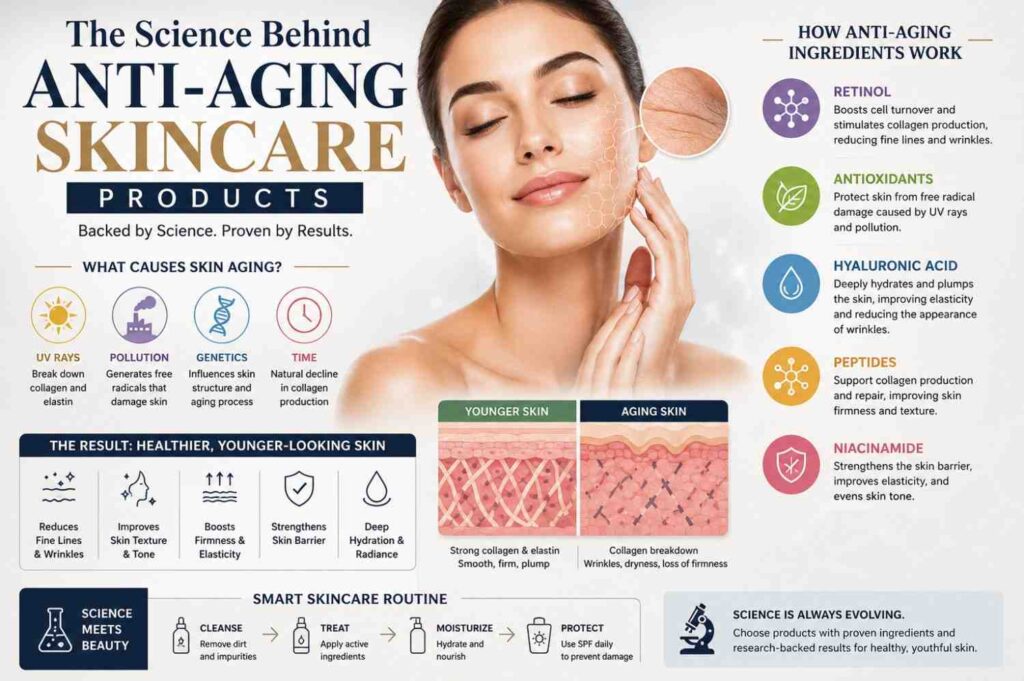
When we talk about The Science Behind Anti-Aging Skincare Products, we are referring to how ingredients like retinol, vitamin C, peptides, and hyaluronic acid interact with skin cells at a molecular level. These ingredients are not randomly chosen; they are backed by dermatological research that studies their effect on collagen production, oxidative stress reduction, and skin barrier repair.
In simple terms, these products aim to slow down visible signs of aging such as fine lines, wrinkles, sagging, and dullness. They do this by improving the skin’s natural ability to regenerate and defend itself against environmental damage like UV rays and pollution.
Modern skincare science has evolved significantly over the past few decades. Today, formulations are developed using clinical trials, laboratory testing, and advanced delivery systems that ensure active ingredients penetrate the skin effectively. This makes anti-aging skincare more targeted and evidence-based than ever before.
Understanding The Science Behind Anti-Aging Skincare Products
Anti-aging skincare is a field rooted in dermatological science, biochemistry, and cosmetic formulation research. When we explore The Science Behind Anti-Aging Skincare Products, we are essentially looking at how scientifically developed ingredients interact with skin biology to slow visible aging signs. This includes understanding how skin structure changes over time, how external factors accelerate damage, and how topical formulations attempt to restore or support natural skin functions.
From a scientific standpoint, skin aging is not a sudden process. It is gradual and influenced by both internal genetic factors and external environmental exposure. Over time, the skin loses moisture retention ability, collagen production slows down, and cellular repair mechanisms become less efficient. Anti-aging skincare products aim to address these changes through targeted active ingredients designed to support skin regeneration and protection.
Modern dermatology has played a crucial role in shaping this industry. Research from institutions such as the American Academy of Dermatology and clinical studies indexed on NIH databases have helped identify which compounds truly influence skin aging pathways. This scientific foundation has transformed skincare from simple cosmetic care into evidence-based skin health management.
Ultimately, understanding this section helps users realize that anti-aging products are not magic solutions but carefully engineered formulations designed to support biological processes at the skin level.
What Makes Skin Age Over Time
Skin aging is a complex biological process influenced by both intrinsic aging (natural aging) and extrinsic aging (environmental damage). Intrinsic aging is genetically determined and occurs naturally as we grow older. This includes slower collagen production, reduced oil secretion, and decreased skin elasticity.
Extrinsic aging, on the other hand, is caused by external stressors such as UV exposure, pollution, smoking, and poor lifestyle habits. These factors accelerate skin damage by breaking down collagen fibers and triggering inflammation at the cellular level. Over time, this leads to fine lines, wrinkles, pigmentation, and uneven skin texture.
Another important factor is reduced skin barrier efficiency. As the skin ages, it becomes less capable of retaining moisture and protecting itself from irritants. This makes it more prone to dryness and sensitivity. Understanding these causes is essential because anti-aging skincare products are designed specifically to target and slow down these biological changes.
Role of Dermatological Research in Skincare
Dermatological research is the backbone of modern anti-aging skincare formulations. Scientists study how skin cells behave under different conditions and how specific ingredients influence cellular activity. This research has led to breakthroughs in understanding collagen synthesis, skin hydration mechanisms, and oxidative stress reduction.
Organizations like the American Academy of Dermatology (AAD) and medical research platforms such as PubMed provide peer-reviewed studies that guide product development. These studies validate ingredients like retinol, vitamin C, and peptides, confirming their role in improving skin texture and elasticity.
In addition, dermatologists conduct clinical trials to measure product effectiveness on real human skin over time. This ensures that claims made by skincare brands are supported by scientific evidence rather than marketing exaggeration. As a result, consumers today have access to more reliable and scientifically validated anti-aging solutions than ever before.
How Skin Ages: Biological Mechanisms
To fully understand The Science Behind Anti-Aging Skincare Products, it is important to examine the biological mechanisms behind skin aging. Skin is a living organ composed of multiple layers, including the epidermis, dermis, and subcutaneous tissue. Each layer plays a specific role in maintaining skin health, structure, and appearance.
As we age, these layers undergo structural and functional changes. The dermis, which contains collagen and elastin, becomes thinner and less supportive. The epidermis slows down its cell renewal cycle, resulting in dull and rough skin texture. Meanwhile, the skin’s ability to retain hydration decreases significantly.
These internal changes are further accelerated by environmental exposure, particularly ultraviolet radiation. UV rays penetrate deep into the skin and cause long-term damage at the cellular level, leading to premature aging.
Understanding these biological mechanisms helps explain why anti-aging skincare products focus on hydration, collagen stimulation, and antioxidant protection. They are designed to target these exact processes in order to slow visible aging signs and improve overall skin resilience.
Collagen and Elastin Breakdown
Collagen and elastin are two essential proteins responsible for maintaining skin structure, firmness, and elasticity. Collagen provides structural support, while elastin allows the skin to stretch and return to its original shape. Together, they keep the skin youthful and resilient.
As we age, collagen production naturally declines, and existing collagen fibers become fragmented. This leads to sagging skin, fine lines, and reduced firmness. Elastin fibers also lose their flexibility, making the skin less elastic over time.
Environmental factors like UV exposure and pollution accelerate this breakdown process by activating enzymes that degrade collagen. Anti-aging skincare products aim to counter this by stimulating fibroblast cells, which are responsible for producing new collagen and elastin.
Oxidative Stress and Free Radicals
Oxidative stress occurs when there is an imbalance between free radicals and antioxidants in the skin. Free radicals are unstable molecules generated by UV rays, pollution, and even normal metabolic processes. These molecules damage skin cells by attacking proteins, lipids, and DNA.
Over time, this damage accumulates and contributes to visible signs of aging such as wrinkles, pigmentation, and loss of elasticity. Anti-aging skincare products often include antioxidants like vitamin C and vitamin E to neutralize free radicals and reduce oxidative stress.
By restoring balance at the cellular level, antioxidants help protect skin structure and slow down premature aging. This is one of the most scientifically supported mechanisms in modern skincare.
Slower Cell Turnover
Cell turnover refers to the process by which the skin sheds old cells and replaces them with new ones. In younger skin, this cycle typically takes around 28 days. However, as we age, this process slows significantly, sometimes taking up to 45–60 days.
Slower cell turnover leads to a buildup of dead skin cells on the surface, resulting in dullness, uneven tone, and rough texture. Anti-aging skincare products such as retinoids help accelerate this process, encouraging faster renewal and healthier-looking skin.
Key Active Ingredients in Anti-Aging Skincare
The effectiveness of anti-aging skincare products largely depends on their active ingredients. These compounds are carefully selected based on scientific research and clinical testing. Each ingredient targets specific skin concerns such as wrinkles, dryness, pigmentation, or loss of elasticity.
Modern formulations often combine multiple active ingredients to provide a multi-functional approach. This includes hydration support, antioxidant protection, and collagen stimulation. Understanding these ingredients helps consumers make informed decisions about their skincare routines.
Retinol and Retinoids
Retinol, a derivative of vitamin A, is one of the most extensively studied ingredients in anti-aging skincare. It works by increasing skin cell turnover and stimulating collagen production in the dermis.
With consistent use, retinol can improve fine lines, uneven texture, and hyperpigmentation. However, it must be introduced gradually into a skincare routine because it can cause initial irritation or dryness.
Clinical studies have shown that retinoids significantly improve visible signs of aging over time when used correctly. This makes them a gold-standard ingredient in dermatology.
Vitamin C and Antioxidants
Vitamin C is a powerful antioxidant that protects the skin from environmental damage while supporting collagen synthesis. It helps brighten the skin and reduce pigmentation caused by sun exposure.
Antioxidants work by neutralizing free radicals, preventing them from damaging skin cells. This helps maintain a healthier and more even complexion.
In addition to vitamin C, other antioxidants such as ferulic acid and vitamin E are often used in combination to enhance stability and effectiveness.
Hyaluronic Acid and Peptides
Hyaluronic acid is a naturally occurring molecule in the skin that retains moisture. It can hold up to 1,000 times its weight in water, making it extremely effective for hydration.
Peptides are short chains of amino acids that signal the skin to produce more collagen. They help improve firmness and elasticity over time.
Together, these ingredients support skin hydration and structural repair, making them essential components of modern anti-aging formulations.
How Anti-Aging Skincare Products Work at Cellular Level
Anti-aging skincare products work by interacting directly with the skin’s biological systems at a cellular level, where real aging processes actually occur. The skin is not just a surface layer; it is a living organ made up of cells that continuously repair, regenerate, and respond to internal and external signals. When applied correctly, active ingredients in skincare products are designed to influence these cellular functions in ways that help slow visible aging and improve overall skin health.
At the core of this process is the ability of active ingredients to penetrate the outermost layer of the skin, known as the stratum corneum. Once this barrier is partially bypassed or supported through advanced formulation techniques, ingredients can reach deeper layers such as the epidermis and dermis. These are the layers where collagen production, hydration balance, and cell regeneration are actively controlled. By influencing these processes, skincare products can improve skin texture, elasticity, and firmness over time.
However, this cellular interaction is not simple or guaranteed. It depends heavily on formulation science, ingredient stability, molecular size, and delivery systems. Some ingredients are naturally small enough to penetrate the skin easily, while others require specialized carriers such as liposomes, nano-emulsions, or encapsulated delivery systems to enhance absorption. Without these technologies, even highly effective ingredients may remain on the surface and provide limited benefits.
Skin Barrier Penetration and Absorption
The outer layer of the skin, known as the stratum corneum, acts as a protective barrier. For active ingredients to be effective, they must penetrate this barrier.
Formulation technologies such as liposomes and nano-encapsulation help improve ingredient delivery. These systems ensure that active compounds reach deeper layers where they can influence skin behavior.
Collagen Synthesis Activation
Certain ingredients stimulate fibroblast cells in the dermis, encouraging them to produce more collagen. This helps restore skin structure and reduce the appearance of wrinkles.
Over time, increased collagen production improves skin firmness and elasticity, making the skin appear more youthful.
Hydration and Barrier Repair
A strong skin barrier is essential for maintaining hydration and protecting against irritants. Ingredients like ceramides and hyaluronic acid help repair this barrier and prevent moisture loss.
This improves overall skin health and enhances its ability to respond to other active ingredients.
Evidence-Based Benefits and Limitations
When evaluating The Science Behind Anti-Aging Skincare Products, it is important to separate scientifically proven benefits from marketing claims. Evidence-based skincare refers to results that are supported by clinical studies, dermatological research, and controlled trials rather than anecdotal opinions or advertising promises. This section helps us understand what anti-aging products can realistically achieve and where their limitations begin.
From a scientific perspective, many anti-aging skincare ingredients have been tested under laboratory and clinical conditions. These studies measure improvements in hydration, skin texture, wrinkle depth, elasticity, and pigmentation over a defined period of usage. Ingredients like retinoids, vitamin C, peptides, and hyaluronic acid consistently show measurable improvements when used correctly and consistently. However, these results are gradual and depend on factors such as skin type, product formulation, and user compliance.
At the same time, it is equally important to acknowledge that skincare has biological limits. While topical products can significantly improve skin quality, they cannot completely reverse deep structural aging or genetic factors. Aging is a multi-layered biological process that involves changes in fat distribution, bone structure, and hormonal levels—none of which can be fully corrected by creams or serums alone.
Clinically Proven Improvements
Clinical research consistently shows that key anti-aging ingredients such as retinol, peptides, antioxidants, and hyaluronic acid can deliver measurable improvements in skin health over time. These improvements include better hydration, smoother texture, reduced fine lines, and improved overall skin tone. Retinol enhances cell turnover and supports collagen production, while peptides help signal skin cells to repair and rebuild structural proteins. Antioxidants like vitamin C protect against free radical damage, which helps slow down visible aging and supports a brighter complexion.
However, these benefits do not appear instantly. Most clinical studies show that visible improvements typically begin after several weeks of consistent use, with more noticeable results appearing after 8–12 weeks. The skin follows natural biological cycles, so gradual change is expected rather than immediate transformation. Consistency and correct product usage play a major role in achieving these scientifically supported results.
Limitations of Topical Skincare
Although anti-aging skincare products are effective in improving surface-level skin quality, they have clear biological limitations. These products mainly work on the epidermis and upper dermis, meaning they cannot fully address deeper structural changes such as fat loss, bone resorption, or severe collagen depletion. As a result, deep wrinkles, pronounced sagging, and volume loss cannot be completely corrected through topical treatments alone.
For more advanced signs of aging, medical or cosmetic procedures such as fillers, laser therapy, or dermatological interventions are often required. Additionally, results vary significantly between individuals due to genetics, lifestyle, and environmental exposure. This is why skincare should be viewed as a supportive and preventive strategy rather than a complete solution for advanced aging.
Importance of Consistency
Consistency is one of the most important factors in achieving visible and long-lasting results from anti-aging skincare products. Active ingredients like retinol and peptides work gradually by influencing skin cell behavior, collagen production, and renewal cycles. These biological processes require continuous stimulation, which only happens when products are used regularly over time.
When skincare is used inconsistently, the skin does not receive stable support for repair and regeneration, which reduces overall effectiveness. Most users begin to notice improvements after 4 to 12 weeks of regular application, depending on the product and skin type. Consistent use also helps the skin build tolerance to active ingredients, reducing irritation and improving long-term results.
How to Choose the Right Anti-Aging Skincare Routine
Choosing the right anti-aging skincare routine is not about using the most expensive products, but about understanding your skin’s unique needs and selecting ingredients that support its biological function. Since skin aging is influenced by hydration levels, collagen loss, sun exposure, and lifestyle habits, a well-structured routine should focus on protection, repair, and long-term maintenance.
A good anti-aging routine is built on simplicity and consistency rather than complexity. Overloading the skin with too many active ingredients can lead to irritation and barrier damage, which may actually accelerate visible aging. The goal is to create a balanced routine that supports skin health while targeting specific concerns like fine lines, dullness, or loss of firmness.
Understanding Your Skin Type
Understanding your skin type is the foundation of any effective anti-aging skincare routine. Each skin type—dry, oily, combination, or sensitive—reacts differently to active ingredients such as retinol, acids, and antioxidants. For example, sensitive skin may experience irritation from strong actives and therefore benefits from gentler formulations with soothing ingredients like niacinamide or ceramides.
Oily skin, on the other hand, can often tolerate stronger formulations and may benefit from lightweight, oil-free products that include salicylic acid or retinoids. Dry skin requires deeper hydration support through ingredients like hyaluronic acid and fatty acids. Identifying your skin type ensures that your routine works with your skin rather than against it, reducing irritation and improving long-term results.
Building a Simple Routine
A simple and effective anti-aging skincare routine does not need to be complicated. The core structure usually includes four essential steps: cleansing, treatment serum, moisturizing, and sun protection. Each step plays a specific role in maintaining skin health and preventing premature aging.
Cleansing removes dirt and pollutants, serums deliver active ingredients directly into the skin, moisturizers help maintain hydration, and sunscreen protects against UV damage. When used consistently, this simple structure is scientifically proven to improve skin texture, hydration, and overall resilience without overwhelming the skin barrier.
Sun Protection as a Core Step
Sun protection is the most important part of any anti-aging skincare routine because UV radiation is the leading cause of premature skin aging. Continuous exposure to the sun breaks down collagen and elastin fibers, leading to wrinkles, pigmentation, and loss of skin firmness over time.
Daily use of sunscreen helps protect the skin from both UVA and UVB rays, preventing long-term damage at the cellular level. Dermatologists strongly recommend sunscreen even on cloudy days or indoors near windows, as UV rays can still penetrate and affect the skin. Without sun protection, even the best anti-aging products lose much of their effectiveness.
Common Myths and Misconceptions
There are many misconceptions surrounding anti-aging skincare, often driven by marketing claims and unrealistic expectations. Understanding the truth behind these myths helps users make more informed decisions and avoid disappointment when using skincare products.
Scientific research shows that anti-aging skincare works gradually and supports skin health over time rather than delivering instant or dramatic transformations. Clearing these myths is essential for building realistic expectations and long-term consistency.
Anti-aging creams erase wrinkles instantly
One of the most common misconceptions is that anti-aging creams can erase wrinkles instantly. In reality, skin is a biological system that requires time to regenerate and respond to active ingredients. Processes like collagen production and cell turnover occur gradually, not overnight.
Most clinically proven ingredients such as retinol or peptides take several weeks or even months to show visible improvements. These products improve skin texture and reduce fine lines over time, but they cannot provide immediate or permanent wrinkle removal like cosmetic procedures.
Natural products are always better
Another widespread myth is that natural skincare products are automatically safer or more effective. While natural ingredients can be beneficial, effectiveness depends on formulation, stability, and concentration—not just origin.
Some synthetic ingredients are actually more stable and clinically proven than natural extracts. For example, laboratory-developed retinol has more consistent results compared to many natural alternatives. What matters most is scientific evidence and formulation quality rather than whether an ingredient is natural or synthetic.
Only older people need anti-aging care
Many people believe that anti-aging skincare is only necessary after wrinkles appear, but this is incorrect. Preventive skincare is most effective when started early, typically in the mid-20s or early 30s.
At this stage, the goal is not to reverse aging but to slow it down by protecting collagen, maintaining hydration, and preventing UV damage. Early care helps reduce the severity of visible aging later in life and supports long-term skin health.
Future of Anti-Aging Skincare Science
The future of anti-aging skincare is rapidly evolving due to advancements in biotechnology, dermatological research, and artificial intelligence. Modern science is moving beyond basic hydration and wrinkle reduction toward personalized and regenerative skincare solutions.
These innovations aim to improve how ingredients interact with skin cells, enhance absorption, and create customized treatments based on individual skin biology. As research progresses, anti-aging skincare is becoming more precise, effective, and scientifically advanced.
Stem Cell and Peptide Research
Stem cell and peptide research is one of the most promising areas in skincare science. Stem cell technology focuses on regenerating damaged skin cells and improving the skin’s natural repair mechanisms. Although still under research in many areas, early studies show potential for improving skin renewal and healing.
Peptides, on the other hand, are already widely used in skincare and are scientifically proven to signal skin cells to produce more collagen and elastin. Advanced peptide formulations are being developed to target specific aging concerns more effectively, making them a key component of future anti-aging products.
Personalized Skincare Formulations
Personalized skincare is becoming increasingly popular with the help of artificial intelligence and skin analysis technology. Instead of using one-size-fits-all products, AI can now analyze skin type, environmental exposure, and aging patterns to recommend customized routines.
This approach improves effectiveness by targeting individual skin needs more accurately. Personalized formulations ensure that users receive the right concentration of active ingredients, reducing irritation and improving overall results.
Advanced Delivery Systems
One of the biggest challenges in skincare is ensuring that active ingredients reach the deeper layers of the skin. Advanced delivery systems such as nano-encapsulation, liposomes, and micro-carriers are being developed to solve this problem.
These technologies protect active ingredients from degradation and improve their penetration into the skin. As a result, ingredients become more effective at lower concentrations, reducing irritation while improving performance. This represents a major step forward in the science behind anti-aging skincare products.
Do anti-aging skincare products really work?
Yes, anti-aging skincare products do work when they are formulated with scientifically backed ingredients such as retinol, peptides, antioxidants, and hyaluronic acid. These ingredients are clinically studied for their ability to support skin cell renewal, improve hydration, and stimulate collagen production over time. As a result, users can notice improvements in skin texture, fine lines, and overall radiance with consistent use.
However, it is important to understand that results are not immediate and vary from person to person. Factors such as skin type, age, sun exposure, diet, and lifestyle habits all influence how effective these products will be. Anti-aging skincare works best as part of a long-term routine rather than a quick solution.
Frequently Asked Questions
The Frequently Asked Questions section helps clarify some of the most common concerns people have about anti-aging skincare products. Many users search for quick, simple answers before starting a skincare routine, especially when it comes to understanding effectiveness, ingredients, timing, and safety. These questions are based on real search intent and reflect what people typically want to know before investing in anti-aging products.
Understanding these answers can help you make more informed decisions and set realistic expectations. Anti-aging skincare works gradually through biological processes such as collagen stimulation, hydration improvement, and skin cell renewal, so it is important to understand how and when results appear.
Below are clear, science-based answers to the most frequently asked questions.
What is the best ingredient for anti-aging skin?
Retinol is widely considered one of the most effective ingredients in anti-aging skincare due to its strong ability to increase cell turnover and stimulate collagen production in the skin. Over time, this helps reduce the appearance of fine lines, improve skin texture, and even out pigmentation.
In addition to retinol, other important ingredients include vitamin C for antioxidant protection and brightening, peptides for collagen signaling, and hyaluronic acid for deep hydration. The most effective skincare routines often combine multiple ingredients to target different aspects of skin aging rather than relying on a single active.
At what age should I start anti-aging skincare?
Most dermatologists recommend starting an anti-aging skincare routine in your mid-to-late 20s. At this stage, the skin begins to naturally produce less collagen, even though visible signs of aging may not yet be obvious. Starting early helps slow down this process and provides long-term protective benefits.
The goal at this age is not to reverse aging but to prevent early damage by focusing on hydration, sun protection, and antioxidant support. Establishing good skincare habits early can significantly reduce the severity of wrinkles, fine lines, and dullness in later years.
How long does it take to see results?
Visible results from anti-aging skincare products usually take time because the skin operates on natural renewal cycles. Most users begin to notice subtle improvements in hydration and texture within 4 to 6 weeks of consistent use.
More significant changes, such as reduced fine lines and improved firmness, typically appear after 8 to 12 weeks. The exact timeline depends on the product formulation, active ingredient strength, and individual skin condition. Consistency is essential because skipping routine use can slow down or reduce visible results.
Is retinol safe for daily use?
Yes, retinol can be safe for daily use, but it should be introduced gradually to allow the skin to build tolerance. At the beginning, many dermatologists recommend using it only 2–3 times per week to minimize irritation such as dryness or peeling.
Once the skin adjusts, frequency can be slowly increased to nightly use depending on tolerance. It is also important to pair retinol with moisturizer and sunscreen, as it can make the skin more sensitive to sunlight. When used correctly, retinol is one of the most effective long-term anti-aging ingredients available.
Conclusion
Understanding The Science Behind Anti-Aging Skincare Products empowers you to make smarter skincare decisions based on biology, dermatological research, and real scientific evidence rather than marketing claims. These products are designed to work with the skin’s natural processes by supporting collagen production, improving hydration levels, strengthening the skin barrier, and enhancing cell renewal over time.
However, it is equally important to maintain realistic expectations. Anti-aging skincare is not an overnight solution, nor can it completely stop the natural aging process. Instead, it works gradually by slowing down visible signs of aging and improving overall skin health when used consistently. Factors such as lifestyle, sun exposure, diet, and routine consistency all play a major role in how effective these products will be for each individual.
With the right skincare routine and scientifically proven ingredients like retinol, peptides, antioxidants, and hyaluronic acid, noticeable improvements in skin texture, firmness, and radiance are absolutely achievable. The key is patience, consistency, and choosing products that are backed by research rather than hype.