Quick Answer About How to Choose the Right Retinol for Your Skin Type
Choosing the right retinol for your skin type starts with understanding your skin’s unique needs, sensitivity level, and primary skincare concerns. Retinol is a powerful Vitamin A derivative that can help improve skin texture, reduce acne, fade hyperpigmentation, and minimize the appearance of fine lines and wrinkles. However, not all retinol products are formulated the same way, which is why selecting the correct concentration and delivery system is essential.
If you have sensitive or dry skin, it is generally best to begin with a low-strength retinol formula that contains hydrating ingredients such as ceramides, hyaluronic acid, or squalane. Individuals with oily or acne-prone skin may tolerate stronger formulations and often benefit from lightweight serum-based products. Beginners should start slowly by applying retinol once or twice per week and gradually increasing frequency as their skin adapts.
In addition to choosing the correct strength, it is important to consider your skincare goals. Some products are specifically designed for acne management, while others focus on anti-aging concerns or improving uneven skin tone. Regardless of your skin type, daily sunscreen use is essential because retinol can increase the skin’s sensitivity to ultraviolet (UV) exposure. By matching the right retinol formula to your skin type and concerns, you can achieve better results while minimizing irritation and discomfort.
How to Choose the Right Retinol for Your Skin Type
Retinol has earned its reputation as one of the most effective and widely recommended skincare ingredients available today. Dermatologists frequently recommend retinol because it addresses multiple skin concerns simultaneously, making it a versatile addition to many skincare routines. From reducing acne breakouts and minimizing enlarged pores to softening fine lines and improving overall skin texture, retinol offers benefits that few other ingredients can match.
Despite its effectiveness, many people struggle to find the right retinol product for their needs. The vast number of available formulations, strengths, and product types can make the selection process confusing, especially for beginners. Choosing a retinol product based solely on popularity or marketing claims often leads to irritation, excessive dryness, or disappointing results.
The key to success lies in understanding how retinol works and selecting a formulation that aligns with your skin type, sensitivity level, and skincare goals. A person with oily skin may require a different retinol product than someone with dry or reactive skin. Similarly, an individual seeking anti-aging benefits may need a different formulation than someone primarily concerned with acne or post-inflammatory hyperpigmentation.
This comprehensive guide explains how to choose the right retinol for your skin type, understand retinol strengths, identify suitable formulations, and introduce the ingredient safely into your routine. Whether you are completely new to retinol or looking to upgrade your current product, this guide will help you make a more informed decision.
Understanding What Retinol Is and How It Works
Before selecting a retinol product, it is important to understand exactly what retinol is and how it affects the skin. Many people know retinol as an anti-aging ingredient, but its benefits extend far beyond wrinkle reduction. Retinol belongs to a family of Vitamin A derivatives known as retinoids, which are among the most extensively researched skincare ingredients available.
When applied to the skin, retinol promotes faster skin cell turnover, helping older skin cells shed more efficiently while encouraging the development of healthier new cells beneath the surface. This process contributes to smoother skin texture, improved tone, and a more youthful appearance. Retinol also stimulates collagen production, which plays a critical role in maintaining skin firmness and elasticity.
One reason retinol remains so popular is its ability to address multiple skin concerns at the same time. It can help reduce acne breakouts, improve hyperpigmentation, refine pores, and soften visible signs of aging. However, the effectiveness of retinol depends heavily on choosing the appropriate concentration and using it consistently over time.
Understanding the science behind retinol allows you to make smarter purchasing decisions and set realistic expectations. Results do not happen overnight, but with proper use and patience, retinol can become one of the most valuable ingredients in your skincare routine.
What Is Retinol?
Retinol is a non-prescription form of Vitamin A that belongs to a broader category of skincare ingredients called retinoids. These compounds are known for their ability to influence skin cell behavior, promote skin renewal, and improve a wide range of common skin concerns. Unlike prescription-strength retinoids, retinol is available over the counter and is generally considered more suitable for gradual, long-term use.
After being applied to the skin, retinol undergoes a series of conversion processes before becoming active. This slower conversion process is one reason retinol is often less irritating than stronger prescription retinoids. Although it may take longer to produce visible results, many users find it easier to tolerate and maintain in their routines.
Retinol works by encouraging skin cells to renew themselves more rapidly. This increased turnover helps remove dull, damaged surface cells and replace them with healthier ones. Over time, this process can improve skin texture, reduce roughness, and create a smoother, brighter complexion.
Because of these properties, retinol has become one of the most widely recommended ingredients for addressing acne, fine lines, uneven skin tone, and early signs of aging. Its versatility makes it suitable for a broad range of skin types when used correctly.
How Retinol Benefits the Skin
Retinol offers numerous skin benefits because it targets several biological processes that contribute to healthy skin function. One of its most significant advantages is its ability to accelerate skin cell turnover. As dead skin cells are shed more efficiently, the skin often appears brighter, smoother, and more even in tone.
Another major benefit is enhanced collagen production. Collagen is the structural protein responsible for maintaining skin firmness and elasticity. As collagen production naturally declines with age, fine lines and wrinkles become more noticeable. Retinol helps support collagen synthesis, making it a popular ingredient in anti-aging skincare products.
For individuals with acne-prone skin, retinol can help keep pores clear by preventing the buildup of dead skin cells and excess oil. This can reduce both blackheads and inflammatory breakouts over time. Retinol may also improve the appearance of post-acne marks and discoloration by promoting faster skin renewal.
In addition, retinol is frequently used to address hyperpigmentation, sun damage, rough texture, and uneven skin tone. Because it offers multiple benefits within a single ingredient, many dermatologists consider retinol one of the most effective long-term investments in skin health and appearance.
Why Skin Type Matters
Although retinol is highly effective, it is not a one-size-fits-all ingredient. Different skin types react differently to retinol, which is why understanding your skin’s characteristics is essential before choosing a product. The same retinol concentration that works perfectly for one person may cause excessive irritation for another.
Individuals with sensitive skin often have a weaker tolerance for active ingredients and may experience redness, peeling, or discomfort when using stronger retinol formulations. For these users, lower concentrations and cream-based formulas are generally better choices. Dry skin types also require additional hydration and barrier-supporting ingredients to prevent excessive moisture loss.
On the other hand, oily and acne-prone skin often tolerates retinol more effectively. These skin types may benefit from lightweight serums and slightly stronger concentrations that help manage excess oil production and clogged pores. Combination skin frequently requires a balanced approach that addresses both dryness and oiliness in different areas of the face.
Understanding your skin type helps you select an appropriate product, establish a realistic application schedule, and reduce the likelihood of unwanted side effects. This personalized approach significantly improves your chances of achieving positive, long-term results with retinol.
| Skin Type | Recommended Retinol Strength | Preferred Product Format | Key Supporting Ingredients | Primary Benefit |
|---|---|---|---|---|
| Sensitive Skin | 0.1%–0.3% | Cream or Encapsulated Retinol | Ceramides, Niacinamide, Hyaluronic Acid | Reduces irritation risk while improving skin texture |
| Dry Skin | 0.1%–0.5% | Moisturizing Retinol Cream | Squalane, Glycerin, Ceramides | Supports hydration and skin renewal |
| Combination Skin | 0.3%–0.5% | Lightweight Cream or Serum | Hyaluronic Acid, Peptides | Balances hydration and oil control |
| Oily Skin | 0.3%–1% | Retinol Serum or Gel | Niacinamide, Zinc | Helps control excess oil and refine pores |
| Acne-Prone Skin | 0.3%–1% | Lightweight Serum | Salicylic Acid, Niacinamide | Reduces breakouts and pore congestion |
| Mature Skin | 0.5%–1%+ | Anti-Aging Cream or Serum | Peptides, Antioxidants | Improves firmness and reduces visible wrinkles |
Identify Your Skin Type Before Choosing Retinol
One of the most important steps in learning how to choose the right retinol for your skin type is accurately identifying your skin type before purchasing a product. While retinol is widely recognized for its ability to improve skin texture, reduce acne, and minimize signs of aging, its effectiveness depends largely on selecting a formula that works with your skin rather than against it.
Many people assume that all retinol products produce the same results, but skin type plays a significant role in how well a formulation is tolerated. A product that delivers excellent results for someone with oily skin may cause excessive dryness and irritation for someone with sensitive or dehydrated skin. This is why dermatologists often recommend taking a personalized approach when introducing retinol into a skincare routine.
Generally, skin types fall into five main categories: sensitive, oily, dry, combination, and normal. Each category has unique characteristics that influence product selection, application frequency, and retinol concentration. Understanding these differences helps prevent common side effects such as redness, peeling, excessive dryness, or breakouts caused by overuse.
In addition to skin type, it is helpful to consider your primary skincare concerns. For example, someone focused on acne treatment may require a different formulation than a person targeting fine lines and wrinkles. By understanding your skin’s needs and limitations, you can choose a retinol product that provides noticeable improvements while maintaining skin comfort and overall barrier health.
Retinol for Sensitive Skin
Sensitive skin requires a cautious and strategic approach when introducing retinol. Individuals with this skin type often experience redness, stinging, dryness, or irritation when exposed to active skincare ingredients. While retinol can still provide significant benefits for sensitive skin, choosing the wrong formulation or concentration can quickly compromise the skin barrier and lead to discomfort.
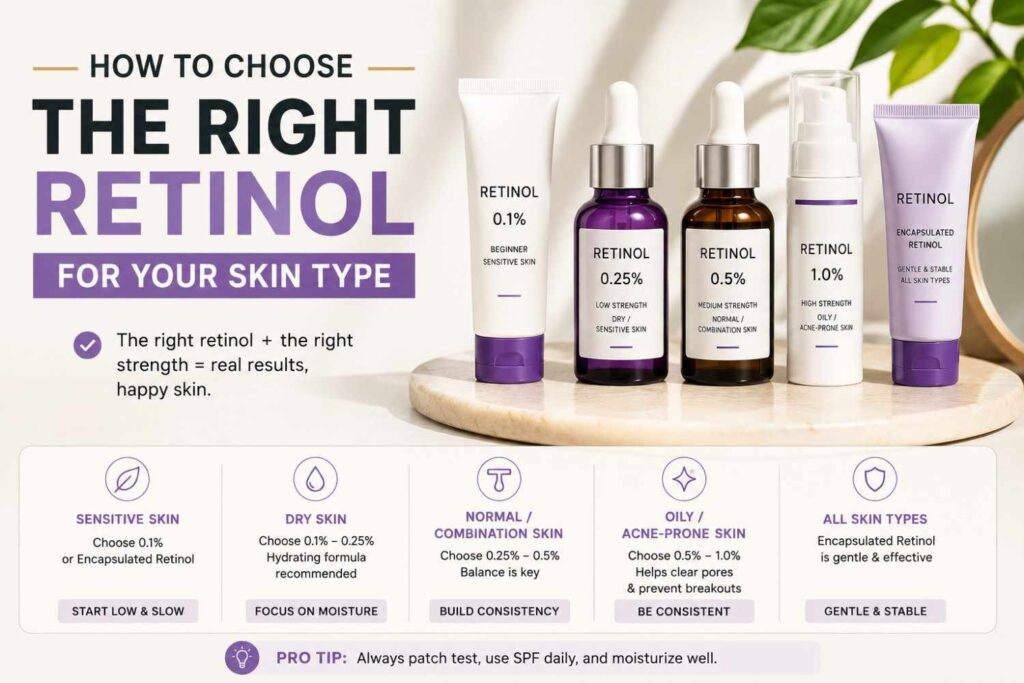
The best retinol for sensitive skin is typically a low-strength formulation containing between 0.1% and 0.3% retinol. These lower concentrations allow the skin to gradually build tolerance without overwhelming its natural protective barrier. Products formulated with soothing ingredients such as ceramides, niacinamide, panthenol, and hyaluronic acid can further reduce the risk of irritation.
Cream-based retinol products are generally preferred for sensitive skin because they provide additional hydration and tend to release active ingredients more gently than lightweight serums. Encapsulated retinol formulas are also an excellent option because they deliver retinol slowly over time, minimizing potential irritation.
When starting retinol, sensitive skin users should apply the product only once or twice per week and gradually increase frequency based on tolerance. Using a moisturizer before and after retinol application, often called the “sandwich method,” can also help reduce side effects. With patience and proper product selection, sensitive skin can enjoy many of the same retinol benefits as other skin types while minimizing unwanted reactions.
Retinol for Oily and Acne-Prone Skin
Oily and acne-prone skin often responds particularly well to retinol because the ingredient directly addresses several factors that contribute to breakouts. Excess oil production, clogged pores, and abnormal skin cell turnover are common causes of acne, and retinol helps regulate each of these processes. As a result, many dermatologists recommend retinoids as a cornerstone of acne treatment plans.
Unlike sensitive skin types, oily skin generally tolerates active ingredients more effectively. This means users may be able to start with slightly stronger formulations depending on their experience level and overall skin resilience. Lightweight serums and gel-based retinol products are especially popular because they absorb quickly without leaving a heavy or greasy residue.
Retinol helps prevent pore congestion by encouraging dead skin cells to shed more efficiently. Over time, this can reduce blackheads, whiteheads, and inflammatory acne lesions. Many users also notice smoother skin texture, reduced oiliness, and a more refined appearance of enlarged pores after consistent use.
For individuals dealing with post-acne marks, retinol can support skin renewal and gradually improve uneven pigmentation. While results require patience, consistent use often leads to clearer and healthier-looking skin. Combining retinol with a gentle cleanser, non-comedogenic moisturizer, and daily sunscreen creates a balanced skincare routine that supports long-term acne management and skin health.
Retinol for Dry or Combination Skin
Dry and combination skin types require special attention when selecting retinol because maintaining adequate hydration is essential for preventing irritation. Although retinol offers significant anti-aging and skin-renewal benefits, it can temporarily increase dryness, particularly during the initial adjustment period. Choosing a formula that supports the skin barrier is therefore critical.
Individuals with dry skin should prioritize retinol products that include nourishing ingredients such as ceramides, squalane, glycerin, shea butter, and hyaluronic acid. These ingredients help replenish moisture and reinforce the skin barrier while retinol performs its renewal functions. Cream-based formulas are often preferable because they provide both hydration and active treatment in a single product.
Combination skin presents a unique challenge because different areas of the face may have varying needs. For example, the T-zone may be oily while the cheeks remain dry or sensitive. In these situations, a balanced retinol formula that provides hydration without excessive heaviness is often the best solution.
Many people with dry or combination skin benefit from using retinol every few days rather than nightly during the introductory phase. Monitoring the skin’s response and adjusting frequency accordingly helps minimize irritation. With proper product selection and consistent moisturizing, dry and combination skin types can experience smoother texture, improved tone, and noticeable anti-aging benefits from retinol use.
Choose the Correct Retinol Strength
Selecting the right retinol strength is one of the most important decisions when building an effective skincare routine. Many people mistakenly believe that higher concentrations automatically produce better results. In reality, the most effective retinol strength is the one your skin can tolerate consistently over time. Using a concentration that is too strong often leads to irritation, peeling, redness, and inconsistent use, which ultimately slows progress.
Retinol products are available in a wide range of concentrations, typically starting around 0.1% and extending to 1% or higher. The ideal strength depends on factors such as skin type, previous retinol experience, sensitivity level, and treatment goals. Beginners should prioritize tolerance and consistency rather than pursuing aggressive results immediately.
Gradually increasing strength allows the skin to adapt while reducing the likelihood of unwanted side effects. This process, commonly referred to as retinization, is a normal adjustment period during which the skin becomes more accustomed to retinol. Moving too quickly through concentration levels can disrupt this adaptation process and compromise the skin barrier.
It is also important to remember that formulation quality matters just as much as concentration. A well-formulated lower-strength product may deliver better long-term results than a poorly formulated high-strength alternative. Understanding how different concentration levels work allows users to create a safer and more effective progression plan that supports long-term skin improvement.
Beginner Retinol Strength
For individuals who are new to retinol, starting with a lower concentration is generally the safest and most effective approach. Most skincare professionals recommend beginning with products containing between 0.1% and 0.3% retinol. These concentrations provide meaningful skin benefits while minimizing the risk of severe irritation.
Many beginners become discouraged because they expect immediate results or choose products that are too strong for their skin. Starting with a gentle concentration allows the skin to gradually adapt to increased cell turnover and collagen stimulation. This adaptation period can take several weeks, but it often leads to a smoother transition and more sustainable long-term use.
A lower-strength retinol can still provide significant improvements in skin texture, brightness, and overall appearance. It may also help reduce minor breakouts and support early anti-aging goals. The key is consistency rather than intensity. Applying a lower-strength retinol regularly often produces better results than using a stronger product sporadically due to irritation.
Beginners should start with one or two applications per week and slowly increase frequency based on skin tolerance. Pairing retinol with a gentle moisturizer and daily sunscreen further enhances comfort and protects the skin during the adjustment process. Establishing a strong foundation at the beginner level creates a smoother path toward stronger formulations if needed later.
Intermediate Retinol Strength
Once the skin has successfully adapted to lower-strength retinol and can tolerate regular use without significant irritation, many users choose to advance to intermediate concentrations around 0.5%. This level often represents a balance between effectiveness and tolerability, making it a popular choice for individuals seeking more noticeable improvements.
Intermediate-strength retinol can provide enhanced benefits for concerns such as fine lines, uneven skin tone, mild hyperpigmentation, and persistent acne. Because the concentration is stronger, users may notice visible improvements sooner compared to lower-strength products. However, proper skincare support remains essential to maintain barrier health and minimize dryness.
At this stage, many users can apply retinol several times per week or even every other night depending on their skin’s response. Even so, it is important to monitor for signs of overuse such as excessive peeling, redness, or sensitivity. These symptoms may indicate that application frequency should be reduced temporarily.
A well-rounded routine that includes gentle cleansing, moisturizing, and sun protection remains critical. Intermediate retinol users often achieve some of the most balanced and sustainable results because they benefit from stronger activity without reaching concentrations that may be difficult to tolerate over the long term.
Advanced Retinol Strength
Advanced retinol concentrations, typically 1% or higher, are designed for individuals who have already built significant tolerance through long-term retinol use. These stronger formulations are often chosen by users targeting more pronounced signs of aging, persistent hyperpigmentation, uneven skin texture, or stubborn acne that has not responded adequately to lower-strength products.
Although higher concentrations can deliver more noticeable improvements, they also carry a greater risk of irritation. Common side effects include redness, peeling, dryness, tightness, and increased skin sensitivity. For this reason, advanced retinol products should only be introduced after successfully using lower concentrations for several months without significant adverse reactions.
Users considering advanced-strength retinol should focus on maintaining a healthy skin barrier. This includes using hydrating moisturizers, avoiding excessive exfoliation, and carefully monitoring the skin for signs of overuse. It is also important to avoid combining high-strength retinol with multiple potent active ingredients unless recommended by a skincare professional.
Many people assume stronger formulas automatically produce faster results. However, consistency remains more important than concentration. A retinol product that can be used regularly without causing irritation will often outperform a stronger product that must be discontinued due to discomfort. Advanced formulations can be highly effective when used appropriately, but they require patience, proper skincare support, and realistic expectations to achieve optimal results.
Retinol Strength Guide Table
Choosing the correct retinol concentration can feel overwhelming, especially for first-time users. The following guide provides a general framework for selecting an appropriate strength based on experience level and skin tolerance. Keep in mind that individual responses vary, and some users may need to progress more slowly than others.
This table should be viewed as a starting point rather than a strict rule. Factors such as skin sensitivity, hydration levels, environmental conditions, and other skincare products can influence how well a particular concentration is tolerated.
Many dermatologists recommend spending several months at each concentration level before considering an upgrade. This gradual approach allows the skin to adapt naturally while minimizing the likelihood of irritation. If redness, excessive peeling, or discomfort occur, reducing frequency or temporarily returning to a lower concentration may be beneficial.
Ultimately, the ideal retinol strength is the one that delivers visible improvements while maintaining overall skin comfort. Long-term consistency almost always produces better outcomes than aggressively pursuing higher concentrations too quickly.
Select the Right Retinol Product Format
Beyond concentration, the format of a retinol product plays a major role in how it performs on the skin. Modern retinol products are available in various forms, including creams, serums, lotions, gels, oils, and encapsulated delivery systems. While the active ingredient may be similar, the formulation can significantly impact absorption, effectiveness, comfort, and suitability for different skin types.
Selecting the right format is particularly important because skin concerns often vary. Someone with dry skin may need a rich cream that delivers hydration alongside retinol, while an individual with oily skin may prefer a lightweight serum that absorbs quickly and does not leave a heavy residue. Understanding these differences helps users choose products that fit seamlessly into their skincare routines.
In recent years, advancements in cosmetic science have also introduced encapsulated retinol technologies and combination formulations that improve tolerability. These innovations allow more people to enjoy retinol benefits while reducing the likelihood of irritation. As a result, product format has become almost as important as retinol strength when selecting the best option.
When evaluating retinol products, consider factors such as skin type, lifestyle, application preferences, and existing skincare products. Choosing a format that complements your routine increases the likelihood of consistent use, which is ultimately the most important factor in achieving long-term results.
Retinol Cream vs Serum
One of the most common questions consumers ask is whether they should choose a retinol cream or a retinol serum. While both options can be effective, they serve different purposes and are often better suited to specific skin types and skincare goals.
Retinol creams are generally thicker and contain additional moisturizing ingredients. These formulations are particularly beneficial for dry, mature, or sensitive skin because they help counteract some of the dryness that retinol can cause. Creams often provide a more nourishing experience and can simplify routines by combining hydration and treatment into a single product.
Retinol serums, on the other hand, are typically lightweight and designed for faster absorption. They are often preferred by individuals with oily or acne-prone skin because they feel less heavy and are less likely to contribute to excess shine. Serums may also contain higher concentrations of active ingredients and are frequently used in more targeted treatment routines.
Neither format is inherently better than the other. The best choice depends on your skin’s needs, comfort level, and desired results. Some individuals even use different formulations seasonally, switching to richer creams during colder months and lighter serums during warmer weather.
Encapsulated Retinol
Encapsulated retinol represents one of the most significant innovations in modern skincare. Unlike traditional retinol formulations, encapsulated retinol is enclosed within a protective delivery system that gradually releases the active ingredient into the skin over time. This controlled-release mechanism offers several advantages, particularly for individuals concerned about irritation.
One of the primary benefits of encapsulated retinol is improved tolerability. Because the ingredient is delivered more slowly, the skin is exposed to lower concentrations at any given moment. This often reduces common side effects such as redness, peeling, dryness, and sensitivity. As a result, encapsulated formulations are frequently recommended for beginners and individuals with sensitive skin.
Another advantage is enhanced stability. Traditional retinol can degrade when exposed to light and air, reducing its effectiveness over time. Encapsulation helps protect the ingredient, allowing it to remain potent for longer periods and potentially improving overall product performance.
While encapsulated retinol products may sometimes be more expensive than traditional formulas, many users find the improved comfort and reduced irritation worthwhile. For those who have struggled with retinol in the past or are hesitant to begin using it, encapsulated formulations can provide a gentler introduction while still delivering meaningful skin-renewal benefits.
Combination Formulas
Combination retinol formulas are designed to provide the benefits of retinol while simultaneously addressing some of its common side effects. These products often include supportive ingredients such as hyaluronic acid, ceramides, niacinamide, peptides, antioxidants, and soothing botanical extracts. By combining multiple beneficial ingredients in a single formulation, manufacturers aim to create a more balanced skincare experience.
One of the biggest advantages of combination formulas is convenience. Instead of layering multiple products separately, users can often achieve hydration, barrier support, and anti-aging benefits through one carefully designed product. This can simplify skincare routines and improve consistency, especially for beginners.
For individuals concerned about irritation, formulas containing ceramides and niacinamide may be particularly beneficial. These ingredients help strengthen the skin barrier and reduce inflammation, making retinol easier to tolerate. Antioxidants such as Vitamin E can also help protect the skin from environmental stressors while supporting overall skin health.
Combination formulations are especially useful for users who want comprehensive skincare benefits without creating an overly complicated routine. By pairing retinol with complementary ingredients, these products help maximize results while minimizing discomfort, making them an attractive option for a wide range of skin types and concerns.
Match Retinol to Your Skin Concerns
While skin type is a major factor in choosing a retinol product, your specific skincare concerns are equally important. Retinol is a versatile ingredient that can address a variety of issues, including fine lines, wrinkles, acne, enlarged pores, uneven skin tone, and hyperpigmentation. However, not every retinol formulation is optimized for every concern. Understanding your primary goal can help narrow your options and improve your results.
For example, someone primarily focused on anti-aging may benefit from a different retinol strength and formulation than someone seeking to reduce acne breakouts. Similarly, individuals targeting dark spots may need a product that combines retinol with brightening ingredients such as niacinamide or Vitamin C derivatives. Selecting a product that aligns with your concerns helps create a more targeted and effective skincare strategy.
It is also important to remember that retinol works gradually. Improvements often occur over several months rather than weeks. Consistent use, combined with realistic expectations, is essential for achieving noticeable results. Many users find that retinol addresses multiple concerns simultaneously, making it one of the most efficient skincare ingredients available.
By identifying your primary skin concerns and choosing a retinol product designed to address them, you can maximize the benefits of your skincare routine while minimizing unnecessary trial and error.
| Skin Concern | Retinol Action | Typical Improvement Timeline | Recommended Retinol Format | Supporting Ingredients |
|---|---|---|---|---|
| Fine Lines and Wrinkles | Stimulates collagen production and skin renewal | 3–6 Months | Cream or Serum | Peptides, Vitamin E |
| Acne and Breakouts | Prevents clogged pores and supports cell turnover | 8–12 Weeks | Lightweight Serum | Salicylic Acid, Niacinamide |
| Hyperpigmentation | Promotes fading of dark spots through skin renewal | 3–6 Months | Brightening Retinol Formula | Vitamin C, Tranexamic Acid |
| Rough Skin Texture | Encourages smoother and more even skin surface | 6–12 Weeks | Beginner or Intermediate Retinol | Ceramides, Hyaluronic Acid |
| Enlarged Pores | Improves pore appearance by reducing congestion | 8–12 Weeks | Serum-Based Retinol | Niacinamide, Zinc |
| Dull Skin Tone | Accelerates turnover of older surface skin cells | 6–10 Weeks | Low to Moderate Strength Retinol | Antioxidants, Vitamin C |
Retinol for Fine Lines and Wrinkles
One of the most common reasons people begin using retinol is to address visible signs of aging. As the skin ages, collagen and elastin production naturally decline, leading to the development of fine lines, wrinkles, and reduced skin firmness. Environmental factors such as sun exposure, pollution, and lifestyle habits can further accelerate these changes.
Retinol is widely recognized for its ability to support collagen production and improve skin renewal. By stimulating cellular turnover and encouraging the production of new collagen fibers, retinol helps improve skin texture and reduce the appearance of fine lines over time. While it cannot completely eliminate deep wrinkles, consistent use can significantly soften their appearance and contribute to smoother-looking skin.
Individuals targeting anti-aging concerns often benefit from moderate to higher-strength retinol products, provided their skin can tolerate them. Products formulated with peptides, ceramides, and antioxidants may offer additional support by enhancing hydration and protecting against environmental stressors.
Results typically develop gradually. Some users notice smoother skin within a few weeks, while more significant improvements in wrinkles and firmness may take several months. Patience and consistency are essential. Combined with daily sunscreen use and a well-balanced skincare routine, retinol remains one of the most effective non-prescription ingredients for maintaining a youthful complexion.
Retinol for Acne and Breakouts
Retinol has become a cornerstone ingredient in many acne-focused skincare routines because it targets several underlying causes of breakouts. Acne often develops when excess oil, dead skin cells, and bacteria accumulate within pores. Retinol helps address these issues by promoting healthy skin cell turnover and reducing the likelihood of pore blockages.
As dead skin cells are shed more efficiently, pores remain clearer and less prone to congestion. This process can help reduce blackheads, whiteheads, and inflammatory acne lesions over time. Many users also notice improvements in skin texture and a reduction in the appearance of enlarged pores after consistent retinol use.
For acne-prone individuals, lightweight retinol serums or gel-based formulations are often preferred because they absorb quickly and do not leave a heavy residue. Some products may also contain complementary ingredients such as salicylic acid, niacinamide, or zinc to further support acne management.
It is important to understand that acne may appear to worsen temporarily during the early stages of retinol use. This phenomenon, often called purging, occurs because increased cell turnover brings underlying congestion to the surface more quickly. While frustrating, this phase is usually temporary. Consistent use, combined with gentle skincare practices, can lead to clearer skin and fewer breakouts over the long term.
Retinol for Dark Spots and Hyperpigmentation
Hyperpigmentation is a common concern that can result from sun exposure, acne, inflammation, hormonal changes, or skin injuries. These darkened areas occur when excess melanin accumulates in certain parts of the skin, creating uneven tone and discoloration. Retinol is frequently recommended for addressing these concerns because it supports skin renewal and encourages the gradual replacement of pigmented cells.
As retinol accelerates skin cell turnover, older pigmented cells are shed more efficiently and replaced by newer, healthier skin cells. This process can gradually improve the appearance of post-inflammatory hyperpigmentation, sun spots, and mild discoloration. While retinol does not produce immediate results, consistent use often leads to a brighter and more even complexion over time.
For enhanced brightening benefits, many formulations combine retinol with ingredients such as niacinamide, licorice root extract, tranexamic acid, or Vitamin C derivatives. These ingredients work alongside retinol to support a more uniform skin tone and improve overall radiance.
Sun protection is particularly important when treating hyperpigmentation. Without daily sunscreen use, new discoloration can develop and existing dark spots may become more noticeable. Combining retinol with diligent UV protection creates a more effective strategy for achieving long-term improvements in skin clarity and tone.
How to Introduce Retinol Safely
Even the most carefully selected retinol product can cause irritation if introduced too aggressively. One of the biggest mistakes people make is assuming that more frequent use will produce faster results. In reality, successful retinol use depends on gradual introduction, patience, and proper skin barrier support.
When first using retinol, the skin often undergoes an adjustment period known as retinization. During this phase, mild dryness, peeling, tightness, or sensitivity may occur as the skin adapts to increased cell turnover. These effects are usually temporary and can often be minimized through proper application techniques.
The safest approach is to start with a lower concentration and limited application frequency. Many dermatologists recommend beginning with one or two applications per week before gradually increasing usage based on tolerance. Monitoring the skin’s response helps prevent excessive irritation and allows users to build long-term tolerance more comfortably.
Hydration also plays a critical role during this process. A supportive skincare routine that includes a gentle cleanser, nourishing moisturizer, and daily sunscreen can significantly improve the retinol experience. These products help maintain barrier integrity while allowing retinol to deliver its benefits effectively.
By introducing retinol gradually and prioritizing skin health, users can maximize results while minimizing common side effects. This patient and methodical approach often leads to greater long-term success than attempting to accelerate the process.
Start Slowly
Starting slowly is one of the most important principles of successful retinol use. Regardless of skin type, introducing retinol too frequently or choosing a concentration that is too strong can overwhelm the skin and increase the likelihood of irritation. Gradual introduction gives the skin time to adapt and develop tolerance.
Most beginners benefit from applying retinol only once or twice per week during the first few weeks. After evaluating the skin’s response, frequency can be increased gradually. This slow progression reduces the risk of excessive peeling, redness, and discomfort while helping users establish a sustainable routine.
A pea-sized amount is typically sufficient for the entire face. Applying more product does not necessarily improve results and may increase irritation. Users should also avoid applying retinol to compromised or damaged skin, as this can worsen sensitivity.
Patience is essential during the adjustment phase. Although it may be tempting to accelerate usage, allowing the skin to adapt naturally often produces better long-term outcomes. A gradual approach encourages consistency, which remains one of the most important factors in achieving visible improvements from retinol.
Moisturize Generously
Proper moisturization is essential when incorporating retinol into a skincare routine. Because retinol increases skin cell turnover, some degree of dryness or tightness is common, especially during the early stages of use. A high-quality moisturizer helps counteract these effects while supporting the skin barrier.
Ingredients such as ceramides, hyaluronic acid, glycerin, squalane, and fatty acids can help replenish lost moisture and reinforce the skin’s protective barrier. When the barrier remains healthy, the skin is often better able to tolerate retinol and recover from temporary irritation.
Many dermatologists recommend applying moisturizer immediately after retinol or using the sandwich method, which involves applying moisturizer before and after retinol application. This technique can help reduce irritation while still allowing the active ingredient to work effectively.
Consistent moisturization does not reduce retinol’s effectiveness. Instead, it helps create a healthier environment in which the ingredient can deliver benefits with fewer side effects. For many users, maintaining adequate hydration is the key to long-term retinol success.
Wear Sunscreen Daily
Daily sunscreen use is non-negotiable when using retinol. Because retinol increases skin cell turnover, newly exposed skin cells can be more vulnerable to ultraviolet radiation. Without proper sun protection, the risk of sun damage, irritation, and hyperpigmentation may increase significantly.
A broad-spectrum sunscreen with SPF 30 or higher is generally recommended for daily use. Sunscreen should be applied every morning, even on cloudy days or when spending most of the day indoors near windows. Consistent protection helps preserve the benefits of retinol while reducing the risk of environmental damage.
Many users invest considerable time and effort into improving their skin with retinol only to undermine their results through inadequate sun protection. UV exposure can accelerate signs of aging, worsen discoloration, and contribute to collagen breakdown, directly opposing many of retinol’s benefits.
Incorporating sunscreen into your daily routine is one of the simplest yet most effective ways to maximize retinol results. Together, retinol and sun protection form a powerful combination for maintaining healthy, youthful-looking skin over the long term.
Common Mistakes to Avoid When Choosing Retinol
Although retinol is one of the most effective skincare ingredients available, many users struggle to achieve optimal results because of avoidable mistakes. In most cases, the problem is not the ingredient itself but rather how it is selected, introduced, or used within a skincare routine. Understanding these common errors can help users maximize the benefits of retinol while minimizing frustration and unnecessary side effects.
One of the most frequent mistakes is choosing a product based solely on concentration rather than considering skin type, sensitivity level, and overall skincare goals. Another common issue is using too many active ingredients at the same time, which can overwhelm the skin barrier and increase irritation. Many people also underestimate the importance of moisturizing and daily sun protection while using retinol.
Additionally, unrealistic expectations can lead users to abandon retinol before it has sufficient time to work. Unlike quick-fix treatments, retinol delivers gradual improvements that become more noticeable with consistent long-term use. Patience and proper usage are essential for success.
By avoiding these common pitfalls and taking a balanced approach, users can enjoy smoother skin, improved texture, reduced breakouts, and visible anti-aging benefits without compromising skin health.
Starting With a Strength That Is Too High
One of the biggest mistakes beginners make is selecting a retinol product that is far too strong for their current tolerance level. Many consumers assume that higher concentrations will produce faster results, but this approach often leads to irritation rather than improvement.
When the skin is exposed to a concentration it cannot comfortably tolerate, symptoms such as redness, peeling, burning, dryness, and sensitivity may occur. These reactions can become severe enough to force users to stop using retinol altogether, delaying progress and creating unnecessary frustration.
A gradual approach is generally far more effective. Starting with a low-strength formula allows the skin to adjust naturally while minimizing adverse reactions. As tolerance improves over several months, users can evaluate whether a stronger concentration is necessary.
It is also important to remember that retinol effectiveness is not determined solely by concentration. Product formulation, consistency of use, skin type, and supporting skincare products all influence results. Many individuals achieve excellent long-term outcomes using moderate-strength products because they can use them consistently without irritation.
Choosing a strength appropriate for your experience level is one of the most important steps in building a successful retinol routine and maintaining healthy skin throughout the process.
Ignoring Skin Barrier Health
The skin barrier plays a critical role in protecting against environmental stressors, retaining moisture, and maintaining overall skin health. Unfortunately, many retinol users focus exclusively on active ingredients while neglecting barrier support, which can significantly impact results.
Retinol naturally increases skin cell turnover, and this process can temporarily challenge the skin barrier, particularly during the adjustment phase. Without adequate hydration and barrier-repair ingredients, the skin may become dry, irritated, or overly sensitive. This can make retinol difficult to tolerate and may increase the risk of inflammation.
Supporting the skin barrier involves using gentle cleansers, nourishing moisturizers, and products containing ingredients such as ceramides, fatty acids, cholesterol, and hyaluronic acid. These ingredients help reinforce the barrier and improve resilience against irritation.
Users should also avoid excessive exfoliation while using retinol. Combining strong exfoliating acids with retinol too frequently can weaken the barrier and increase sensitivity. A balanced approach that prioritizes skin health often produces better results than an aggressive treatment strategy.
Healthy skin tolerates retinol more effectively and responds more positively over time, making barrier care an essential part of every successful retinol routine.
Expecting Overnight Results
Retinol has earned a reputation as a powerful skincare ingredient, but it is not an instant solution. One of the most common reasons users become disappointed is because they expect dramatic improvements within a few days or weeks. In reality, retinol works gradually by influencing natural biological processes within the skin.
Cell turnover, collagen production, and pigment correction all require time. While some users may notice smoother skin relatively quickly, more substantial improvements in wrinkles, acne, and hyperpigmentation often take several months of consistent use. This timeline is completely normal and should not be viewed as a sign that the product is ineffective.
Abandoning retinol prematurely prevents users from experiencing its full benefits. Many people stop during the adjustment period because they misinterpret temporary dryness or mild peeling as failure rather than a normal part of adaptation.
Setting realistic expectations is essential. Rather than focusing on immediate results, users should evaluate progress over several months. Consistency, patience, and proper skincare support typically produce the best outcomes. When used correctly, retinol can deliver significant long-term improvements that continue to develop over time.
Signs That Your Retinol Is Working
Many people wonder how to tell whether their retinol product is actually delivering results. Because retinol works gradually, changes often occur in stages rather than appearing all at once. Understanding the normal progression of improvements can help users stay motivated and avoid unnecessary product changes.
During the first few weeks, the skin may undergo an adjustment period that includes mild dryness or peeling. Although these effects can be concerning, they often indicate that increased cell turnover is taking place. As the skin adapts, many users begin noticing improvements in texture, brightness, and overall smoothness.
Long-term benefits become more apparent with consistent use. These may include reduced breakouts, softer fine lines, improved skin tone, and greater firmness. The exact timeline varies based on factors such as skin type, retinol strength, application frequency, and individual biology.
Tracking progress through photographs can be particularly helpful because changes often occur gradually. Comparing images taken several weeks apart may reveal improvements that are difficult to notice on a day-to-day basis.
Recognizing the signs of successful retinol use helps users maintain realistic expectations and stay committed to their skincare routines. Understanding the stages of progress can make the journey more rewarding and encourage long-term consistency.
Early Changes
The first signs that retinol is working often appear within the initial few weeks of use. During this period, the skin begins adapting to increased cell turnover, which may result in mild dryness, flaking, or temporary sensitivity. While these effects are sometimes viewed negatively, they are frequently part of the normal adjustment process.
Many users also notice that their skin feels smoother to the touch as older surface cells are shed more efficiently. Some individuals experience a brighter complexion and improved softness relatively early in their retinol journey. These subtle changes can indicate that the product is beginning to influence skin renewal processes.
For acne-prone individuals, temporary purging may occur. This happens when underlying congestion is brought to the surface more rapidly than usual. Although frustrating, purging is often temporary and should gradually improve with continued use.
It is important not to overreact to mild adjustment symptoms by immediately increasing or discontinuing treatment. Monitoring the skin carefully and maintaining a supportive skincare routine can help ensure a smoother transition. Early changes may be modest, but they often represent the foundation for more significant improvements in the months ahead.
Medium-Term Improvements
After several weeks to a few months of consistent use, many users begin noticing more meaningful improvements in their skin. This stage is often where the visible benefits of retinol become easier to appreciate and where motivation to continue treatment tends to increase.
One of the most common improvements is enhanced skin texture. Rough patches often become smoother, and the overall complexion may appear more refined and even. Individuals with acne-prone skin frequently notice fewer breakouts, reduced congestion, and a decrease in the appearance of enlarged pores.
Uneven skin tone and mild hyperpigmentation may also begin to fade during this period. As skin renewal continues, discoloration gradually becomes less noticeable, contributing to a brighter and more balanced complexion.
While medium-term improvements can be encouraging, it is important to maintain consistency. Skincare results are cumulative, and ongoing use is necessary to achieve maximum benefits. Supporting the skin with hydration and sun protection remains essential throughout this stage.
For many users, this phase confirms that retinol is delivering measurable results and reinforces the value of maintaining a long-term skincare strategy.
Long-Term Results
The most significant retinol benefits typically emerge after several months of regular use. At this stage, the cumulative effects of increased cell turnover, collagen stimulation, and improved skin renewal become more visible. Long-term users often experience some of the most impressive transformations.
Fine lines and wrinkles may appear softer as collagen production improves skin structure and firmness. Skin texture often becomes smoother and more refined, while persistent discoloration may continue to fade. Many users also notice improvements in overall skin clarity, resilience, and radiance.
For acne-prone individuals, long-term retinol use can contribute to fewer breakouts and healthier-looking skin. Although occasional blemishes may still occur, overall congestion often becomes easier to manage. The skin may also feel stronger and better able to tolerate environmental stressors.
It is important to understand that retinol benefits are maintained through ongoing use. Discontinuing treatment may eventually allow previous concerns to reappear. Incorporating retinol as a long-term component of a balanced skincare routine can help preserve results and support healthier-looking skin for years to come.
Frequently Asked Questions
Frequently Asked Questions (FAQs) are an important part of any fitness guide because they provide quick, clear answers to the most common doubts people have. Instead of going through long explanations, readers can use FAQs to understand key concepts in a simple and direct way.
In fitness, people often struggle with similar concerns such as workout routines, diet plans, progress timelines, and motivation. FAQs help simplify these topics and make it easier to apply practical steps in real life.
They also serve as a quick summary of the most important points covered in a guide. By reviewing FAQs, readers can reinforce their understanding and make better decisions about their fitness journey.
What strength retinol should beginners use?
Most skincare professionals recommend that beginners start with a retinol concentration between 0.1% and 0.3%. These lower strengths provide meaningful benefits while allowing the skin to gradually develop tolerance. Starting with a gentle concentration reduces the risk of irritation, excessive dryness, and peeling. Once the skin adapts successfully over several weeks or months, users can consider increasing strength if additional results are desired.
Is retinol safe for sensitive skin?
Yes, retinol can be safe for sensitive skin when introduced carefully and used in appropriate formulations. Individuals with sensitive skin should choose low-strength products, preferably those containing soothing ingredients such as ceramides, niacinamide, and hyaluronic acid. Encapsulated retinol formulations may also provide better tolerability by releasing the active ingredient gradually. Starting slowly and maintaining strong barrier support are essential.
How often should I apply retinol?
Application frequency depends on skin type, product strength, and individual tolerance. Beginners typically start with one or two applications per week and gradually increase usage as their skin adapts. Some experienced users eventually apply retinol every other night or nightly. The key is to monitor your skin closely and adjust frequency based on comfort and tolerance rather than following a rigid schedule.
Can retinol help with acne scars?
Retinol can help improve the appearance of certain types of acne scars, particularly post-inflammatory hyperpigmentation and uneven skin texture. By accelerating skin cell turnover and supporting collagen production, retinol encourages gradual skin renewal. While it may not completely eliminate deep scars, consistent use often results in smoother skin and reduced discoloration over time.
Should I use retinol every night?
Not necessarily. Daily use is not required for everyone and may be too aggressive for some skin types. The ideal frequency depends on your skin’s tolerance and the concentration of the product. Many individuals achieve excellent results using retinol several times per week. Consistency and comfort are generally more important than maximizing frequency.
What age should you start using retinol?
There is no universal age for starting retinol. Many people begin using it in their mid-to-late twenties as part of a preventative anti-aging routine. Others may start earlier to address acne concerns. The decision should be based on individual skin goals, concerns, and tolerance rather than age alone.
Conclusion
Choosing the right retinol product requires more than simply selecting the strongest formula available. Success depends on understanding your skin type, identifying your primary skincare concerns, choosing an appropriate concentration, and selecting a formulation that fits comfortably into your routine. By taking a personalized approach, you can maximize retinol benefits while minimizing irritation and other common side effects.
Whether your goal is reducing acne, fading hyperpigmentation, improving skin texture, or minimizing fine lines and wrinkles, retinol remains one of the most effective skincare ingredients available. Its ability to support collagen production, encourage healthy skin renewal, and improve overall skin appearance makes it a valuable long-term investment in skin health.
The key to achieving the best results is patience and consistency. Start slowly, support your skin barrier, wear sunscreen daily, and allow time for gradual improvements to develop. With the right product and a well-balanced skincare routine, retinol can help you achieve healthier, smoother, and more youthful-looking skin over the long term.