How to Build a Personalized Skincare Routine
Learning how to build a personalized skincare routine begins with understanding that healthy-looking skin does not come from using the largest possible number of products. A useful routine is one that matches your skin’s current behavior, addresses realistic concerns, fits your budget, and can be followed consistently. A complicated routine may look impressive, but it becomes ineffective when products are applied incorrectly, changed too often, or abandoned because the process takes too much time.
Most people can begin with a simple foundation: gentle cleansing, moisturizing, and daily sun protection. Once these steps feel comfortable, one targeted treatment can be added for a specific concern such as acne, clogged pores, uneven tone, dryness, or early signs of aging. The American Academy of Dermatology advises that a basic three-step approach can be effective and budget-friendly, while using too many products may increase irritation.
Personalization also requires patience. Skin can react differently according to weather, stress, hormones, medication, travel, age, and product use. A routine that worked during a humid summer may feel insufficient during a dry winter. Similarly, a strong acne treatment may become difficult to tolerate when the skin barrier is already irritated.
One thing I always recommend is introducing only one new product at a time. This makes it easier to identify what is helping, what is unnecessary, and what may be causing redness, dryness, itching, or breakouts. Rather than copying a social-media routine, use your own skin’s response as the main source of feedback.
This guide provides a practical framework for beginners while also explaining the reasoning behind ingredient selection, routine order, product testing, and long-term adjustment. It offers general education and should not replace individual medical advice, especially when a rash, painful acne, persistent redness, or another possible skin condition is present.
The Basic Skincare Formula
The basic skincare formula is cleanse, treat when necessary, moisturize, and protect. Cleansing removes sweat, excess oil, makeup, sunscreen, and environmental residue without intentionally stripping all natural oils from the skin. A cleanser should leave the face feeling clean but not painfully tight, rough, or irritated. People with very dry or reactive skin may not need a full facial cleanse twice daily, while those wearing makeup or water-resistant sunscreen usually need effective evening cleansing.
Treatment is the most flexible stage. It may include a prescribed medication or an over-the-counter active ingredient selected for a clear concern. If there is no specific concern, a separate treatment product is not compulsory.
Moisturizer supports comfort and helps reduce water loss. The appropriate texture may range from a light lotion to a richer cream or ointment.
During the day, broad-spectrum sunscreen with SPF 30 or higher provides protection against UVA and UVB exposure. The American Academy of Dermatology recommends applying sunscreen after other skincare products and before makeup.
This formula creates a stable base. Optional products should be added only when they provide a purpose that is not already being met.
The Personalization Rule
The main personalization rule is that every product should have a defined job. Before adding an item, ask what concern it addresses, where it belongs in the routine, how often it should be used, and how you will judge whether it works. If those questions cannot be answered, the product may be unnecessary.
Personalization is also about tolerance. Two people with oily skin may not respond to the same cleanser because one may also have sensitivity, eczema, acne medication use, or a dry climate. Similarly, two people concerned about fine lines may require different approaches depending on sun exposure, pregnancy, current irritation, and experience with retinoids.
Lifestyle matters as much as skin type. Someone who works outdoors needs a realistic sunscreen-reapplication plan. A person who wears heavy makeup may require more careful evening removal. A busy beginner may achieve better results from three dependable products than from a ten-step routine used inconsistently.
Keep a short record of new products, start dates, frequency, and reactions. This turns personalization into an informed process rather than constant guessing. The routine can then evolve through controlled changes based on visible results and comfort.
Identify Your Skin Type and Main Concerns
A useful skincare routine begins with observation. Before introducing new treatments, spend several days noticing how your skin behaves under normal conditions. Look at how it feels after gentle cleansing, whether it becomes shiny by midday, whether certain areas feel rough, and how often you experience redness, itching, clogged pores, or inflamed spots. Try not to assess your natural skin type immediately after a harsh scrub, strong peel, drying soap, or new acne treatment because these products may temporarily alter oiliness and comfort.
It is also important to separate skin type from skin condition. Skin type generally describes recurring patterns such as dryness, oiliness, or a combination of both. A skin condition may involve acne, eczema, rosacea, contact dermatitis, or another medical issue. Oily skin can still be dehydrated or irritated, while dry skin can still develop acne. This is why selecting products based on a single label is often insufficient.
Choose one or two priority concerns after observing your skin. A concern should be specific enough to guide product selection. “I want better skin” is too broad, whereas “I want fewer clogged pores on my forehead” or “I want to reduce tightness after washing” provides a measurable starting point.
Avoid diagnosing a persistent rash from appearance alone. Ongoing redness, scaling, swelling, burning, or itching may require assessment from a qualified healthcare professional. Product recommendations cannot replace a diagnosis when symptoms suggest an underlying condition.
| Skin Type | Main Characteristics | Recommended Cleanser | Recommended Moisturizer | Extra Tip |
|---|---|---|---|---|
| Dry Skin | Tight, flaky, rough texture | Gentle hydrating cleanser | Cream with ceramides, glycerin, or hyaluronic acid | Avoid over-cleansing and use lukewarm water |
| Oily Skin | Excess shine and enlarged pores | Gel or foaming cleanser | Lightweight, oil-free moisturizer | Choose non-comedogenic products |
| Combination Skin | Oily T-zone with dry cheeks | Balanced gentle cleanser | Lightweight lotion, adjust by facial area | Moisturize dry areas more than oily zones |
| Sensitive Skin | Easily irritated, redness, burning | Fragrance-free gentle cleanser | Barrier-supporting moisturizer | Introduce only one new product at a time |
| Acne-Prone Skin | Frequent breakouts and clogged pores | Gentle cleanser with acne-friendly ingredients | Oil-free non-comedogenic moisturizer | Avoid harsh scrubs and over-exfoliation |
Dry, Oily, and Combination Skin
Dry skin often feels tight, rough, itchy, or flaky and may become more uncomfortable after cleansing, bathing, cold weather, air conditioning, or low humidity. A routine for dry skin should focus on gentle cleansing and effective moisture retention. Creams and ointments usually provide more moisture than thin lotions, and dermatologists commonly recommend applying moisturizer while the skin is still slightly damp. Ingredients such as glycerin, hyaluronic acid, petrolatum, dimethicone, and shea butter may appear in products designed to reduce dryness and improve comfort.
Oily skin produces visible shine and may be more likely to develop clogged pores. However, harsh scrubbing or repeatedly washing the face can cause irritation without solving the underlying oil production. Choose a gentle cleanser and consider lightweight products labeled oil-free or non-comedogenic.
Combination skin has different needs across the face. The forehead, nose, and chin may become oily while the cheeks remain normal or dry. Instead of creating two separate routines, adjust product amounts by area. A light moisturizer may be used everywhere, with an extra layer on drier zones. Treatment products should also be applied only where they are needed unless their instructions state otherwise.
Sensitive and Easily Irritated Skin
Sensitive skin is not always a fixed medical category. It is often used to describe skin that stings, burns, becomes red, or develops itching after exposure to products, weather, heat, shaving, or friction. Because several skin conditions can cause similar symptoms, persistent sensitivity should not automatically be treated as a cosmetic issue.
Begin with a short routine containing a gentle cleanser, a fragrance-free moisturizer, and a sunscreen you can tolerate. Introduce optional products slowly and avoid starting several exfoliating acids, scrubs, retinoids, or acne treatments at once. Even ingredients that benefit one concern may irritate skin when the formula is too strong or the application is too frequent.
Pay attention to wording on labels. “Fragrance-free” usually means that fragrance ingredients were not intentionally added, while “unscented” may indicate that ingredients were used to mask the product’s natural smell. Neither term guarantees that a product will suit every person.
Rosacea, eczema, and allergic contact dermatitis may all cause recurring sensitivity. The American Academy of Dermatology notes that appropriate skincare can improve comfort and support treatment for conditions such as rosacea, but professional assessment remains important when symptoms continue.
Acne, Dark Spots, and Signs of Aging
Acne can appear as blackheads, whiteheads, inflamed pimples, or deeper painful lesions. Different forms may require different treatment plans, so a routine should be based on the actual pattern rather than the general label “acne-prone.” Mild clogged pores may respond to an appropriate over-the-counter ingredient, while deep, painful, or scarring acne deserves professional care.
Dark marks may remain after inflammation settles. These marks are not always scars, although both can occur. Repeated picking, squeezing, aggressive exfoliation, and untreated breakouts may increase the chance of long-lasting discoloration or visible scarring. Gentle care and sun protection are important because irritation and ultraviolet exposure can make uneven tone more noticeable.
Common aging-related concerns include fine lines, roughness, uneven pigmentation, and changes in firmness. A routine should first address daily sun protection, moisture, and tolerance before adding stronger active ingredients. Retinoids may help some people with acne or visible aging concerns, but they can also cause dryness and require careful use.
Choose the concern that matters most and build around it. Treating everything at once makes it harder to recognize progress and increases the risk of irritation.
Build Your Morning and Nighttime Skincare Routine
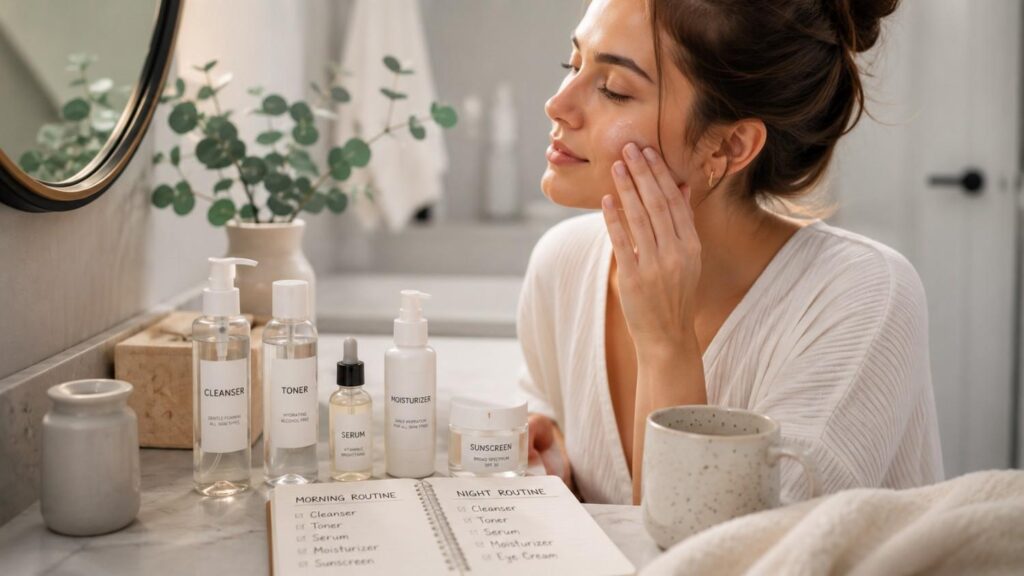
A morning and nighttime routine can share the same foundation while serving slightly different purposes. Morning care prepares the skin for the day and prioritizes protection from environmental exposure, particularly sunlight. Evening care focuses on removing makeup, sunscreen, oil, sweat, and residue before applying any treatment or moisturizer. Neither routine needs to contain a large number of steps.
Product order matters because it affects whether treatments reach clean skin and whether sunscreen forms the final protective daytime layer. Dermatologists generally advise washing the face, applying medication or treatment, adding moisturizer or sunscreen, and then applying makeup when desired.
Use the routine table as a framework rather than a universal prescription. Someone with very dry skin may prefer a richer moisturizer in both routines. A person with oily skin may choose a lighter lotion. Someone using prescription acne medication should follow the prescriber’s instructions even when they differ from a general routine.
| Routine Stage | Morning | Night | Main Purpose |
|---|---|---|---|
| Cleanse | Gentle cleanser or water rinse when suitable | Cleanser and makeup removal as needed | Remove sweat, oil, makeup, sunscreen, and residue |
| Treat | Optional targeted product | Optional acne, pigment, exfoliating, or retinoid product | Address a specific concern |
| Moisturize | Lotion, gel-cream, cream, or ointment as needed | Moisturizer suited to comfort and treatment use | Reduce dryness and support the skin barrier |
| Protect | Broad-spectrum SPF 30 or higher | Not normally required | Reduce exposure to UVA and UVB radiation |
| Makeup | Apply after sunscreen | Remove before sleeping | Cosmetic use without replacing skincare |
Consistency matters more than the number of steps. A routine should be simple enough to complete on ordinary days, not only when there is extra time.
Morning Skincare Routine
Begin the morning skincare routine with gentle cleansing or a water rinse, depending on your skin’s needs and what was applied the previous night. People using heavy ointments, acne medication, or products that leave residue may prefer a cleanser. Others with very dry or easily irritated skin may find that a simple rinse is sufficient on some mornings.
Apply any morning treatment next. This step is optional and should have a clear purpose. Do not layer multiple serums merely because they are marketed for daytime use. Follow with moisturizer, adjusting the texture to your skin type and climate.
Finish with broad-spectrum, water-resistant sunscreen offering SPF 30 or higher when you will be exposed to daylight. Dermatologists recommend applying sunscreen after skincare and before makeup. It should cover exposed areas, including the face, ears, neck, and other uncovered skin. Outdoor conditions, swimming, sweating, toweling, and extended exposure may require reapplication.
Tinted sunscreen may be useful for people who dislike a visible white cast, while non-comedogenic formulas may suit acne-prone skin. The most practical sunscreen is one that provides appropriate protection and can be applied in a sufficient, consistent manner.
Nighttime Skincare Routine
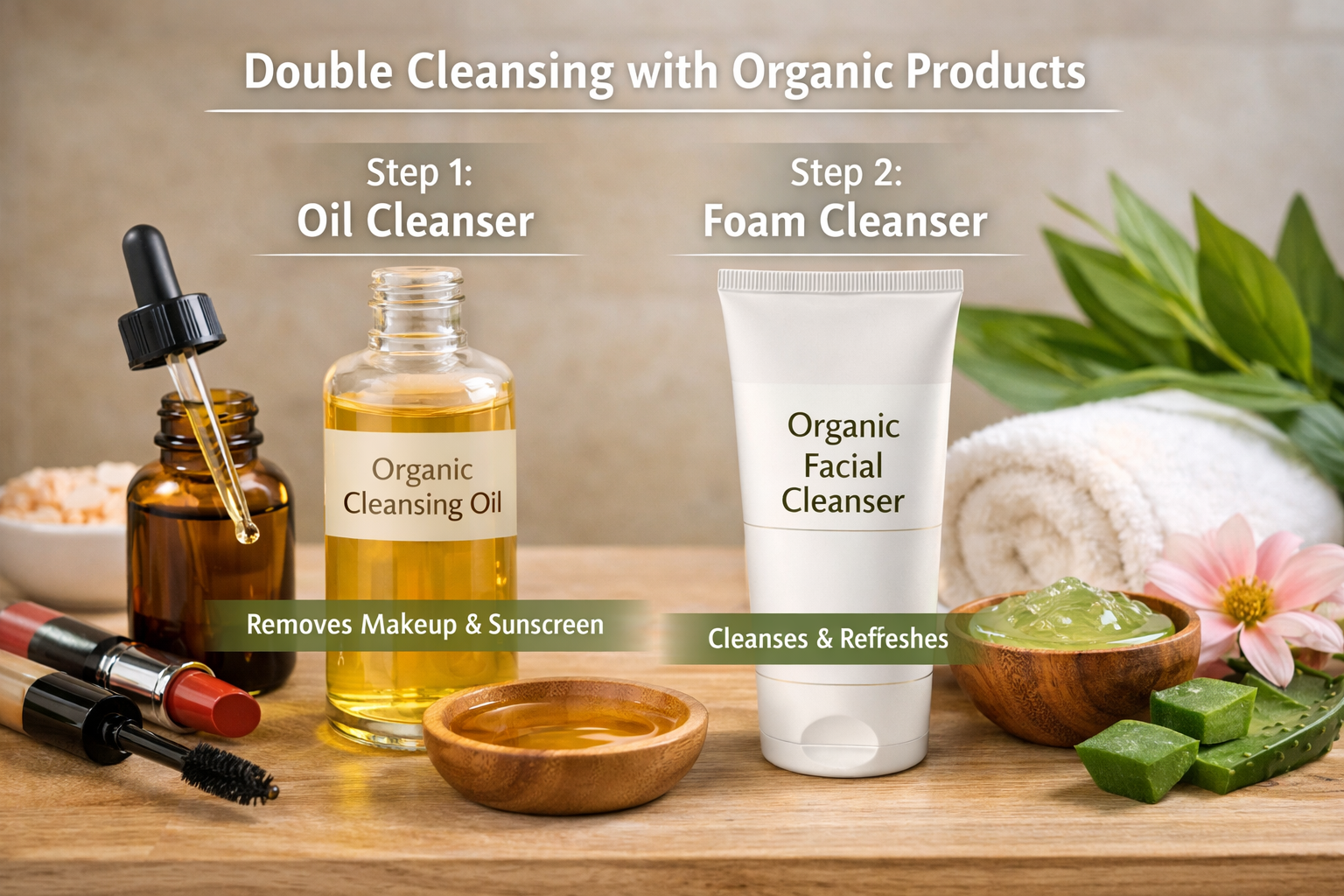
The nighttime skincare routine should remove the day’s buildup without leaving the skin raw or uncomfortable. Makeup, sunscreen, oil, sweat, and dirt can remain on the surface, so effective cleansing is important. A separate makeup remover or first cleansing step may be helpful for long-wear makeup or water-resistant sunscreen, but double cleansing is not compulsory when one gentle cleanser performs the job adequately.
After cleansing, apply prescribed medication or a selected treatment according to its instructions. Avoid assuming that every active ingredient must be used nightly. Retinoids, exfoliating acids, or acne products may require gradual introduction, particularly for beginners or people with sensitive skin.
Finish with moisturizer. When a treatment causes dryness, moisturizer may improve comfort and make continued use more manageable. Some people prefer applying moisturizer before and after an irritating treatment, but the correct approach depends on the product and professional instructions.
Create recovery nights when necessary. On these evenings, use only gentle cleansing and moisturizer. Recovery nights are not wasted opportunities; they can help prevent a routine from becoming unnecessarily aggressive. A comfortable routine followed consistently is usually more useful than a strong routine that repeatedly causes peeling and has to be stopped.
Correct Skincare Routine Order
A practical skincare routine order is cleanser, targeted treatment, moisturizer, daytime sunscreen, and makeup. This sequence places medication or active ingredients close to clean skin while keeping sunscreen near the end of the morning routine. The American Academy of Dermatology recommends washing first, applying medication or treatment next, and then applying moisturizer, sunscreen, or makeup.
The order may change when a product label or dermatologist provides specific instructions. For example, some treatments are intended for completely dry skin, while others may be mixed with or followed by moisturizer. Prescription guidance should take priority over general online advice.
You do not automatically need a toner, essence, facial mist, eye cream, mask, oil, and several serums. These products can be included when they address a defined need, but they are not required to create a complete routine.
When layering compatible leave-on products, allow each one to spread evenly rather than waiting for an arbitrary number of minutes. The more important issue is whether the combination causes pilling, irritation, or reduced adherence. If a routine feels crowded, remove overlapping steps and retain the products that provide the greatest practical value.
Choose Active Ingredients Based on Your Goal
Active ingredients are used to address a defined concern, such as clogged pores, inflammatory acne, uneven tone, dryness, or fine lines. They should be selected after the basic routine is stable because introducing treatment onto already irritated skin can make the problem harder to manage. A product is not appropriate simply because its ingredient is popular; concentration, formula, frequency, and individual tolerance also affect the experience.
Choose one active ingredient that matches the concern you identified earlier. Read the product label to understand where it should be applied, how often it should be used, and what warnings are included. More frequent application does not always produce faster results. In many cases, excessive use leads to burning, peeling, redness, or a damaged-feeling skin barrier.
Avoid combining ingredients based only on short social-media instructions. Some combinations may be tolerated by experienced users, but beginners often benefit from alternating treatment nights or limiting the routine to one main active.
Medical context also matters. Pregnancy, breastfeeding, prescription medication, eczema, rosacea, allergies, and previous reactions can influence which products are appropriate. Retinoids should not be used during pregnancy, and pregnancy-related skincare decisions should be discussed with a dermatologist or obstetric clinician.
The following ingredient groups provide general education rather than individual treatment instructions. Seek professional advice when symptoms are painful, severe, scarring, persistent, or difficult to identify.
| Skincare Goal | Helpful Ingredients | Main Benefit | Beginner-Friendly |
|---|---|---|---|
| Reduce Acne | Salicylic Acid, Benzoyl Peroxide, Adapalene | Clears clogged pores and breakouts | Yes (introduce gradually) |
| Hydrate Dry Skin | Hyaluronic Acid, Glycerin, Ceramides | Improves moisture and skin barrier | Yes |
| Improve Dark Spots | Azelaic Acid, Retinoids | Helps fade post-acne marks and uneven tone | Yes (slow introduction) |
| Reduce Fine Lines | Retinoids | Supports smoother skin appearance | Use only a few nights weekly at first |
| Strengthen Skin Barrier | Ceramides, Glycerin, Petrolatum | Reduces moisture loss and irritation | Yes |
Ingredients for Breakouts and Clogged Pores
Salicylic acid is commonly used for clogged pores, whiteheads, and some pimples because it helps exfoliate the skin and clear pore buildup. It appears in cleansers, leave-on liquids, gels, and moisturizers, so frequency and contact time vary by formula. The American Academy of Dermatology includes salicylic acid among recommended topical acne options.
Benzoyl peroxide is another widely used acne ingredient. It may help with mild inflammatory pimples, but it can cause dryness, burning, or irritation. Starting with a lower-strength product may improve tolerance. It can also bleach towels, pillowcases, and clothing, so application habits matter.
Adapalene is a topical retinoid available in some over-the-counter acne products, depending on the country. It may help prevent clogged pores but often requires gradual introduction.
Azelaic acid can address acne and may help fade dark marks left after spots heal. It can be useful when acne and uneven tone occur together.
Do not use several acne actives at full frequency from the first day. Select one, follow its directions, support the skin with moisturizer, and review progress before adding another.
Ingredients for Dryness and Barrier Support
A moisturizer can contain several ingredient types that work together. Humectants, such as glycerin and hyaluronic acid, help attract or hold water in the upper layers of the skin. Emollients smooth rough areas and improve softness, while occlusive ingredients such as petrolatum reduce water loss by forming a protective layer.
Texture matters. Thin gels may feel comfortable in humid conditions or on oily areas, but they may not provide enough support for very dry skin. Creams and ointments generally offer richer moisture and can be especially useful for flaky or tight areas. Applying moisturizer while the skin is slightly damp can help trap water. Dermatologists commonly recommend this approach for dryness.
Ceramides are lipids naturally found in the skin barrier and are included in many barrier-supporting moisturizers. Their presence does not automatically make a product suitable, because the complete formula still matters.
When skin suddenly burns, peels, or feels unusually tight, adding another exfoliant is rarely the best first step. Pause optional active ingredients and return to a gentle cleanser, moisturizer, and sunscreen. Once comfort returns, treatments can be reintroduced individually at a lower frequency.
Ingredients for Uneven Tone and Fine Lines
Retinoids are vitamin A-related ingredients used in dermatology and skincare for concerns that may include acne, uneven texture, fine lines, and some forms of discoloration. Prescription retinoids and cosmetic retinol products differ in strength, formulation, evidence, and expected irritation. Beginners should not treat all retinoids as interchangeable.
Dryness, peeling, redness, and sun sensitivity can occur, particularly when use begins too frequently. A gradual schedule, daytime sun protection, and appropriate moisturizer may improve tolerance. Dermatologists advise using retinoids at night and maintaining sun protection during the day. Retinoids should not be used during pregnancy.
Azelaic acid may help when uneven tone is linked to acne-related dark marks. Gentler product choices can also matter because repeated irritation may make dark spots more noticeable, especially in deeper skin tones.
Daily sun protection is a central part of any routine for visible aging or pigmentation. Treatments cannot fully compensate for repeated unprotected UV exposure.
Avoid expecting one ingredient to erase every line or mark. Evaluate changes in texture, frequency of new discoloration, overall comfort, and tone over time rather than searching for immediate perfection.
Introduce, Test, and Adjust Products Safely
A personalized routine is built through controlled testing, not repeated guesswork. Even a product labeled for sensitive, dry, oily, or acne-prone skin may not suit every person in that category. Formulas contain combinations of active ingredients, preservatives, fragrances, plant extracts, solvents, and texture-enhancing ingredients, any of which may affect tolerance.
Begin by checking the ingredient list, usage directions, warnings, expiration information, and packaging. Avoid using a product when its seal is broken, its smell or texture has changed unexpectedly, or its label does not provide enough information to use it safely.
Keep the rest of your routine stable while introducing something new. This makes it easier to connect a positive or negative change to a specific product. A simple diary can include the product name, start date, amount, frequency, area of application, and any change in dryness, oiliness, itching, redness, breakouts, or comfort.
Distinguish temporary adjustment from harmful irritation carefully. Mild dryness can occur with some acne treatments or retinoids, but severe burning, swelling, hives, blistering, or difficulty breathing is not a normal sign that a product is “working.” Stop using the product and seek appropriate medical care when a reaction is severe.
Product testing reduces risk, but it cannot guarantee that a reaction will never occur on the face or after longer use. Continue observing your skin after full application.
Patch Test New Skincare Products
The American Academy of Dermatology recommends testing a new skincare product on a small area twice daily for seven to ten days. A quarter-sized area on the underside of the arm or bend of the elbow may be suitable when the product will not be repeatedly washed or rubbed away. Use the amount and thickness you would normally apply.
Match the test method to the product. A leave-on moisturizer or serum remains on the test area, while a rinse-off cleanser should be removed after the amount of time stated on its directions. Sunscreen testing should also consider how it feels after drying and whether it causes itching, stinging, or visible irritation.
Do not apply a known irritant to damaged skin merely to complete a patch test. Stop testing if redness, swelling, itching, blistering, or significant discomfort develops.
Home testing is different from medical patch testing for allergic contact dermatitis. Professional testing uses controlled allergens and scheduled readings to identify possible causes of recurring rashes.
A successful home test lowers uncertainty but does not eliminate it. The face may be more reactive than the arm, so begin full use cautiously.
Add One Product at a Time
Adding one product at a time is one of the most useful habits in skincare. When a cleanser, serum, moisturizer, exfoliant, and sunscreen are all changed in the same week, any improvement or reaction becomes difficult to trace. You may incorrectly blame a helpful product or continue using the item causing the problem.
Keep your existing routine unchanged and introduce one product according to its label. Basic products such as a gentle moisturizer may be used regularly, while potentially irritating treatments may need a slower schedule. Do not increase the frequency simply because you have not seen immediate results.
Wait until you understand how the first product affects your skin before adding another. This waiting period depends on the product and concern; there is no universal number of days that applies to everything.
Avoid duplicate functions. An exfoliating cleanser, acid toner, peel pad, exfoliating serum, and scrub may all target surface buildup. Using them together can create more irritation than benefit.
Advanced users should follow the same principle when changing concentrations or formulas. Replacing a familiar retinoid with a stronger one is still a meaningful routine change and should be evaluated separately.
Give Your Routine Enough Time
Skincare results develop at different speeds. A moisturizer may improve tightness quickly, while acne, uneven tone, and fine texture usually require longer observation. Judging a treatment after one or two uses may lead to unnecessary product switching, but continuing through severe irritation is also inappropriate.
For acne care, the American Academy of Dermatology advises giving a treatment approximately six to eight weeks to show some improvement, while more complete clearing may take longer. Consistency is important because changing products every few days can irritate the skin and prevent a fair assessment.
Take progress photographs under similar lighting, camera distance, and skin conditions. Compare the number of new breakouts, level of discomfort, visible flaking, texture, and tone rather than relying only on memory.
Review whether you are using the product as directed. Applying too little sunscreen, skipping treatment repeatedly, or using an acne product only on individual visible spots may affect results.
Stop sooner when there is severe burning, swelling, hives, blistering, or worsening symptoms. Patience is useful only when the routine remains reasonably safe and tolerable.
Fix Common Skincare Routine Problems
Even a carefully selected routine may stop working as expected. Skin can change with humidity, heat, cold weather, air conditioning, travel, menstrual cycles, stress, medication, illness, shaving, and changes in activity. A routine should therefore be reviewed rather than followed rigidly forever.
Begin troubleshooting by identifying what changed. Did you add a new product, increase the frequency of an active ingredient, start using hotter water, travel to a drier climate, or begin a medication? Return to the last routine that felt comfortable before making further additions.
Avoid responding to every breakout by adding another acne treatment. Breakouts may result from several factors, and excessive treatment can create irritation that resembles or worsens the original problem. Similarly, sudden dryness does not always require a collection of oils and masks. A gentler cleanser and a more suitable moisturizer may provide a clearer solution.
Check application practices. Sunscreen pilling may result from incompatible textures, excessive layering, or insufficient drying time. Makeup separation may occur when too many products sit underneath it. A greasy feeling may improve by reducing product quantity or choosing a lighter moisturizer rather than skipping moisture entirely.
When the cause is uncertain, simplify. Use a gentle cleanser, a familiar moisturizer, and daytime sunscreen. Reintroduce optional products individually after comfort returns. Persistent or severe symptoms should be assessed professionally rather than managed through repeated online experimentation.
What to Do When Your Skin Becomes Irritated
When skin begins to burn, sting, peel, or feel unusually tight, pause recently introduced products and optional active ingredients. Exfoliating acids, scrubs, retinoids, strong acne treatments, fragranced products, and harsh cleansing may need to be stopped temporarily. Continue only products that are familiar, gentle, and comfortable.
Use lukewarm rather than hot water and avoid rubbing the face with towels, cleansing brushes, or exfoliating cloths. Apply a fragrance-free moisturizer that does not sting. During the day, use a sunscreen you have previously tolerated because irritated skin still requires protection.
Do not peel away flaking skin or attempt to “speed up” recovery with additional exfoliation. This may extend redness and discomfort. Once the skin feels normal, reintroduce one treatment at a lower frequency. If the same reaction returns, the ingredient, concentration, vehicle, or combination may not suit you.
Seek urgent care for symptoms such as facial swelling, widespread hives, blistering, difficulty breathing, or swelling around the eyes or mouth. Persistent irritation, recurrent rashes, or symptoms that spread beyond the application area should be evaluated by a healthcare professional.
When to Consult a Dermatologist
Consult a dermatologist when acne is deep, painful, scarring, widespread, or not improving despite consistent and appropriate over-the-counter care. Early treatment may help reduce the chance of long-lasting marks and scars. Professional assessment is also valuable when breakouts may be linked to medication, hormones, occupational exposure, or another health issue.
Arrange an evaluation for recurring redness, scaling, itching, swelling, burning, unexplained light or dark patches, sores that do not heal, or rashes that repeatedly return. Conditions such as eczema, rosacea, psoriasis, fungal infections, and allergic contact dermatitis can resemble ordinary sensitivity but may require different treatment.
Pregnancy, breastfeeding, prescription medication, and treatment for children also call for greater caution. Retinoids should not be used during pregnancy, and acne treatments should be reviewed with an obstetric clinician or dermatologist.
Bring a list or photographs of the products you use, including haircare and makeup that touches the face. Record when symptoms began and what changed beforehand.
A professional consultation is not a failure of self-care. It prevents repeated spending on unsuitable products and helps distinguish a cosmetic concern from a medical condition.
Quick Answer About How to Build a Personalized Skincare Routine
To build a routine that is genuinely personal, start by observing how your skin behaves rather than immediately purchasing products. Notice whether it regularly feels tight, becomes shiny, develops clogged pores, reacts easily, or behaves differently across separate areas of the face. Then choose one main concern to address first. Trying to correct acne, pigmentation, texture, sensitivity, and fine lines at the same time often leads to an overloaded routine that is difficult to assess.
Your initial foundation can remain simple: use a gentle cleanser, apply a moisturizer suitable for your comfort level, and wear broad-spectrum sunscreen with SPF 30 or higher when you will be exposed to daylight. A targeted treatment may be introduced after the basic routine is stable. Dermatologists commonly recommend cleansing first, applying treatment or medication next, and following with moisturizer and daytime sunscreen.
Change only one product at a time, follow the label, and watch for increased dryness, burning, itching, swelling, peeling, or breakouts. A product that is popular or expensive is not automatically appropriate for your skin.
The most effective personalized skincare routine is not the longest one. It is the routine you understand, tolerate, and follow consistently. Review it when your environment, health, medication, skin condition, or goals change.
Frequently Asked Questions
The following questions reflect common concerns from beginners and experienced skincare users. Each answer offers a general framework rather than a personal diagnosis or treatment plan. Individual needs can differ according to age, pregnancy, medication, allergies, climate, occupation, and diagnosed skin conditions.
When reading skincare advice online, separate universal foundations from optional treatments. Gentle cleansing, suitable moisture, and appropriate sun protection are broadly useful principles. Active ingredients require more individual consideration because their benefits, concentrations, and irritation risks differ.
Product marketing can also create unnecessary confusion. Terms such as “clean,” “natural,” “medical grade,” “dermatologist tested,” and “for sensitive skin” do not guarantee that a formula is superior or appropriate for every user. Review the ingredient list, directions, packaging, and your own tolerance rather than relying on one front-label claim.
The safest way to learn how to build a personalized skincare routine is to begin simply, test controlled changes, and seek professional help when symptoms suggest more than a basic cosmetic concern.
What are the three most important skincare products?
For most adults, a practical starting routine contains a gentle cleanser, an appropriate moisturizer, and broad-spectrum sunscreen with SPF 30 or higher. The cleanser removes residue without intentionally stripping the skin. Moisturizer supports comfort and helps reduce water loss. Sunscreen protects exposed skin from ultraviolet radiation and should be the final skincare step in the morning before makeup.
These three products provide a stable base before targeted treatments are considered. A person with acne may later add salicylic acid, benzoyl peroxide, adapalene, azelaic acid, or a prescribed medication. Someone concerned about fine lines may discuss retinoids or other options with a dermatologist. Those treatments are additions rather than substitutes for the foundation.
The exact formulas should match the user. Dry skin may prefer a cream cleanser and rich moisturizer, while oily skin may feel more comfortable with lighter textures. Sensitive skin may require fragrance-free products and slower testing.
More products do not automatically produce better results. Start with the basic three, confirm that they are comfortable, and add only what serves a clear purpose.
How do I know my skin type?
Observe your skin under ordinary conditions for several days. After gentle cleansing, notice whether the face feels comfortable, tight, oily, itchy, or rough. Check again several hours later. Persistent tightness and flaking may suggest dryness, while widespread shine may suggest oiliness. An oily forehead, nose, and chin with normal or dry cheeks may suggest combination skin.
Do not assess skin type immediately after using a drying soap, peel, strong acne product, heavy facial oil, or scrub. These products can temporarily change how the skin feels and may lead to an inaccurate conclusion.
Also distinguish skin type from dehydration and medical conditions. Oily skin can become dehydrated, and dry skin can develop clogged pores. Redness, itching, burning, or scaling may indicate sensitivity or a condition such as eczema, rosacea, or contact dermatitis.
Write down repeated patterns rather than focusing on one day. Weather, hormones, sleep, and product use can cause temporary changes.
When symptoms are persistent or difficult to identify, a dermatologist can assess the skin and help separate cosmetic concerns from conditions requiring treatment.
How many products should a beginner use?
A beginner can start with three core products: cleanser, moisturizer, and daytime sunscreen. This short routine is easier to follow and makes it simpler to identify whether a product causes irritation or clogged pores. The American Academy of Dermatology notes that a three-step approach can support healthy skin while controlling cost and reducing unnecessary product use.
After the basic routine has remained comfortable, add one targeted treatment for the main concern. For example, someone with clogged pores may consider a suitable acne ingredient, while someone with persistent dryness may first need a richer moisturizer rather than a serum.
Avoid beginning with several cleansers, toners, acids, masks, serums, oils, and spot treatments. Even when the ingredients are individually useful, the complete combination may become irritating or impossible to evaluate.
Beginners should focus on function rather than product count. Each item should answer a clear question: What does it do? When is it used? How often? What result am I monitoring?
A routine containing four carefully selected products can be more effective than a ten-product routine that is inconsistent, overlapping, or uncomfortable.
Can I use the same skincare products morning and night?
Many people can use the same gentle cleanser and moisturizer in both morning and evening routines. This simplifies the process and reduces the number of products needed. However, the complete routines are not identical because sunscreen belongs in daytime care, while makeup and sunscreen removal are usually evening priorities.
Some treatments are better suited to a particular time. Retinoids are commonly used at night, and dermatologists advise daytime sun protection when using them. Other products may be used in the morning, evening, or both according to their label and the user’s tolerance.
Texture preferences may also change. A lightweight moisturizer may sit better under sunscreen and makeup during the day, while a richer cream may feel more comfortable at night. This difference is optional rather than compulsory.
Do not apply a product twice daily merely because it is available. Strong acne treatments, exfoliants, or retinoids may need less frequent use.
Follow prescription directions and product instructions. When a treatment causes ongoing dryness or burning, reduce complexity and seek professional advice rather than automatically adding more products.
How long should I patch test skincare products?
The American Academy of Dermatology recommends applying a new skincare product to a small test area twice daily for seven to ten days. The underside of the arm or bend of the elbow may be used when the area will not be repeatedly rubbed or washed. Apply the product in the same amount and manner intended for normal use.
For a rinse-off cleanser, leave it on only for the period stated on the label before washing it away. A leave-on moisturizer or serum should remain on the skin.
Stop testing if you develop redness, swelling, itching, blistering, or significant discomfort. A home patch test cannot guarantee that the face will tolerate the product because facial skin may be more sensitive and reactions can develop after longer exposure.
Do not confuse home product testing with dermatologist-led patch testing for allergic contact dermatitis. Medical patch testing uses selected allergens and scheduled readings to identify possible causes of a recurring rash.
After a successful home test, begin facial use cautiously and keep other routine changes to a minimum.
Should oily skin use moisturizer?
Yes. Oily skin can still become dehydrated, irritated, or uncomfortable, particularly when treated with strong cleansers, benzoyl peroxide, salicylic acid, retinoids, or frequent exfoliation. Skipping moisturizer does not necessarily reduce oil production and may make an acne routine harder to tolerate.
Choose a lightweight lotion, gel-cream, or fluid moisturizer if richer textures feel heavy. Look for labels such as oil-free, non-comedogenic, or “won’t clog pores,” especially when clogged pores are a concern. These labels reduce some uncertainty but do not guarantee that every user will respond in the same way.
Apply enough product to relieve tightness without creating an uncomfortable layer. The amount may need to change with weather, treatment frequency, and different facial areas. Combination skin may require more moisturizer on the cheeks and less on the forehead or nose.
Moisturizer is particularly useful when acne treatments cause dryness. Supporting comfort may help a person use treatment more consistently.
If every moisturizer causes burning, itching, or worsening bumps, simplify the routine and consider professional advice. The reaction may involve a specific ingredient, formula, or an underlying condition rather than moisture itself.
Can I use salicylic acid and retinol together?
Some experienced users may eventually tolerate salicylic acid and a retinoid within the same overall routine, but using both at full frequency can increase dryness, peeling, burning, and irritation. Beginners should normally introduce only one active ingredient at a time so that tolerance and results can be assessed clearly.
Start with the ingredient that best matches the main concern. Salicylic acid is commonly used for clogged pores and some forms of acne, while retinoids may be used for acne, uneven texture, or visible aging concerns.
When both are appropriate, they may be used on alternate nights or in different product formats under professional guidance. Do not assume that separating them by a few minutes removes the irritation risk.
Support the routine with gentle cleansing, moisturizer, and daytime sunscreen. Stop or reduce frequency if persistent burning, marked redness, or heavy peeling develops.
People who are pregnant should not use retinoids. Those with eczema, rosacea, significant sensitivity, or prescription treatments should ask a dermatologist before combining active ingredients. Individual advice is more reliable than a universal layering chart.
Conclusion
Understanding how to build a personalized skincare routine means learning to make deliberate choices rather than collecting products without a plan. Start by observing the skin, distinguishing recurring skin type from temporary irritation, and choosing one priority concern. Build a dependable foundation with gentle cleansing, moisturizer, and broad-spectrum SPF 30 or higher before adding active ingredients.
Product order, frequency, and tolerance are just as important as the ingredient name on the label. A suitable treatment used consistently is more valuable than several strong products applied irregularly. Introduce one change at a time, test new formulas on a small area, and keep a record of reactions and progress. This process makes it easier to identify what supports the skin and what should be removed.
Expect the routine to evolve. Dry weather may require richer moisture, while humid conditions may call for lighter textures. Medication, pregnancy, stress, travel, and diagnosed skin conditions can also change product needs.
Most importantly, recognize the limits of self-care. Deep or scarring acne, persistent rashes, repeated swelling, severe reactions, and unexplained pigment changes require professional assessment.
A personalized skincare routine should feel manageable, comfortable, and connected to a realistic goal. It does not need to follow every trend. It needs to work safely within your daily life.
Keep the Foundation Simple
A simple foundation makes every later decision easier. Use a cleanser that removes residue without leaving the skin painfully tight. Follow with a moisturizer that provides enough comfort for your skin type and climate. During the day, complete the routine with broad-spectrum sunscreen offering SPF 30 or higher. Dermatologists recommend applying sunscreen after other skincare products and before makeup.
Once these products are comfortable, choose one treatment for one clear concern. Do not add an exfoliant, retinoid, acne serum, brightening product, and mask simultaneously. Introduce a single product, follow its instructions, and give it an appropriate period of consistent use.
A simple routine is not an incomplete routine. It reduces cost, limits overlapping ingredients, and makes negative reactions easier to trace. It is also more likely to be followed during busy mornings, travel, or periods of stress.
Review every product by function. When two products perform the same task without providing an added benefit, keep the one that is easier to tolerate and use. Simplicity creates room for consistency, and consistency provides better information about what the skin actually needs.
Let Your Skin Guide Future Changes
Your skin’s response should guide future adjustments more than product trends, influencer routines, or expensive packaging. Monitor comfort, frequency of new breakouts, texture, oiliness, flaking, redness, and visible changes in the concern you are treating. Take photographs under similar lighting when visual comparison is helpful.
Change one variable at a time. If the skin becomes dry during winter, first consider adjusting the cleanser or moisturizer instead of replacing the entire routine. If an acne treatment causes irritation, reduce its frequency or seek professional guidance before adding more actives.
Review health and lifestyle changes as well. Pregnancy, medication, hormonal changes, increased outdoor work, swimming, travel, and air-conditioned environments can affect skincare needs. Retinoids should not be used during pregnancy, and treatment choices should be discussed with an appropriate clinician.
Do not interpret severe irritation as proof that a product is effective. Burning, swelling, blistering, or persistent redness indicates that the routine needs attention.
The best routine is flexible but not constantly changing. Make careful adjustments, document the results, and allow enough time to understand each decision.