Healthy skin depends on using scientifically supported ingredients that address concerns such as acne, dryness, wrinkles, hyperpigmentation, sensitivity, and uneven texture. Platforms like TikTok, Instagram, and YouTube have increased awareness about skincare science and ingredient focused beauty routines.
Dermatologists often recommend ingredients that are supported by research and clinical studies. Ingredients like retinol, sunscreen, niacinamide, and hyaluronic acid continue to dominate skincare discussions because they provide visible and long term benefits for many skin types.
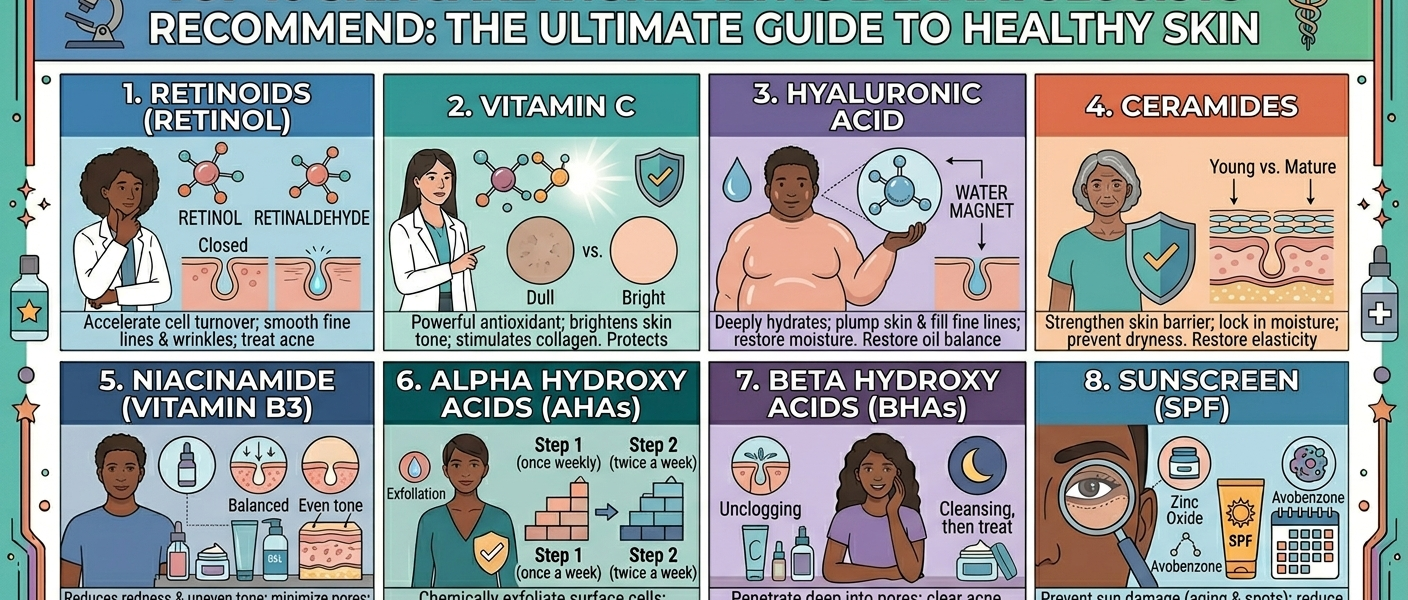
In this article, you will discover the Top 10 Skincare Ingredients Dermatologists Recommend: The Ultimate Guide to Healthy Skin how they work, and how to build an effective skincare routine using science based skincare products.
Why Skincare Ingredients Matter
Skincare products are only effective when they contain beneficial ingredients.
Understanding ingredients helps people:
- Choose suitable products
- Avoid irritation
- Target specific skin concerns
- Build better skincare routines
Knowledge based skincare leads to healthier and more balanced skin.
Understanding Different Skin Types
Before choosing skincare ingredients, identify your skin type.
Dry Skin
Feels tight and flaky.
Oily Skin
Produces excess oil and shine.
Combination Skin
Contains oily and dry areas.
Sensitive Skin
Reacts easily to products and environmental factors.
Acne Prone Skin
Frequently experiences breakouts and clogged pores.
Different ingredients work better for different skin needs.
1. Retinol
Retinol is one of the most dermatologist recommended skincare ingredients.
What Is Retinol
A vitamin A derivative that supports skin renewal.
Benefits of Retinol
- Reduces wrinkles
- Improves skin texture
- Fades dark spots
- Helps acne treatment
- Stimulates collagen production
Retinol is highly effective for anti-aging skincare.
Brands like CeraVe and The Ordinary offer popular retinol products.
Important Tip
Retinol should be introduced gradually to reduce irritation.
2. Hyaluronic Acid
Hyaluronic acid is famous for hydration.
How It Works
It attracts moisture and helps skin retain water.
Benefits
- Deep hydration
- Plumper skin appearance
- Reduced dryness
- Improved smoothness
Hydrated skin often looks healthier and more youthful.
3. Vitamin C
Vitamin C is a powerful antioxidant used in many skincare routines.
Benefits of Vitamin C
- Brightens skin tone
- Fades hyperpigmentation
- Protects against environmental damage
- Supports collagen production
Vitamin C is especially popular for glowing skin routines.
4. Niacinamide
Niacinamide is one of the most versatile skincare ingredients.
Benefits
- Reduces redness
- Improves skin barrier
- Minimizes pores
- Controls oil production
- Brightens uneven skin tone
Sensitive and acne prone skin often responds well to niacinamide.
5. Sunscreen
Dermatologists consider sunscreen one of the most important skincare products.
Why Sunscreen Matters
UV exposure accelerates skin aging and increases skin damage.
Benefits of Daily Sunscreen
- Prevents wrinkles
- Reduces sunspots
- Protects collagen
- Helps prevent skin cancer
Brands like La Roche-Posay and Supergoop! are highly recommended for UV protection.
6. Ceramides
Ceramides help strengthen the skin barrier.
What Ceramides Do
- Lock in moisture
- Reduce irritation
- Improve dryness
- Protect against environmental stressors
Healthy skin barriers are essential for long term skin health.
7. Salicylic Acid
Salicylic acid is highly effective for oily and acne prone skin.
Benefits
- Unclogs pores
- Reduces breakouts
- Controls oil
- Improves texture
It belongs to the beta hydroxy acid family.
Important Tip
Overuse may cause dryness, especially for sensitive skin.
8. Glycolic Acid
Glycolic acid is a popular exfoliating ingredient.
Benefits
- Removes dead skin cells
- Improves skin brightness
- Reduces rough texture
- Softens fine lines
Chemical exfoliation helps create smoother skin.
9. Peptides
Peptides support skin repair and collagen production.
Why Peptides Are Popular
- Improve firmness
- Reduce fine lines
- Support elasticity
- Strengthen skin barrier
Peptides are commonly found in anti-aging products.
10. Azelaic Acid
Azelaic acid is recommended for multiple skin concerns.
Benefits
- Reduces redness
- Helps acne
- Brightens skin tone
- Improves sensitivity issues
It works well for people with rosacea prone skin.
How Dermatologists Choose Skincare Ingredients
Dermatologists focus on:
- Scientific evidence
- Skin compatibility
- Long term safety
- Ingredient effectiveness
Research based skincare often produces the best results.
Ingredients That Work Well Together
Vitamin C and Sunscreen
Enhance protection against environmental stress.
Hyaluronic Acid and Retinol
Hydration helps reduce retinol irritation.
Niacinamide and Ceramides
Strengthen and calm the skin barrier.
Combining compatible ingredients improves skincare effectiveness.
Ingredients That Should Be Used Carefully Together
Some ingredient combinations may irritate skin.
Common Examples
- Strong acids with retinol
- Over exfoliating products
- Too many active ingredients at once
Balanced skincare routines are safer and more effective.
The Importance of Skin Barrier Health
Healthy skin barriers protect against moisture loss and irritation.
Signs of a Damaged Barrier
- Redness
- Dryness
- Burning sensation
- Increased sensitivity
Barrier focused skincare supports long term skin health.
The Role of Hydration in Skincare
Hydration is essential for healthy skin function.
Benefits of Hydrated Skin
- Smoother texture
- Better elasticity
- Healthier appearance
Hydration supports all skin types.
Anti-Aging Ingredients Dermatologists Recommend
Most Popular Anti-Aging Ingredients
- Retinol
- Peptides
- Vitamin C
- Sunscreen
These ingredients help improve signs of aging over time.
Acne Fighting Ingredients Recommended by Dermatologists
Most Effective Acne Ingredients
- Salicylic acid
- Retinol
- Azelaic acid
- Niacinamide
Acne treatment often requires consistency and patience.
Sensitive Skin and Gentle Ingredients
Sensitive skin requires calming products.
Recommended Ingredients
- Ceramides
- Niacinamide
- Hyaluronic acid
Gentle skincare reduces irritation risk.
Skincare Myths About Ingredients
Myth 1 Expensive Products Are Always Better
Ingredient quality matters more than price.
Myth 2 Natural Ingredients Are Always Safer
Natural products can still cause irritation.
Myth 3 More Products Mean Better Results
Overusing skincare may damage the skin barrier.
Understanding skincare science prevents common mistakes.
Social Media and Skincare Trends
Social media strongly influences skincare culture.
Beauty influencers often share:
- Ingredient reviews
- Product recommendations
- Dermatologist interviews
- Skincare routines
However, skincare should always be personalized.
Sustainable and Clean Beauty Trends
Consumers increasingly prefer:
- Cruelty free products
- Fragrance free skincare
- Sustainable packaging
- Ethical beauty brands
The skincare industry continues adapting to conscious consumer habits.
How to Build a Dermatologist Approved Routine
Morning Routine
- Gentle cleanser
- Vitamin C serum
- Moisturizer
- Sunscreen
Evening Routine
- Cleanser
- Retinol or treatment serum
- Moisturizer
Simple and consistent routines usually work best.
Common Skincare Mistakes to Avoid
- Skipping sunscreen
- Over exfoliating
- Using too many active ingredients
- Changing products too frequently
Patience and consistency are important for visible results.
The Future of Skincare Science
Future skincare trends may include:
- AI based skin analysis
- Personalized skincare products
- Biotechnology ingredients
- Advanced peptide research
Scientific innovation continues transforming the skincare industry.
These resources provide expert skincare education and dermatologist supported advice.
Conclusion
Understanding skincare ingredients is one of the best ways to build healthier and more effective skincare routines. Dermatologists consistently recommend science backed ingredients like retinol, sunscreen, hyaluronic acid, niacinamide, and peptides because of their proven benefits for many skin concerns.
Healthy skin is not about following every beauty trend. Instead, it depends on choosing suitable ingredients, maintaining consistency, and protecting the skin barrier. Whether your goal is anti-aging, acne treatment, hydration, or brightening, the right ingredients can significantly improve skin appearance and health.
Skincare should focus on long term care, balance, and realistic expectations. By learning how ingredients work, consumers can make smarter and more confident skincare choices.
FAQs
What is the most important skincare ingredient?
Dermatologists often consider sunscreen the most important skincare product.
Is retinol suitable for beginners?
Yes, beginners should start with low strength retinol products slowly.
Why is hyaluronic acid popular?
It deeply hydrates and plumps the skin.
Can niacinamide help acne?
Yes, niacinamide helps reduce oil production and redness.
How often should exfoliating acids be used?
Most people benefit from using them only a few times weekly.
Are expensive skincare products always better?
No, effective ingredients matter more than brand price.
Why is sunscreen important every day?
Daily sunscreen protects skin from UV damage and premature aging.