The Science of Skin Barrier Repair: How to Rebuild Healthier Skin
The Science of Skin Barrier Repair is easier to understand when we view the barrier as a living biological system rather than a passing skincare trend. Your skin is continuously adapting to weather, cleansing, friction, ultraviolet exposure, allergens, microorganisms, and the products you apply. Its outer layers must limit unnecessary water loss while still allowing normal shedding, renewal, and communication between skin cells.
When this system works effectively, the skin usually feels comfortable, flexible, and relatively resilient. When it becomes disrupted, familiar products may sting, the surface may feel unusually tight, and dry or inflamed patches may appear. These changes often encourage people to add more serums, oils, masks, or exfoliants. Unfortunately, adding too many products can make the problem harder to identify and may extend the irritation.
A professional barrier repair approach starts with understanding the structure of the stratum corneum, recognizing the difference between dryness and inflammation, and reducing exposure to likely triggers. It also requires realistic expectations. Moisturizers can support recovery, but they cannot diagnose an allergy, cure an infection, or replace prescribed treatment for conditions such as eczema or severe contact dermatitis.
This guide explains how the skin barrier works, what commonly damages it, which ingredients provide meaningful support, and how to create a practical routine for sensitive or compromised skin. It is designed to remain accessible for beginners while offering enough physiological detail to help experienced skincare users make more informed decisions.
Related Articles
What Is the Skin Barrier and How Does It Work?
The term “skin barrier” is sometimes used broadly to describe the entire skin surface. More precisely, the primary permeability barrier is located within the stratum corneum, the outermost portion of the epidermis. Although this layer is extremely thin, it performs essential work. It reduces excessive water movement out of the body, limits penetration by many external substances, supports protection from mechanical stress, and contributes to antimicrobial defense.
The stratum corneum is not an inactive sheet of dead material. It is a highly organized structure made from mature cells, proteins, lipids, enzymes, water-binding compounds, and signaling molecules. These elements must remain properly arranged for the barrier to function efficiently. A person can apply plenty of moisturizer and still experience irritation if cleansing, inflammation, or repeated exfoliation continues to disturb this organization.
Barrier performance also depends on processes taking place below the surface. New epidermal cells form in deeper layers and gradually mature as they move upward. During this journey, they produce structural proteins and lipid precursors that later become part of the outer barrier. This means that repair involves both immediate surface protection and longer-term biological renewal.
Understanding this system helps explain why no single serum can “fix” every barrier concern. Effective care must reduce ongoing damage, replace lost water and lipids, and create conditions in which normal epidermal maturation can continue. The following components are especially important when evaluating barrier health.
For a clear overview of skin barrier function and the factors that can weaken it, this evidence-informed resource provides helpful background that complements the concepts explained here.
The “Bricks and Mortar” Structure
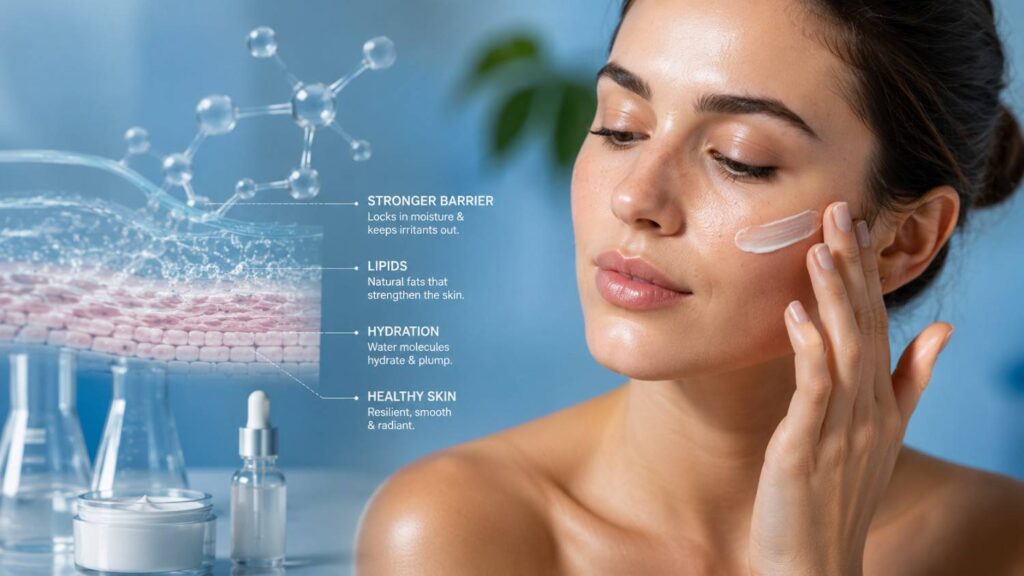
The “bricks and mortar” model is one of the clearest ways to understand the stratum corneum. Corneocytes are the bricks. These flattened, protein-rich cells develop from keratinocytes as they move toward the skin surface. Each corneocyte is surrounded by a strong outer envelope that helps it resist physical and chemical stress.
The mortar is a carefully organized mixture of lipids positioned between the corneocytes. Its major components include ceramides, cholesterol, and free fatty acids. These lipids are arranged in layered structures that slow water movement and make it more difficult for many outside substances to pass through the epidermis.
A healthy barrier requires both parts of this model to work together. Strong corneocytes without properly organized lipids would leave pathways through which water could escape. Lipids alone would not provide the mechanical structure needed to resist friction and environmental stress.
When harsh cleansers, solvents, excessive exfoliation, inflammation, or low humidity disturb the lipid matrix, the mortar becomes less effective. Small gaps may form within the organization of the outer layer. This does not mean the skin is literally cracked in every case, but its permeability can increase, making dryness, stinging, and sensitivity more likely.
Why Transepidermal Water Loss Matters
Transepidermal water loss, commonly abbreviated as TEWL, is the passive movement of water from inside the body through the epidermis and into the surrounding air. Some TEWL occurs continuously and is part of normal skin physiology. The goal of a healthy barrier is not to stop all water movement but to regulate it effectively.
When the stratum corneum is disrupted, water can escape more quickly. Increased TEWL can leave the outer layers less flexible and more vulnerable to microscopic fissures, irritation, and scaling. This explains why compromised skin may continue to feel tight shortly after a lightweight hydrating serum is applied. The added water is not being retained effectively.
TEWL is frequently used in dermatological research to evaluate barrier function, although individual readings can be influenced by temperature, humidity, body location, and measurement conditions. For everyday skincare decisions, a device is not necessary. Persistent tightness, rapid return of dryness after moisturizing, and increased sensitivity can provide practical clues that water retention is impaired.
A complete barrier routine therefore combines hydration with methods that reduce evaporation. Humectants add or bind water, emollients improve surface flexibility, and occlusives slow water loss. Supporting all three functions is generally more effective than relying on hydration alone.
The Role of the Acid Mantle and Natural Moisturizing Factor
The skin surface normally maintains a mildly acidic environment often called the acid mantle. This acidity helps regulate enzymes involved in barrier formation and normal shedding. It also contributes to an environment that supports beneficial microorganisms while discouraging the growth of some harmful organisms.
Repeated use of strongly alkaline soaps can temporarily raise surface pH and interfere with these processes. Healthy skin can often recover, but frequent exposure may become more problematic for people with eczema, sensitive skin, or an already compromised barrier. This is one reason gentle, appropriately formulated cleansers are usually preferable to traditional high-pH soaps for dry facial skin.
Natural moisturizing factor, or NMF, is another important part of the barrier system. It consists of water-attracting substances found inside corneocytes, including amino acids and related compounds. NMF helps the outer skin remain hydrated, flexible, and capable of normal shedding.
When NMF levels are reduced through excessive washing, environmental exposure, aging, or inflammatory skin disease, the surface may become rough and flaky. Effective barrier care therefore supports both the lipid environment between cells and the water-binding capacity within those cells. Moisturizers containing compatible humectants can help, but they work best when combined with ingredients that reinforce the surrounding surface.
What Are the Signs of a Damaged Skin Barrier?
A damaged skin barrier does not produce one universal appearance. Symptoms vary according to skin type, skin tone, body location, climate, underlying health conditions, and the cause of the disruption. Someone living in a cold, dry climate may notice roughness and scaling, while another person may mainly experience burning after product application. On deeper skin tones, visible redness may appear as darkening, violet discoloration, ashiness, or changes in texture rather than bright pink skin.
The most useful comparison is often your own normal baseline. If a moisturizer that previously felt comfortable suddenly causes stinging, the skin may be irritated even when the surface does not look dramatically different. Similarly, an unexpected increase in flaking, tightness, sensitivity, or itching may indicate that the barrier is under stress.
However, the phrase “damaged skin barrier” is not a formal diagnosis for every rash. Contact dermatitis, eczema, rosacea, psoriasis, acne, fungal infections, and perioral dermatitis can all affect the surface and may share overlapping symptoms. Treating every reaction with heavy occlusive products or stopping all medications without guidance can delay appropriate care.
A careful assessment should consider timing, product changes, symptom distribution, and severity. Think about what changed during the days or weeks before the reaction began. New skincare, stronger active ingredients, frequent masks, professional treatments, weather changes, illness, medications, and increased cleansing can all provide useful clues.
Common Signs and Sensations
Common signs of barrier disruption include tightness, roughness, dryness, scaling, flaking, itching, tenderness, burning, and increased reactivity. The skin may appear dull or uneven because dehydrated corneocytes do not reflect light as smoothly. Makeup may separate, cling to dry patches, or emphasize texture that was not previously noticeable.
Stinging is an especially useful clue. Ingredients such as water-based moisturizers or gentle sunscreens may suddenly feel uncomfortable because the irritated surface allows greater interaction with sensory nerves. This does not always mean the product is inherently unsafe. It may indicate that the skin is temporarily less tolerant.
More significant inflammation can produce swelling, cracking, warmth, oozing, crusting, or a sharply defined rash. These findings suggest that the problem may extend beyond routine cosmetic irritation. Allergic contact dermatitis, for example, can develop even after repeated use of a previously tolerated ingredient because allergies may appear after sensitization over time.
The pattern matters as much as the symptom. Irritation concentrated around the eyelids may have a different trigger from uniform facial dryness. A rash that spreads beyond the area of product application also deserves attention. When symptoms are severe, persistent, or difficult to explain, professional evaluation is more reliable than repeated trial and error.
Dry Skin, Dehydrated Skin, and Barrier Disruption
Dry skin and dehydrated skin are related but not identical concepts. Dry skin generally refers to reduced surface lipids or naturally lower oil production. It may be a long-term skin type or a temporary condition caused by age, weather, cleansing, or medication. Dehydrated skin refers more specifically to insufficient water within the outer skin layers.
Barrier disruption can involve both lipid loss and reduced water content. This is why applying a watery serum may produce temporary comfort without resolving persistent flaking. A humectant can attract or bind water, but the improvement may be short-lived if the surface lacks enough lipids and occlusive support to retain that moisture.
Conversely, applying a thick oil or ointment without adding hydration may not fully correct tight, dehydrated skin. Oils can soften the surface and slow evaporation, but they do not necessarily increase water-binding capacity inside the corneocytes. Balanced products combine several functional ingredient categories.
For practical purposes, focus less on assigning a perfect label and more on the skin’s behavior. If dryness returns quickly, products sting, and the surface feels inflexible, the routine likely needs gentler cleansing and a more complete moisturizer. Persistent inflammation, intense itching, or sharply defined patches may indicate a dermatological condition rather than ordinary dehydration.
Barrier Damage Versus Acne or “Purging”
The term “purging” is often used to describe an initial increase in breakouts after starting an ingredient that accelerates skin-cell turnover, such as a retinoid or exfoliating acid. True purging generally occurs in areas where a person already tends to develop clogged pores. It should not automatically be used to explain widespread burning, swelling, itching, or a new rash.
Barrier irritation may produce small red bumps that resemble acne. Inflammation can also make existing breakouts look more severe. Continuing an irritating product because the reaction is assumed to be purging may worsen both the barrier and the acne.
Location and sensation offer helpful clues. Acne commonly involves blackheads, whiteheads, papules, pustules, or deeper nodules. Irritant dermatitis is more likely to produce diffuse stinging, tightness, scaling, and burning. Perioral dermatitis may create clusters of small bumps around the mouth, nose, or eyes and can be aggravated by inappropriate topical treatments.
Because these conditions can overlap, self-diagnosis is not always straightforward. A gentle routine is a reasonable temporary measure, but persistent or worsening bumps should be assessed professionally. Accurate diagnosis prevents the cycle of repeatedly introducing acne treatments that further irritate a rash caused by something else.
What Damages the Skin Barrier?
The skin barrier is designed to tolerate ordinary environmental exposure, but its resilience has limits. Damage often develops through accumulated stress rather than one dramatic event. A person may tolerate a cleanser, exfoliating toner, retinoid, and acne treatment individually, yet experience irritation when all four are used together. Frequency, concentration, climate, and application order can change how the routine affects the skin.
Repeated disruption is particularly important. The skin may begin repairing itself after an irritating treatment, only to be exposed again before recovery is complete. This cycle can create ongoing tightness and sensitivity that appears mysterious because no single product seems severe enough to explain it.
Underlying conditions can lower the threshold for irritation. People with atopic dermatitis, rosacea, allergies, or very dry skin may react to routines that others tolerate. Age also matters because lipid production and recovery processes can change over time. Medications, hormonal changes, and occupational exposure may further influence barrier performance.
Identifying the cause is more valuable than simply purchasing a product labeled “barrier repair.” A moisturizer may reduce symptoms, but the improvement will remain limited if the person continues using a harsh cleanser, applying exfoliating acids daily, or exposing the skin to repeated friction.
The following causes are among the most common, although they are not the only possibilities. Reviewing them systematically can help reveal which part of a routine or environment should be modified first.
| Risk Factor | How It Affects the Skin Barrier | Prevention Strategy | Severity Level |
|---|---|---|---|
| Over-cleansing | Removes protective lipids and increases moisture loss | Cleanse only twice daily with a gentle cleanser | High |
| Harsh Exfoliation | Weakens the outer skin layer and causes irritation | Limit exfoliation and avoid overuse of acids | High |
| Excess Active Ingredients | Triggers redness, dryness, and sensitivity | Introduce one active ingredient at a time | High |
| Hot Water | Strips natural oils from the skin | Wash with lukewarm water instead | Medium |
| Cold or Dry Weather | Accelerates transepidermal water loss (TEWL) | Apply moisturizer more frequently | Medium |
| Sun Exposure | Weakens the skin’s protective barrier | Use broad-spectrum sunscreen daily | High |
| Friction (Masks/Shaving) | Creates irritation and micro-damage | Reduce friction and moisturize afterward | Medium |
| Fragranced Skincare | May trigger irritation in sensitive skin | Choose fragrance-free products | Medium |
Over-Cleansing and Harsh Surfactants
Cleansers use surfactants to loosen oil, sunscreen, makeup, sweat, and debris so they can be rinsed away. This process is useful, but it can also remove some of the lipids and water-binding substances that support the stratum corneum. The effect depends on the surfactant system, product pH, water temperature, cleansing duration, and frequency of use.
A cleanser that leaves the face feeling tight, squeaky, or uncomfortable may be removing more than the skin can readily replace. Washing several times a day, double cleansing when it is not necessary, or using hot water can increase the cumulative effect. Scrubbing with textured cloths, brushes, or grainy exfoliants adds mechanical stress.
People with oily or acne-prone skin sometimes cleanse aggressively because they fear that gentler products will leave residue. However, irritation does not reliably prevent acne and may make treatment more difficult to tolerate. Effective cleansing should remove what needs to be removed without creating prolonged discomfort.
A mild cleanser can still clean the skin successfully. Look for fragrance-free formulas designed for sensitive or dry skin, and use lukewarm rather than hot water. When the face is not visibly dirty or covered with water-resistant products, a morning water rinse may be sufficient for some individuals.
Overuse of Active Ingredients
Active ingredients can provide meaningful benefits, but many work by altering cell turnover, pigmentation, oil production, or inflammation. Retinoids, alpha hydroxy acids, beta hydroxy acids, benzoyl peroxide, and strong acidic vitamin C formulas may all cause irritation when introduced too quickly or combined without a clear plan.
The risk is not limited to high concentrations. A moderately strong product used every night may be more irritating than a stronger formula used carefully once or twice a week. Applying active ingredients to damp skin can also increase penetration and intensify the response in some cases.
Layering several products with overlapping functions is a common problem. A cleanser containing an exfoliating acid, followed by an exfoliating toner, retinoid, and acne spot treatment may expose the skin to more irritation than the user realizes. Each label may look reasonable in isolation, but the total routine is excessive.
When burning, scaling, or persistent sensitivity develops, temporarily pausing nonessential actives is usually more helpful than adding another corrective serum. Once the skin is comfortable, products should be reintroduced individually. This approach helps identify tolerance limits and makes it easier to determine which ingredient or frequency caused the reaction.
Environment, Friction, and Skin Conditions
Environmental conditions influence how quickly water leaves the skin. Cold air and low indoor humidity can increase dryness, especially during winter or in air-conditioned spaces. Wind exposure may further increase discomfort by combining evaporation with mechanical stress. Heat and sweating can also aggravate inflamed or eczema-prone skin.
Friction is another underestimated cause. Face coverings, tight clothing, shaving, frequent wiping, sports equipment, and repetitive rubbing can disturb the outer layer. Even a soft towel may contribute when the skin is rubbed vigorously rather than patted dry.
Ultraviolet exposure affects several aspects of skin biology and can worsen inflammation. Sun protection remains important during barrier recovery, although finding a comfortable sunscreen can be challenging when the skin is highly reactive. A fragrance-free broad-spectrum product should be introduced carefully, with physical shade and protective clothing used as additional measures.
Underlying dermatological conditions may produce chronic or recurrent barrier dysfunction. Atopic dermatitis, contact dermatitis, rosacea, psoriasis, and certain genetic disorders require condition-specific management. In these situations, moisturizer supports treatment but does not replace it. Persistent symptoms, especially intense itching, oozing, pain, or spreading inflammation, should be assessed by a dermatologist or other qualified clinician.
How to Repair the Skin Barrier Step by Step
Repairing the skin barrier is less about finding one miraculous ingredient and more about creating a low-irritation environment in which normal recovery can occur. The most effective routines are usually simpler than the routines that caused the problem. They reduce exposure to likely triggers, provide water and lipids, limit evaporation, and protect the surface from further stress.
Consistency matters more than complexity. Switching moisturizers every few days or testing several “barrier” products at once makes it difficult to determine what the skin tolerates. A short routine followed consistently gives the skin time to respond and provides clearer information about whether symptoms are improving.
It is also important to separate cosmetic irritation from medical disease. Mild tightness after over-exfoliation may improve with supportive care. A widespread rash, facial swelling, blistering, infection, or severe pain requires a different approach. Barrier repair advice should never be used to delay medical attention when symptoms are concerning.
A practical routine should account for individual skin type. Someone with acne-prone skin may prefer a lighter cream, while a person with severe dryness may need an ointment on selected areas. Product labels such as “non-comedogenic,” “fragrance-free,” and “for sensitive skin” can be useful starting points, but personal tolerance remains the final test.
The following three-step process provides a structured way to simplify care, support hydration, and cautiously rebuild the routine once the skin is stable.
| Time of Day | Recommended Action | Primary Goal | Suitable Product Type |
|---|---|---|---|
| Morning | Gentle cleanse or rinse | Remove overnight buildup | Mild fragrance-free cleanser |
| Morning | Apply moisturizer | Restore hydration and support barrier | Ceramide-based moisturizer |
| Morning | Apply sunscreen | Protect against UV damage | Broad-spectrum SPF 30+ |
| Afternoon | Reapply moisturizer if skin feels dry | Prevent moisture loss | Lightweight cream or lotion |
| Evening | Gentle cleanse | Remove sunscreen and impurities | Non-stripping cleanser |
| Evening | Apply barrier repair moisturizer | Replenish lipids and hydration | Cream containing ceramides and fatty acids |
| Night (Optional) | Apply thin occlusive layer on dry areas | Reduce overnight water loss | Petrolatum or occlusive ointment |
Step 1—Remove Likely Triggers
Begin by pausing products most likely to intensify irritation. Common examples include scrubs, exfoliating brushes, leave-on acids, retinoids, strong acne treatments, fragranced products, essential oils, and recently introduced serums. The goal is not to declare these products permanently harmful but to reduce variables while the skin is reactive.
Review the timeline carefully. Think about what changed during the week or two before symptoms appeared. A new product is an obvious possibility, but increased frequency of an existing product can be equally important. Professional peels, waxing, shaving, travel, cold weather, illness, and prolonged mask use may also contribute.
Avoid picking at flakes or repeatedly touching the area. Removing visible peeling skin can create additional microscopic injury and may increase the risk of discoloration, especially in skin tones prone to post-inflammatory hyperpigmentation.
Prescribed treatments need special consideration. Do not discontinue a medically necessary topical or oral medication solely on general skincare advice. Contact the prescribing clinician to discuss the reaction and determine whether the dose, frequency, application method, or supporting routine should be adjusted. A targeted change is safer than abandoning treatment without understanding the cause.
Step 2—Cleanse Gently and Moisturize Promptly
Use lukewarm water and a mild, fragrance-free cleanser that rinses without leaving prolonged tightness. Cleanse with fingertips rather than abrasive tools, and avoid scrubbing. People wearing heavy makeup or water-resistant sunscreen may need a thorough evening cleanse, but repeated washing during the day is rarely necessary for barrier recovery.
After cleansing, gently pat the skin so it remains slightly damp. Apply moisturizer promptly to help retain some of that water. Creams and ointments usually offer more support than thin lotions because they contain a higher proportion of emollient and occlusive ingredients.
A practical morning routine may include a gentle rinse or cleanse, moisturizer, and broad-spectrum sunscreen. The evening routine can consist of one thorough cleanse followed by moisturizer. Very dry areas may benefit from a small amount of petrolatum or another tolerated occlusive over the cream.
Avoid assuming that thicker is always better. Acne-prone or heat-sensitive skin may prefer a lighter fragrance-free cream. The best barrier repair moisturizer is one that provides adequate comfort without causing persistent clogging, itching, or burning. Apply it consistently rather than waiting until the skin feels severely dry.
Step 3—Reintroduce Products One at a Time
Do not rush to restart active ingredients as soon as the skin looks slightly better. Visible flaking may improve before sensitivity and barrier function have fully normalized. Wait until cleansing and moisturizing feel consistently comfortable and the skin is no longer becoming progressively red, tight, or irritated.
Reintroduce one product at a time. Use it at a lower frequency than before and observe the skin through several applications. If multiple products are added simultaneously, identifying the cause of a new reaction becomes difficult.
Patch testing can reduce risk, although it cannot guarantee that a product will be tolerated on the entire face. Apply a small amount to a limited area for several days, following label directions. Stop if itching, swelling, blistering, or significant burning develops.
When restarting actives, avoid combining several on the same night. A person returning to retinoid use, for example, may begin with a small amount once or twice weekly and apply moisturizer to improve comfort. The correct schedule varies by product and medical need. Prescribed treatments should be restarted according to professional guidance rather than a generalized online timetable.
Which Ingredients Support Skin Barrier Repair?
Ingredient selection becomes easier when products are evaluated by function rather than marketing language. A moisturizer labeled “barrier repair” may contain several helpful categories, while another product with no barrier-focused branding may offer a similar combination. The formulation as a whole matters more than the presence of one fashionable ingredient.
Humectants increase water content by attracting or binding water. Emollients fill spaces between rough surface cells and improve softness. Occlusives create a water-resistant layer that slows evaporation. Physiological lipids, including ceramides, cholesterol, and fatty acids, resemble components naturally present in the stratum corneum.
These categories are complementary. Hyaluronic acid is not a substitute for ceramides, and ceramides do not perform exactly the same role as petrolatum. A well-formulated moisturizer may include all three types of support: water-binding ingredients, surface-smoothing ingredients, and evaporation-reducing ingredients.
Tolerance should remain the priority. Botanical extracts, essential oils, and complex blends are not automatically superior because they sound natural. Every additional ingredient creates another potential exposure for extremely reactive skin. During an active flare, a shorter ingredient list may be easier to evaluate.
The following table summarizes the main functional groups. It should be used as a guide rather than a rigid product-selection formula, since concentration, delivery system, texture, packaging, and individual sensitivity all influence performance.
| Ingredient category | Examples | Main role | Practical note |
|---|---|---|---|
| Barrier lipids | Ceramides, cholesterol, fatty acids | Support the lipid matrix of the stratum corneum | Often combined in creams designed for dry or eczema-prone skin |
| Humectants | Glycerin, hyaluronic acid, urea | Attract or bind water in the outer skin | Perform best when paired with emollient or occlusive support |
| Emollients | Squalane, fatty alcohols, triglycerides | Soften rough skin and improve flexibility | Texture and acne tolerance vary by formulation |
| Occlusives | Petrolatum, mineral oil, dimethicone | Reduce evaporation and shield the surface | Particularly helpful for very dry or exposed areas |
| Supportive actives | Niacinamide, panthenol | May support hydration and barrier-related processes | Introduce cautiously when skin is actively stinging |
Ceramides, Cholesterol, and Fatty Acids
Ceramides, cholesterol, and free fatty acids are central components of the lipid matrix between corneocytes. They help form the organized layers that regulate permeability and water retention. Ceramides are especially prominent in barrier-focused skincare marketing, but they do not work in complete isolation from the other lipids.
Different ceramide types exist naturally in human skin, and cosmetic formulations vary considerably. The name “ceramide” on a label does not reveal the concentration, ratio, delivery system, or overall quality of the product. A formula’s performance depends on how its ingredients work together.
Research on ceramide-containing moisturizers suggests that they can improve hydration and measures of barrier function in certain populations, including people with dry or eczema-prone skin. However, these products should be considered supportive care rather than a cure for inflammatory skin disease.
When choosing a ceramide product, consider the entire formulation. Fragrance-free creams containing humectants and occlusives may offer broader support than a lightweight ceramide serum alone. People with very reactive skin should still patch-test because a product can contain beneficial lipids alongside preservatives, botanical extracts, or other ingredients that are not personally tolerated.
Readers interested in the clinical evidence behind these formulations can explore this ceramide barrier research, which reviews how ceramide-based therapies support skin barrier recovery.
Humectants, Emollients, and Occlusives
Humectants, emollients, and occlusives address different aspects of dryness. Humectants such as glycerin, hyaluronic acid, and urea increase water binding in the outer skin. Glycerin is widely used because it functions effectively across many product types and is generally well tolerated.
Emollients soften rough texture by filling spaces between irregular surface cells. Examples include squalane, fatty alcohols, esters, and various plant-derived or synthetic lipids. They improve flexibility and can make flaky skin feel smoother, but their effects depend on the formulation.
Occlusives reduce the rate at which water evaporates from the skin. Petrolatum is one of the most effective and well-established examples. Mineral oil and dimethicone also provide protective, evaporation-reducing benefits with different textures.
A balanced moisturizer often combines all three groups. The humectant increases water content, the emollient improves surface feel, and the occlusive helps retain the added moisture. This explains why layering several hydrating serums may be less effective than using one complete cream. Product choice should account for climate, skin type, body area, and acne susceptibility rather than following a universal texture recommendation.
Niacinamide and Sensitive-Skin Cautions
Niacinamide, also known as nicotinamide, is a form of vitamin B3 used in many moisturizers and treatment products. Research suggests that topical niacinamide can support epidermal barrier function, improve hydration, and influence the production of certain skin lipids, including ceramides. It may also provide anti-inflammatory and tone-supporting benefits in appropriate formulations.
These properties make niacinamide useful, but they do not mean every person needs a high-concentration serum. Some users report stinging, flushing, or irritation, especially when the barrier is already compromised or when the product contains a high percentage and multiple additional actives.
More is not automatically better. A modest amount of niacinamide within a well-formulated moisturizer may be easier to tolerate than a concentrated standalone serum. Product pH, solvent system, and combination with other ingredients also influence comfort.
During active burning or severe sensitivity, begin with a bland fragrance-free moisturizer rather than testing multiple supportive actives. Niacinamide can be introduced later when the skin is stable. Patch-test first, use it at a conservative frequency, and stop if symptoms consistently worsen. Barrier care should reduce irritation, not create another tolerance challenge.
How Long Does Skin Barrier Repair Take?
There is no universal recovery period that applies to every damaged skin barrier. The time required depends on what caused the disruption, how severe it is, how long it has been present, and whether the trigger has been removed. Mild irritation after a single episode of over-exfoliation may settle relatively quickly, while chronic dermatitis or repeated exposure to an allergen may continue until the underlying issue is treated.
Body location matters because skin thickness, oil production, friction, and environmental exposure vary across different areas. Age, climate, overall health, medication use, and inflammatory skin conditions can also influence recovery. For these reasons, promises that every barrier will heal in a fixed number of days should be treated cautiously.
The surface may look better before normal tolerance has returned. Reduced flaking does not always mean the skin is ready for daily exfoliation or multiple active ingredients. Restarting an aggressive routine too early can create a repeated cycle of improvement and relapse.
It is more useful to monitor functional signs. Cleansing should become more comfortable, moisturizer should sting less, tightness should return less quickly, and redness or scaling should gradually decline. Improvement should be reasonably consistent rather than lasting only a few hours after product application.
A patient approach generally produces better information and more stable results. If symptoms fail to improve, repeatedly return, or become more severe despite a simplified routine, the possibility of eczema, allergy, infection, rosacea, or another condition should be investigated.
What Progress Should Look Like
Early progress often appears as improved comfort rather than a dramatic visual transformation. The skin may sting less when water or moisturizer is applied. Tightness may take longer to return, and rough patches may begin to feel softer. Redness, itching, or visible scaling should gradually become less intense.
Recovery is rarely perfectly linear. Weather changes, sweating, friction, or accidental exposure to an irritating product may cause a temporary setback. A minor fluctuation does not necessarily mean the entire routine has failed, but repeated worsening suggests that a trigger remains.
Continue the gentle routine after the first signs of improvement. The temptation to restart every active ingredient at once is understandable, especially when acne or pigmentation treatment has been paused. However, doing so removes the ability to identify which product the skin can tolerate.
Documenting the routine can be useful. Note which products are used, how often they are applied, and when symptoms change. Photographs taken under consistent lighting may help track visible improvement. This structured approach is more reliable than changing multiple products based on how the skin feels at one moment.
When to See a Dermatologist
Medical assessment is appropriate when symptoms are severe, rapidly spreading, repeatedly returning, or not improving with a simplified routine. Pain, significant swelling, blistering, open sores, or involvement of the eyes, lips, mouth, or genital area should not be managed solely as routine barrier damage.
Signs of possible infection include increasing warmth, tenderness, pus, unpleasant odor, fever, or yellow-golden crusting. New or persistent weeping also warrants attention. People with eczema can be particularly vulnerable to secondary infection when the skin surface is broken.
A dermatologist may evaluate for irritant contact dermatitis, allergic contact dermatitis, atopic dermatitis, rosacea, psoriasis, perioral dermatitis, or infection. Patch testing may be recommended when an allergy is suspected. Treatment can include prescription anti-inflammatory medication, antimicrobial therapy, or a condition-specific skincare plan.
Seek urgent medical care for difficulty breathing, widespread hives, severe facial swelling, or symptoms suggesting a serious allergic reaction. General skincare guidance is intended for mild, uncomplicated irritation. It should never replace emergency care or delay evaluation of a rapidly worsening condition.
Quick Answer About The Science of Skin Barrier Repair
The Science of Skin Barrier Repair focuses on restoring the structure and function of the stratum corneum, which is the outermost layer of the epidermis. This layer is often described through a “bricks and mortar” model. Flattened skin cells called corneocytes form the bricks, while ceramides, cholesterol, and free fatty acids create the lipid-rich mortar between them. Together, these components help retain water, resist irritants, and protect the body from environmental stress.
When the barrier becomes disrupted, water can escape more easily through a process called transepidermal water loss. At the same time, skincare ingredients, allergens, pollutants, and microorganisms may penetrate the surface more readily. The result can be tightness, flaking, burning, itching, redness, roughness, or sensitivity to products that were previously comfortable.
Repair generally begins by removing the source of irritation and simplifying the skincare routine. A mild cleanser, fragrance-free moisturizer, appropriate sun protection, and temporary pause from strong active ingredients are usually more helpful than adding numerous new products.
Barrier-supporting formulas often combine humectants, emollients, occlusives, and physiological lipids. Humectants attract water, emollients smooth the surface, occlusives reduce evaporation, and ceramides or similar lipids help support the outer layer’s structure. Persistent, painful, blistering, infected, or rapidly worsening symptoms require assessment by a qualified medical professional.
Frequently Asked Questions About The Science of Skin Barrier Repair
Questions about barrier repair often sound simple but require context. The correct answer depends on whether the concern involves mild cosmetic irritation, chronic dry skin, an inflammatory condition, an allergy, or an infection. Advice that works after over-exfoliation may not be appropriate for an unexplained rash around the eyes or mouth.
The FAQs below address common informational and commercial-investigation searches while avoiding unrealistic promises. They explain what people can reasonably do at home, which ingredients perform different functions, and when professional guidance becomes important.
A recurring theme is simplification. People frequently respond to irritation by purchasing more products, yet every new formula adds another potential variable. A short routine gives the skin a more stable environment and makes reactions easier to interpret.
Another important theme is tolerance. An ingredient can be supported by research and still be unsuitable for one person. Concentration, formula design, frequency, and the current condition of the skin all affect the response. Barrier-focused skincare should be adjusted according to symptoms rather than copied exactly from another person’s routine.
Finally, the term “repair” should not be interpreted as an instant or permanent fix. The epidermis constantly renews itself, and the barrier remains exposed to daily stress. Long-term success depends on maintaining habits that preserve function, including moderate cleansing, consistent moisturizing, appropriate sun protection, and careful use of active ingredients.
What Is the Fastest Way to Repair a Damaged Skin Barrier?
The fastest practical strategy is to stop adding new irritation. Pause likely triggers, avoid scrubs and strong active ingredients, cleanse gently, and apply a fragrance-free cream or ointment consistently. This reduces the number of variables while supporting hydration and limiting further water loss.
Do not try to accelerate recovery by layering multiple “repair” serums. Even beneficial ingredients can sting when the surface is highly reactive. A simple moisturizer containing humectants, emollients, and occlusives is often more useful than a complicated routine.
Protect the skin from hot water, rubbing, wind, and unnecessary cleansing. Use a comfortable broad-spectrum sunscreen or rely on shade and protective clothing when sunscreen temporarily irritates the area.
Speed also depends on the diagnosis. An allergic reaction will continue if the allergen remains present, and an infection will not resolve through moisturizer alone. Seek professional care if symptoms are severe, spreading, painful, blistering, oozing, or failing to improve.
Should I Stop Retinol While Repairing My Skin Barrier?
When an over-the-counter retinol or retinoid is causing significant burning, scaling, tenderness, or persistent redness, pausing it temporarily is usually reasonable. Continuing through substantial irritation does not necessarily produce better results and may make the product harder to tolerate over time.
Use a gentle cleanser and supportive moisturizer while symptoms settle. Avoid replacing the retinoid with exfoliating acids or other strong actives during the pause, since this defeats the purpose of simplifying the routine.
Once the skin is consistently comfortable, reintroduce the product at a lower frequency. Apply only the recommended amount, avoid sensitive areas, and consider using moisturizer before or after application to improve tolerance.
Prescription retinoids require additional caution. If the medication was prescribed for acne, pigmentation, or another medical condition, contact the prescriber before making a long-term change. The clinician may adjust frequency, formulation, or supporting skincare rather than stopping treatment completely.
Are Ceramides or Hyaluronic Acid Better for Barrier Repair?
Ceramides and hyaluronic acid serve different functions, so one is not universally better. Ceramides are lipids that support the organized matrix between corneocytes. Hyaluronic acid is a humectant that helps bind water within a formulation and at the skin surface.
A person with a compromised barrier may benefit from both. Hyaluronic acid can improve hydration, while ceramides contribute lipid support. However, neither ingredient alone guarantees an effective product. The complete formulation determines how well water is attracted, retained, and protected from evaporation.
A cream combining humectants, emollients, occlusives, and barrier lipids usually provides broader support than a single-ingredient serum. Glycerin, fatty alcohols, dimethicone, petrolatum, cholesterol, and fatty acids may be just as relevant as the two ingredients highlighted on the front label.
Choose based on product performance and tolerance rather than marketing emphasis. Fragrance-free formulas with a comfortable texture are generally better starting points for reactive skin than highly fragranced or overly complex products.
Can a Damaged Skin Barrier Cause Acne?
Barrier disruption can contribute to inflammation and may make existing acne more difficult to manage, but it is not the sole cause of every breakout. Irritated skin can develop redness and small bumps that resemble acne, while aggressive acne treatment can simultaneously damage the barrier.
Heavy ointments may also clog pores for some acne-prone users, particularly when applied across the entire face. This does not make occlusives inherently harmful. It means texture and application area should be adjusted according to individual tolerance.
Use a gentle, non-irritating moisturizer that supports the barrier without feeling excessively heavy. Pause unnecessary exfoliation, but do not assume every acne medication must be permanently stopped. Prescription treatment should be adjusted with professional guidance.
Persistent bumps around the mouth or eyes may represent perioral dermatitis rather than acne. Itchy, sharply defined bumps may suggest contact dermatitis. When the appearance is unusual or does not respond as expected, accurate diagnosis is more useful than repeatedly changing acne products.
Does Niacinamide Repair the Skin Barrier?
Niacinamide can support several processes relevant to barrier function. Research suggests that it may improve hydration, reduce transepidermal water loss in some settings, and encourage production of skin lipids such as ceramides. It can therefore be a useful ingredient in a balanced moisturizer.
However, niacinamide should not be treated as an instant cure. A compromised barrier needs protection from ongoing irritation, appropriate cleansing, adequate moisturization, and time for normal epidermal renewal. One serum cannot compensate for repeated over-exfoliation or an untreated allergic reaction.
Concentration also matters. Higher percentages are not automatically more effective and may be less comfortable for reactive skin. A modest amount within a moisturizer may be easier to tolerate than a highly concentrated standalone product.
When the skin currently burns with nearly everything, begin with a bland fragrance-free cream. Introduce niacinamide later through patch testing and conservative use. Stop if it consistently increases redness, itching, or stinging.
Can I Exfoliate While My Barrier Is Healing?
It is generally best to pause exfoliation while the skin is burning, unusually tight, flaky, tender, or reactive. Both physical scrubs and chemical exfoliants remove or loosen surface cells, which may intensify discomfort when the stratum corneum is already compromised.
This pause includes products that may not be marketed primarily as exfoliants. Acid cleansers, exfoliating pads, peeling masks, rough cloths, cleansing brushes, and certain acne treatments can all contribute to cumulative irritation.
Wait until cleansing and moisturizing feel consistently comfortable and visible inflammation has settled. Then reintroduce one exfoliating product at a low frequency. Avoid combining it immediately with retinoids, benzoyl peroxide, or other potentially irritating actives.
Exfoliation is optional, not a basic requirement for healthy skin. Normal epidermal turnover already includes shedding. People with sensitive skin or eczema may need much less exfoliation than social media routines suggest. Comfort and long-term tolerance are more valuable than achieving a temporarily polished surface.
Conclusion
The central principle of barrier recovery is straightforward: reduce unnecessary stress and support normal skin physiology. The stratum corneum cannot function effectively when it is repeatedly exposed to harsh cleansing, excessive exfoliation, friction, and poorly tolerated products. Adding more ingredients does not solve a routine that remains fundamentally irritating.
A successful approach combines immediate protection with long-term prevention. Immediate care may include pausing strong actives, using a mild cleanser, applying a fragrance-free moisturizer, and protecting the skin from environmental exposure. Long-term care involves reintroducing treatment products gradually, monitoring tolerance, and avoiding the assumption that more frequent use always produces faster results.
Product choice should be guided by function. Humectants support water content, emollients improve softness, occlusives reduce evaporation, and physiological lipids help support the lipid matrix. A balanced moisturizer may contain several of these categories in one formulation.
The Science of Skin Barrier Repair also requires knowing the limits of cosmetic care. Moisturizer can support dry or irritated skin, but it cannot independently diagnose an allergy, treat an infection, or replace prescribed therapy for inflammatory conditions. Persistent, painful, blistering, oozing, or rapidly spreading symptoms need professional assessment.
The most reliable routine is not necessarily the most expensive or complex. It is the one that removes avoidable triggers, provides consistent support, and allows the skin to remain comfortable over time.
What to Remember
The stratum corneum acts as the skin’s primary permeability barrier. Corneocytes provide structural strength, while ceramides, cholesterol, and free fatty acids form the lipid matrix that helps regulate water loss and external exposure.
Signs of disruption may include tightness, flaking, roughness, stinging, burning, itching, redness, or sudden sensitivity to familiar products. These symptoms overlap with several dermatological conditions, so persistent or severe reactions should not be self-diagnosed indefinitely.
Barrier repair begins with simplification. Remove likely irritants, cleanse gently, moisturize promptly, and avoid repeatedly testing new products. Choose a moisturizer that combines water-binding, smoothing, and evaporation-reducing ingredients.
Recovery should be judged by improving comfort and tolerance rather than an arbitrary number of days. Restart active ingredients one at a time and at a lower frequency.
Most importantly, recognize medical warning signs. Pain, swelling, blistering, infection, spreading inflammation, and involvement of sensitive areas require professional care. Good skincare supports the barrier, but appropriate diagnosis protects long-term skin health.
Your Next Step
Begin by reviewing every product, treatment, and environmental change that occurred before the irritation started. Look for new formulas, increased application frequency, multiple exfoliants, hot water, professional treatments, friction, or changes in climate. Removing the trigger is often more effective than purchasing another corrective product.
Create a temporary routine with only essential steps: gentle cleansing, a fragrance-free moisturizer, and suitable sun protection. Use the same routine consistently rather than making daily adjustments based on short-term changes.
Track how the skin responds. Note whether stinging decreases, moisturizer becomes more comfortable, and tightness returns less quickly. When improvement is stable, reintroduce one product at a time.
Choose product categories according to function rather than marketing claims. A complete moisturizer that combines humectants, emollients, occlusives, and useful lipids may be more practical than several separate serums.
When symptoms remain unexplained, repeatedly return, or show warning signs, consult a dermatologist. A clear diagnosis can prevent months of unnecessary product changes and help distinguish ordinary irritation from eczema, allergy, infection, or another condition.