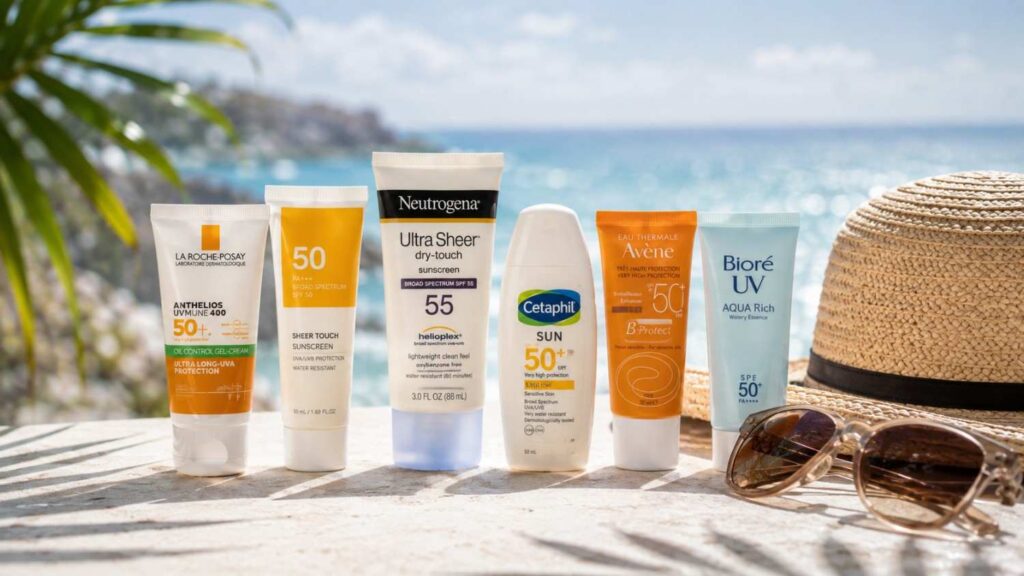
How to Choose the Right Sunscreen for Your Skin
Learning how to choose the right sunscreen for your skin is easier once you separate essential protection features from marketing language. Sunscreen shelves may include mineral, chemical, hybrid, tinted, matte, moisturizing, sport, stick, spray, serum, and facial formulas, but those descriptions do not all carry the same importance. Your first priority should be proven sun-protection characteristics, followed by a texture and formulation that work with your skin and daily routine.
For most people looking for everyday outdoor protection, the American Academy of Dermatology recommends choosing a sunscreen that is broad spectrum, water resistant, and SPF 30 or higher. Broad-spectrum labeling indicates protection against both UVA and UVB radiation, while SPF primarily relates to UVB-associated sunburn protection. No sunscreen blocks all ultraviolet radiation, so sunscreen should be used alongside other protective measures such as shade, clothing, hats, and sunglasses.
After those basics are covered, the “right” sunscreen becomes more personal. Someone with oily, acne-prone skin may value a non-comedogenic lightweight formula, while someone with dry or sensitive skin may prefer a creamier mineral sunscreen. Darker skin tones may benefit from tinted formulas that reduce visible white residue, and people managing melasma or dark spots may want iron oxides for added visible-light protection. This article provides general educational guidance and does not replace individualized advice from a dermatologist, particularly if you have persistent irritation, allergies, severe acne, rosacea, eczema, or another diagnosed skin condition.
What Should You Look for on a Sunscreen Label?
A sunscreen label contains far more useful information than the largest SPF number printed on the package. When comparing products, I recommend reading the protection claims before focusing on words such as “glow,” “matte,” “invisible,” “sport,” or “hydrating.” Cosmetic descriptions can help you choose a pleasant texture, but they do not replace the core protection features that determine whether the product is appropriate for regular outdoor use.
For additional guidance on evaluating sunscreen labels and using sunscreen effectively, the Skin Cancer Foundation provides practical sunscreen selection tips.
Start by checking three things: SPF, broad-spectrum protection, and water resistance. The AAD recommends SPF 30 or higher, broad-spectrum coverage, and water resistance. Broad-spectrum sunscreen is designed to protect against both UVA and UVB rays, while water-resistant products are tested to maintain labeled protection for either 40 or 80 minutes during water exposure, depending on the claim. Products cannot legitimately promise to be completely waterproof.
After confirming those basics, look at ingredient and skin-type information. Labels such as “non-comedogenic,” “sensitive skin,” “fragrance free,” or “tinted” may help narrow your options. Active ingredients tell you whether a product is mineral or uses other sunscreen filters, while inactive ingredients influence feel, fragrance, moisturization, and finish. The best label is not necessarily the one with the most claims. It is the one that combines appropriate protection with a formula you can apply consistently and comfortably.
Choose SPF 30 or Higher
SPF stands for sun protection factor and is most closely associated with protection from UVB radiation, the ultraviolet radiation that plays a major role in sunburn. The AAD recommends SPF 30 or higher and notes that SPF 30 filters approximately 97% of the sun’s UVB rays when used correctly. Higher SPF values filter somewhat more UVB, but no sunscreen can block 100% of UV radiation.
If you are comparing SPF levels, this SPF selection guidance provides a useful explanation of how SPF ratings relate to everyday sun protection.
This is why SPF 30 should be considered a practical baseline rather than a magic number. Choosing SPF 50 can be reasonable, especially if you prefer extra UVB protection, but the higher number does not compensate for applying too little sunscreen, missing areas, or failing to reapply. Sunscreen performance in real life depends heavily on how generously and consistently the product is used.
It is also important not to interpret SPF as a simple time multiplier. The FDA cautions against assuming that SPF tells you how many hours you can safely remain in sunlight. UV intensity changes according to time, location, weather, season, reflection, and other factors. Reapplication and additional sun-protective measures remain necessary regardless of whether the label says SPF 30, SPF 50, or higher.
Look for Broad-Spectrum Protection and Water Resistance
Broad-spectrum protection should appear near the top of your sunscreen checklist because SPF alone does not fully describe UVA protection. The broad-spectrum designation means a sunscreen has met requirements for protection across UVA and UVB wavelengths. UVA exposure contributes to skin aging and other forms of sun damage, while UVB is strongly associated with sunburn, making broad coverage more useful than focusing on SPF alone.
Water resistance becomes especially important when your routine involves swimming, outdoor exercise, high humidity, or significant sweating. In the United States, sunscreens that make a water-resistance claim are tested for either 40 or 80 minutes. That number does not mean the sunscreen is waterproof or that it can remain fully effective for an entire day at the pool.
Read the specific directions on your bottle because reapplication needs can change with activity. Even a water-resistant sunscreen should be reapplied after the labeled water-resistance period, after toweling off, or sooner when the product may have been removed. For everyday shopping, “broad spectrum + SPF 30+ + water resistant” is one of the simplest evidence-based combinations to remember.
How to Choose Sunscreen for Your Skin Type
Once you have confirmed adequate SPF, broad-spectrum protection, and water resistance, skin type becomes the most useful way to narrow your options. Sunscreens contain both active ingredients that provide UV protection and inactive ingredients that influence texture, moisturization, finish, fragrance, and overall tolerability. Two sunscreens with the same SPF can therefore feel completely different when applied to oily, dry, sensitive, or acne-prone skin.
The goal is not to find a product that carries every skin-care claim on the market. Instead, identify the characteristic most likely to interfere with consistent sunscreen use. If rich creams make your face feel greasy, prioritize a lighter non-comedogenic formula. If sunscreen frequently stings or triggers redness, a fragrance-free mineral formula may be more appropriate. If white cast discourages you from applying enough product, a well-matched tinted sunscreen may be more practical.
This skin-type approach also helps prevent unnecessary product hopping. The protective standard remains the same; only the formulation changes. The table below provides a practical starting point based on AAD recommendations, but personal tolerance still matters. Patch testing a new facial sunscreen on a limited area can be useful if your skin is highly reactive, and persistent irritation should be discussed with a dermatologist.
| Skin Need | What to Look For | Why It May Help |
|---|---|---|
| Oily/acne-prone skin | Non-comedogenic or “won’t clog pores” | Helps reduce the likelihood of pore-clogging products |
| Dry skin | Moisturizing cream or hydrating lotion | Can feel more comfortable on dry or tight skin |
| Sensitive skin | Mineral sunscreen, fragrance-free formula | Zinc oxide and titanium dioxide may be better tolerated |
| Rosacea-prone skin | Zinc oxide and/or titanium dioxide | AAD recommends mineral options for irritation-prone rosacea |
| Darker skin tone | Tinted sunscreen | Can reduce visible white residue |
| Hyperpigmentation or melasma | Tinted SPF with iron oxides | Adds protection against visible light |
Sunscreen for Oily and Acne-Prone Skin
For oily or acne-prone skin, the most useful label is often non-comedogenic or “won’t clog pores.” The AAD recommends choosing non-comedogenic sunscreen when acne is a concern. This does not guarantee that every person will tolerate the product perfectly, but it provides a more relevant starting point than choosing solely according to SPF or brand reputation.
Texture also affects adherence. Many people with oily skin prefer fluids, light lotions, gels, or formulas marketed with a less greasy finish because heavy creams can feel uncomfortable throughout the day. That preference is reasonable as long as the sunscreen still provides broad-spectrum SPF 30+ protection and is applied generously enough. A pleasant finish cannot compensate for inadequate UV protection.
If acne treatment has made your skin dry or sensitive, your needs may change. For example, AAD guidance for people taking isotretinoin recommends non-comedogenic SPF 30+ broad-spectrum, water-resistant sunscreen and notes that mineral ingredients such as zinc oxide or titanium dioxide can be helpful when skin is sensitive. If a sunscreen consistently causes breakouts, burning, or dermatitis, stop using it and consider discussing alternatives with a dermatologist.
Sunscreen for Dry or Sensitive Skin
Dry skin usually benefits from sunscreen formulations that add comfort rather than increasing tightness or flaking. Creams and moisturizing lotions can be easier to tolerate than very matte formulas, particularly when your skin barrier already feels dry. A moisturizer can also be applied separately beneath sunscreen if your preferred sunscreen does not provide enough hydration.
Sensitive skin requires more attention to ingredients and irritation. The AAD recommends considering mineral sunscreens containing zinc oxide, titanium dioxide, or both, especially when conventional sunscreens sting or burn. Its rosacea guidance similarly recommends fragrance-free mineral sunscreen and notes that zinc oxide and titanium dioxide are less likely to irritate sensitive rosacea-prone skin.
Fragrance can also matter when skin is reactive. The AAD specifically recommends fragrance-free sunscreen for rosacea-prone skin and distinguishes “fragrance free” from “unscented,” since an unscented product can still contain fragrance-related ingredients used to mask odors. If you experience persistent rash, swelling, severe burning, or worsening dermatitis after sunscreen use, the problem deserves professional evaluation rather than repeated trial and error.
Sunscreen for Darker Skin Tones and Hyperpigmentation
People with darker skin tones still benefit from regular sun protection, but cosmetic acceptability can influence whether a sunscreen is used consistently. Some mineral formulas leave a visible white or gray residue, commonly described as white cast. The AAD recommends considering tinted sunscreen for darker skin because tint can help the product blend more naturally with the skin tone.
Tint is especially relevant when hyperpigmentation or melasma is a concern. The AAD recommends tinted sunscreen containing iron oxides for dark spots and melasma because iron oxides can help protect against visible light. Visible light can contribute to pigmentation problems, particularly in darker skin tones, so this adds a useful layer of protection beyond standard UV-focused sunscreen.
The tint itself does not replace sunscreen requirements. Look for a product that still provides broad-spectrum protection, SPF 30 or higher, and water resistance. The most practical option is one whose shade blends well enough that you can apply the necessary amount without feeling that your skin looks chalky, gray, or mismatched.
Mineral, Chemical, or Hybrid Sunscreen: Which Is Better?
The mineral-versus-chemical debate often makes sunscreen shopping sound more complicated than it needs to be. From a practical perspective, either approach can provide effective sun protection when the finished product offers appropriate broad-spectrum protection, adequate SPF, and water resistance and is used correctly. The more meaningful question is which formulation your skin tolerates and which texture you can apply consistently.
Mineral sunscreens use zinc oxide, titanium dioxide, or both as active ingredients. Products that use other sunscreen filters are commonly described as chemical sunscreens, while hybrid formulas combine filter types. These categories can differ in feel, appearance, ingredient lists, and suitability for sensitive skin, but none of those differences eliminates the need to read the finished product’s SPF and broad-spectrum claims.
One outdated simplification is that mineral sunscreen merely “reflects” UV while chemical sunscreen “absorbs” it. The AAD explains that mineral sunscreens also absorb ultraviolet radiation while reflecting some of it. Instead of choosing based on internet slogans, compare actual skin tolerance, tint, finish, active ingredients, and protection labeling. In my experience, this practical approach makes the decision far easier than trying to declare one entire sunscreen category universally superior.
When Mineral Sunscreen Makes Sense
Mineral sunscreen is especially worth considering when your skin is sensitive, easily irritated, or rosacea-prone. The AAD identifies zinc oxide and titanium dioxide as the active ingredients in physical or mineral sunscreen and recommends mineral formulas for sensitive skin. Its rosacea guidance likewise recommends sunscreen containing zinc oxide, titanium dioxide, or both when irritation is a concern.
Mineral formulas can also be useful for people who prefer to keep their sunscreen ingredient list focused around these filters. However, cosmetic performance varies widely. Some mineral sunscreens blend almost invisibly, while others can leave noticeable residue, especially on deeper skin tones. Tinted mineral formulas may help reduce this white cast and can offer the added benefit of iron oxides when pigmentation is a concern.
Do not assume that “mineral” automatically means non-irritating for every person. Inactive ingredients, preservatives, botanical extracts, fragrances, and the overall formulation can still affect tolerance. Evaluate the entire product rather than only the active filter. If your skin reacts frequently, prioritize simple, fragrance-free products and consider professional dermatology advice when necessary.
When Chemical or Hybrid Sunscreen May Work Better for You
Chemical and hybrid sunscreens may appeal to people who want formulas that feel lightweight, spread easily, or blend without noticeable residue, although those properties depend on the individual product rather than the category alone. Some people find these formulas more comfortable under makeup or easier to use in the recommended amount, making them practical everyday options when skin tolerance is good.
The U.S. sunscreen ingredient landscape also changed in 2026. On June 9, the FDA added bemotrizinol as a permitted over-the-counter sunscreen active ingredient. The agency states that bemotrizinol provides both UVA and UVB protection and is the first new sunscreen active ingredient added to the U.S. OTC monograph since the late 1990s.
That regulatory change does not mean bemotrizinol products instantly appeared in every U.S. store. FDA consumer guidance notes that manufacturers determine when products containing the newly permitted ingredient become available. For shoppers, the larger lesson is that sunscreen technology and regulation continue to evolve. Read current labels rather than relying on old lists of “available” filters.
Related Articles
How to Choose Sunscreen for Your Lifestyle
Skin type is only half of the selection process. The right sunscreen should also match how you spend your day. A lightweight facial sunscreen that works beautifully under makeup may not be the formula you want for several hours at the beach, while a water-resistant body sunscreen may feel too heavy for daily office wear. Choosing different products for different situations is perfectly reasonable.
Consider three questions: Where will you use the sunscreen, how much will you sweat or encounter water, and how easy will reapplication be? These questions often make the decision more practical than comparing long ingredient lists. For example, a stick can be convenient for targeted touch-ups, a lotion makes it easier to judge full-body coverage, and a water-resistant sunscreen is more appropriate for swimming or exercise.
The goal is to reduce friction between good intentions and real behavior. If your sunscreen is difficult to apply, unpleasant to wear, or inconvenient to reapply, you may use too little or skip it entirely. One thing I always check is whether the format genuinely fits the person’s routine. Protection depends not only on what is inside the bottle but also on whether enough product actually reaches the skin and remains there.
| Sunscreen Format | Best Use Case | Advantages | Important Consideration |
|---|---|---|---|
| Facial Lotion | Everyday facial use, commuting, skincare routines | Easy to spread and layer with skincare or makeup | Choose broad-spectrum SPF 30+ and a texture suited to your skin |
| Cream Sunscreen | Dry or sensitive skin | Richer, more moisturizing feel | May feel heavier on oily skin |
| Gel or Fluid | Oily or combination skin | Lightweight and quick-spreading texture | Check that the product still provides SPF 30+ broad-spectrum protection |
| Tinted Sunscreen | Darker skin tones, hyperpigmentation, melasma | Helps minimize white cast and may provide visible-light protection | Look for iron oxides plus broad-spectrum SPF 30+ |
| Stick Sunscreen | Portable application and small areas | Convenient for touch-ups and around facial contours | Apply enough product for adequate coverage |
| Spray Sunscreen | Large body areas | Convenient for difficult-to-reach areas | Do not spray directly onto the face; follow product directions |
| Water-Resistant Sunscreen | Swimming, exercise, sweating, outdoor sports | Designed for 40 or 80 minutes of water exposure | Reapply after swimming, sweating, or toweling |
| Body Sunscreen | Arms, legs, neck, and other exposed body areas | Practical for covering larger areas | Use sufficient product and cover commonly missed areas |
For Everyday Face and Commuting
For routine daily use, choose a facial sunscreen that feels comfortable enough to wear consistently and works with the rest of your skin-care routine. The essential criteria remain broad-spectrum protection, SPF 30 or higher, and water resistance according to AAD guidance. After that, texture becomes the deciding factor: lighter fluids may appeal to oily skin, while creams can feel better on dry skin.
If you wear makeup, consider how the sunscreen behaves beneath complexion products. Pilling, excessive shine, dryness, or visible white cast may encourage under-application, so testing compatibility matters. Allowing skin-care layers to settle before applying makeup can also make the routine easier, although exact performance will depend on the products involved.
For people concerned about pigmentation, a tinted sunscreen containing iron oxides can be especially useful on the face because it combines UV protection with additional visible-light protection. If commuting includes significant walking, cycling, or outdoor exposure, reapplication later in the day becomes more important than it would for someone spending nearly the entire day indoors away from direct sunlight.
For Swimming, Exercise, and Outdoor Sports
When choosing sunscreen for swimming, running, hiking, outdoor sports, or humid conditions, prioritize a clearly stated water-resistance duration. In the United States, water-resistant sunscreens are tested to maintain their labeled SPF during either 40 or 80 minutes of water exposure. The term “sport” may sound convincing, but water-resistance testing provides more specific information about performance during water and sweat exposure.
A product labeled water resistant for 80 minutes may be more convenient for sustained activity than one rated for 40 minutes, but neither is waterproof. The sunscreen can still be removed by swimming, perspiration, friction, and towels. FDA guidance advises more frequent reapplication when swimming or sweating, while AAD guidance recommends reapplying after water exposure or heavy perspiration.
Outdoor activities also make complementary protection more important. Clothing, hats, sunglasses, and shade can reduce the amount of exposed skin and provide protection that does not depend on perfect sunscreen application. For long days outside, think of sunscreen as one part of a broader protection system rather than the only defense.
| Skin Type / Concern | Recommended Sunscreen Characteristics | Key Ingredients or Terms | Preferred Texture | Main Selection Consideration |
|---|---|---|---|---|
| Oily Skin | Lightweight, non-comedogenic, broad-spectrum SPF 30+ | Zinc oxide, titanium dioxide, or suitable chemical filters | Gel, fluid, lightweight lotion | Avoid formulas that feel excessively greasy |
| Acne-Prone Skin | Non-comedogenic and fragrance-free options | Zinc oxide or other suitable UV filters | Gel or lightweight fluid | Prioritize pore-friendly formulas without sacrificing SPF |
| Dry Skin | Moisturizing broad-spectrum SPF 30+ | Hydrating ingredients with UV filters | Cream or moisturizing lotion | Choose a formula that supports comfortable daily use |
| Sensitive Skin | Fragrance-free, mineral-based options | Zinc oxide, titanium dioxide | Cream or gentle lotion | Minimize potential irritation and prioritize skin tolerance |
| Rosacea-Prone Skin | Mineral sunscreen with broad-spectrum protection | Zinc oxide, titanium dioxide | Gentle cream or lotion | Consider formulas recommended for sensitive or rosacea-prone skin |
| Darker Skin Tones | Tinted broad-spectrum SPF 30+ | Iron oxides plus UV filters | Tinted lotion or cream | Reduce visible white cast while maintaining UV protection |
| Hyperpigmentation / Melasma | Tinted broad-spectrum sunscreen | Iron oxides | Tinted cream or lotion | Combine UV protection with visible-light protection |
| Active / Outdoor Lifestyle | Broad-spectrum, water-resistant SPF 30+ | FDA-recognized sunscreen active ingredients | Lotion, stick, or suitable sport format | Check the 40- or 80-minute water-resistance claim |
Sticks, Sprays, and Body Sunscreens
Different sunscreen formats can make certain areas easier to cover. Lotion remains straightforward for large body areas because you can see and feel where it has been applied. Sticks can be convenient for smaller locations such as the face, ears, or areas around the eyes, while sprays may help with large or hard-to-reach areas when applied carefully and according to the product directions.
Spray sunscreen requires special attention because it can be easy to apply too little or unevenly. FDA guidance advises following the label and avoiding direct spraying onto the face; spray can instead be applied according to the product’s directions so it does not enter the eyes or mouth. Some aerosol sunscreens are also flammable, making it important to follow warnings about flames and heat.
Whatever format you choose, adequate and even coverage matters more than convenience claims. A beautifully designed mist cannot protect skin that was missed, and a stick requires enough passes to cover the area properly. The most useful format is the one that helps you apply a sufficient, consistent layer without creating gaps.
How to Apply Sunscreen Correctly
Choosing a well-formulated sunscreen is only the first half of effective sun protection. Sunscreen is tested under specific application conditions, and applying too little can reduce the protection you receive in everyday use. Proper timing, sufficient quantity, coverage of commonly missed areas, and reapplication are therefore essential parts of any sunscreen routine.
FDA consumer guidance recommends applying sunscreen about 15 minutes before sun exposure and using enough to cover exposed skin. For an average-sized adult or child, the FDA gives approximately one ounce—about enough to fill a shot glass—as a reference amount for covering the face and body. That figure is an approximation rather than a rigid personal dose because body size and exposed area vary.
Correct application also means recognizing that sunscreen does not create permanent protection. Sunlight, swimming, sweating, rubbing, toweling, and time can reduce the protective layer. This is why both FDA and AAD guidance emphasize reapplication. A simpler routine used correctly is often more protective than an expensive formula that is applied too sparingly.
Apply Enough and Apply Before Going Outside
Apply sunscreen before outdoor exposure rather than waiting until your skin already feels hot or looks pink. FDA and AAD guidance recommends application approximately 15 minutes before going outside. This gives you time to create an even protective film before meaningful sun exposure begins.
For full-body use, FDA guidance uses about one ounce as a general reference for an average-sized person. Cover every exposed area rather than concentrating only on the face and shoulders. Frequently missed spots include the ears, neck, tops of the feet, hands, hairline, and exposed scalp. Lips can be protected with a lip product that provides SPF.
On the face, apply enough product to achieve even coverage instead of using a tiny amount simply because the sunscreen feels like skin care. When layering moisturizer, sunscreen, and makeup, sunscreen should remain the dedicated sun-protection step. If your product pills or feels too heavy at the necessary amount, that may be a sign to choose a more comfortable formulation rather than deliberately under-applying it.
Reapply Every Two Hours Outdoors
For continued outdoor exposure, FDA guidance recommends reapplying sunscreen at least every two hours and more frequently when swimming or sweating. AAD recommendations are similar and emphasize reapplication after swimming, sweating, or other activities that remove sunscreen.
Water-resistant sunscreen does not remove this requirement. A 40- or 80-minute water-resistance claim tells you how long the tested SPF is maintained during specified water exposure—not that the sunscreen remains waterproof indefinitely. Toweling off can also physically remove product, which is why reapplication after drying is important.
Think of the two-hour rule as a practical outdoor guideline rather than a reason to become anxious about the clock during ordinary indoor life. Your actual need depends on sun exposure and activity. If you are outdoors for extended periods, reapplication is essential. If your day changes from indoor work to an afternoon walk, commute, or outdoor meal, refreshing protection before the new exposure is a practical habit.
Common Mistakes When Choosing and Using Sunscreen
Many sunscreen mistakes happen because shoppers focus on a single impressive claim rather than the complete protection routine. A high SPF number can create false confidence, “sport” branding can sound more protective than it actually proves, and an expensive cosmetic formula may encourage people to apply too little because they want the bottle to last longer.
Another mistake is choosing sunscreen based entirely on someone else’s skin. A product that works perfectly for a friend with dry skin may feel heavy on oily skin, while a transparent chemical formula that works for one person may sting someone with rosacea. The correct protective criteria are broadly consistent, but the formulation must still suit your skin and lifestyle.
Finally, sunscreen should not be viewed as a license for unlimited sun exposure. FDA and AAD guidance consistently recommends combining sunscreen with protective clothing, hats, sunglasses, shade, and sensible sun-avoidance measures when appropriate. The most effective strategy is layered protection, not dependence on one bottle.
Assuming Higher SPF Means You Can Reapply Less Often
A very high SPF can provide strong UVB protection, but it does not turn sunscreen into an all-day product. The FDA specifically warns against interpreting SPF as a direct measure of how long a person can remain in sunlight without risk. UV exposure depends on factors such as sun intensity, time of day, location, skin characteristics, and how the product is used.
This means SPF 50 does not eliminate the need for reapplication. When you remain outdoors, FDA guidance recommends reapplying at least every two hours and more often when swimming or sweating. The same logic applies to SPF 30, SPF 50, and higher values.
Higher SPF can still be a reasonable choice, especially if you prefer additional UVB protection or know that your application may not be perfect. The mistake is treating the higher number as permission to apply less, miss areas, or stay outside indefinitely. Consistent application, broad-spectrum coverage, and appropriate reapplication remain more important than chasing the largest SPF number available.
Choosing Texture Over Protection—or Protection Over Usability
Texture matters because sunscreen has to be used consistently, but cosmetic elegance should not replace adequate protection. A beautifully lightweight product that lacks sufficient SPF or broad-spectrum coverage is not a good trade-off for routine outdoor protection. Start with the protection criteria and then choose the finish you prefer.
The opposite mistake is ignoring usability entirely. A thick sunscreen that makes your skin sting, leaves a strong white cast, or feels so uncomfortable that you deliberately apply half the needed amount may be less practical than another adequately protective formula you can use generously. This is particularly important for facial sunscreen, where finish often determines whether the product becomes a daily habit.
The best solution is not to choose between protection and comfort—it is to look for both. AAD guidance provides many formulation options for different skin types, including non-comedogenic products for acne-prone skin, mineral formulas for sensitive skin, and tinted formulas for darker skin tones or pigmentation concerns. With enough experimentation, most people can find a formula that meets protective standards without feeling unpleasant.
Quick Answer About How to Choose the Right Sunscreen for Your Skin
To choose the right sunscreen for your skin, begin with protection rather than cosmetic claims. The American Academy of Dermatology recommends a broad-spectrum, water-resistant sunscreen with SPF 30 or higher for outdoor sun protection. Broad-spectrum coverage matters because it protects against both UVA and UVB radiation, while water resistance is particularly useful when swimming or sweating.
Next, match the formulation to your skin. Acne-prone skin often does better with products labeled non-comedogenic or “won’t clog pores.” Sensitive or rosacea-prone skin may benefit from mineral sunscreens containing zinc oxide, titanium dioxide, or both. Dry skin may prefer moisturizing creams, while people concerned about white cast can consider tinted formulas.
For darker skin tones, melasma, or persistent dark spots, tinted sunscreen containing iron oxides can offer an additional advantage because iron oxides help protect against visible light, which can contribute to hyperpigmentation. Whatever formula you choose, correct application and reapplication are essential.
Frequently Asked Questions About How to Choose the Right Sunscreen for Your Skin
Questions about how to choose the right sunscreen for your skin usually involve SPF strength, mineral versus chemical filters, acne, sensitive skin, darker skin tones, or how frequently sunscreen needs to be reapplied. These questions are understandable because sunscreen combines medical sun-protection guidance with highly personal preferences about texture, finish, and skin tolerance.
The most useful principle is to separate universal protection requirements from individual formulation preferences. Broad-spectrum coverage, adequate SPF, water resistance, proper application, and reapplication form the protective foundation. Skin type then helps determine whether you prefer a light non-comedogenic lotion, moisturizing cream, mineral formula, tinted sunscreen, stick, spray, or another format.
The answers below summarize the most common search questions using current FDA and AAD guidance. They are general educational answers rather than personalized medical recommendations. If sunscreen repeatedly triggers severe irritation, allergic symptoms, persistent acne flares, or worsening of a diagnosed skin condition, speak with a dermatologist instead of continually changing products without guidance.
Is SPF 30 or SPF 50 better?
Both SPF 30 and SPF 50 can provide strong sun protection when used correctly. The AAD recommends choosing at least SPF 30 and notes that SPF 30 filters approximately 97% of UVB radiation. SPF 50 filters somewhat more UVB, but the difference does not mean SPF 50 provides unlimited protection.
The better option is the sunscreen you can apply generously and consistently. If both products feel equally comfortable, choosing SPF 50 is perfectly reasonable. However, SPF 50 should not encourage you to use less product, skip reapplication, or ignore broad-spectrum coverage and water resistance.
For everyday outdoor protection, focus on the whole label: broad spectrum, SPF 30 or higher, and water resistance. Reapply during prolonged outdoor exposure and after swimming or sweating. SPF is important, but correct use ultimately determines how much protection you receive.
What sunscreen is best for acne-prone skin?
For acne-prone skin, start with sunscreen labeled non-comedogenic or “won’t clog pores.” AAD acne guidance recommends non-comedogenic sunscreen because these products are formulated to be less likely to contribute to clogged pores.
Many people with oily or acne-prone skin also prefer lighter lotions, fluids, or gel-like textures. That is a matter of comfort rather than a universal medical requirement. The formula should still provide broad-spectrum SPF 30+ protection, and water resistance is useful when sweating or exercising.
If acne medications have made your skin unusually dry or sensitive, your ideal sunscreen may need to change. AAD guidance for isotretinoin users recommends non-comedogenic SPF 30+ broad-spectrum, water-resistant sunscreen and suggests mineral options when skin sensitivity is significant.
Is mineral sunscreen better for sensitive skin?
Mineral sunscreen is often a good starting point for sensitive skin. The AAD identifies zinc oxide and titanium dioxide as mineral sunscreen filters and recommends mineral formulas for people whose skin is sensitive or easily irritated.
That does not mean every mineral product is automatically gentle. Fragrance, preservatives, botanical ingredients, and the rest of the formulation can still cause irritation in susceptible people. A fragrance-free product may be preferable if your skin reacts easily.
If sunscreen frequently causes burning, rash, or worsening redness, especially with rosacea, consider a fragrance-free product containing zinc oxide, titanium dioxide, or both. Persistent reactions should be evaluated by a dermatologist rather than managed only through repeated product switching.
What sunscreen is best for darker skin?
For darker skin tones, the best sunscreen is one that provides adequate protection without leaving an unacceptable white or gray cast. The AAD recommends tinted sunscreen as a practical way to reduce visible white residue on darker skin.
If hyperpigmentation or melasma is also a concern, look for a tinted sunscreen containing iron oxides. AAD guidance explains that iron oxides help protect against visible light, which can contribute to dark spots and melasma, especially in darker skin tones.
The sunscreen should still provide broad-spectrum protection, SPF 30 or higher, and water resistance. Tint is an additional feature, not a substitute for UV protection. The most practical shade is one you can apply in a sufficient amount without the product looking obviously mismatched.
How often should I reapply sunscreen?
When you remain outdoors, reapply sunscreen at least every two hours. FDA guidance also recommends more frequent reapplication if you are swimming or sweating because water, perspiration, and physical activity can remove sunscreen from the skin.
If your sunscreen is water resistant, check whether the label specifies 40 or 80 minutes. Reapply after that period of water exposure and after toweling off. “Water resistant” does not mean waterproof.
Reapplication needs depend on actual exposure. Someone spending hours outdoors needs more active reapplication than a person sitting indoors most of the day. When moving from indoor work to significant afternoon sun exposure, refreshing your sunscreen before going outside is a practical approach.
Do I need sunscreen on cloudy days?
Yes. Cloud cover does not eliminate ultraviolet exposure, so sun protection remains relevant on overcast days. AAD sun-protection guidance recommends broad-spectrum, water-resistant SPF 30+ sunscreen on exposed skin when outdoors rather than limiting sunscreen to clear summer days.
Weather can also change rapidly, which makes sunscreen easier to treat as a routine part of outdoor preparation rather than something you decide on only after seeing bright sunshine. This is especially helpful for people managing sun-sensitive conditions or pigmentation.
Sunscreen is only one part of the strategy. Protective clothing, hats, sunglasses, and shade remain useful on cloudy as well as sunny days. If you are outdoors for an extended period, follow normal reapplication guidance even when the sky does not look particularly bright.
Conclusion
Understanding how to choose the right sunscreen for your skin becomes much easier when you follow a clear order of priorities. Start with protection: broad-spectrum coverage, SPF 30 or higher, and water resistance. Then evaluate whether the formulation works with your skin type. That prevents cosmetic claims from distracting you from the features that matter most for sun protection.
For oily or acne-prone skin, non-comedogenic formulas provide a sensible starting point. Dry skin may benefit from richer moisturizing textures, while sensitive or rosacea-prone skin may tolerate fragrance-free mineral sunscreen containing zinc oxide or titanium dioxide more comfortably. For darker skin tones, tinted sunscreen can reduce white cast, while iron oxides can provide additional visible-light protection when dark spots or melasma are concerns.
Finally, remember that the sunscreen itself is only effective when it is used correctly. Apply an adequate amount before outdoor exposure, reapply during prolonged time outside and after swimming or sweating, and combine sunscreen with shade, hats, clothing, and sunglasses. The best sunscreen is not simply the most expensive or highest-SPF product—it is an appropriately protective formula that suits your skin well enough for consistent, correct use.